
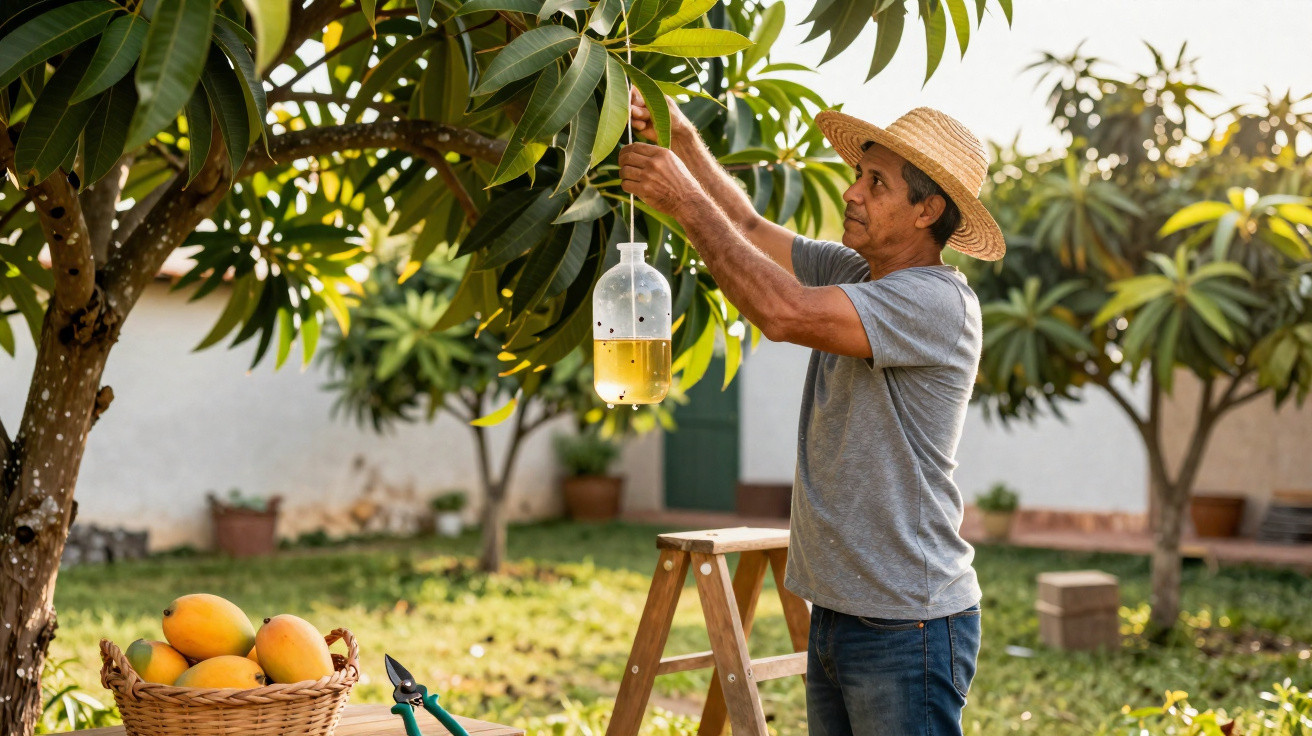
Hanging plastic bottles from the branches of a mango tree is a familiar sight in many Brazilian back gardens. Although it can look like a makeshift trick, the habit serves a practical purpose: it helps keep pests away and cuts fruit losses in a straightforward, low-cost way without using chemical products. This can help mango trees stay more productive, particularly in urban and peri-urban areas.
Why does hanging plastic bottles on a mango tree help protect the tree?
The approach differs from place to place, but it is generally used to defend the crop from insects that attack the fruit while it is still green or nearly ripe. By turning a bottle into a simple trap, the homeowner reduces the number of insects flying around the tree and limits problems such as punctures, rot, and mangoes dropping before they are ready.
As a result, the tree tends to look tidier and more of the harvest can be used. In neighbourhoods where many gardens are close together, neighbours using the method at the same time can also lower overall fruit-fly pressure, benefiting the wider area.
How does using a plastic bottle on a mango tree work?
The benefit of placing a plastic bottle on a mango tree comes from using it as a trap or a physical deterrent. In many gardens, people make small holes in the sides of the bottles and add an attractant inside-such as sugar water, very ripe fruit, or leftover juice. The smell draws fruit flies and other insects into the container.
In some cases, the bottle is hung empty or with a small amount of water so it creates flashes of light and movement in the wind, which can unsettle certain birds and more light-sensitive insects. Spread at different heights through the canopy, the bottles form a loose “net” around the fruit, which is particularly helpful during hot, humid periods when pests are more common.
How to prepare and hang plastic bottles on a mango tree effectively
For a plastic bottle on a mango tree to work properly, it needs to be set up in the right way. A basic version uses a clean, dry 1.5 L or 2 L PET bottle, with 3 or 4 holes of about 1 cm in diameter made around the middle of the side. The top section is kept as a lid, making it easier to replace the bait.
Inside the bottle, an insect lure is usually added, made from everyday, easy-to-find ingredients, such as the options below.
- Water with sugar, or diluted honey;
- Leftover very ripe fruit, mashed with water;
- Baker’s yeast mixed into sugar water.
Once assembled, the bottle is hung using wire, twine, or a strong cord, taking care not to constrict the branch. On medium-sized mango trees, people commonly use 5 to 10 bottles, placed near the fruiting area at roughly 1.5 to 2.5 metres from the ground. It is advisable to check the contents every few days so you can replace spoiled bait or any damaged bottles.
What other simple care helps protect fruit trees in the garden?
Alongside using plastic bottles on a mango tree, many people cover individual fruits or small clusters with paper bags, fine-fabric pouches, or small pieces of mesh. This makes it harder for boring insects to reach the fruit and reduces damage caused by birds, without needing chemical products.
Looking after the ground around the tree also matters: clearing away fallen fruit and built-up leaves breaks the life cycle of larvae developing in the soil, while light pruning improves air flow and sunlight. In some gardens, improvised reflectors made from old CDs or metallic tape are hung from branches to scare birds, and combining these measures with the bottles generally helps keep more fruit healthy until picking time.
Comments
No comments yet. Be the first to comment!
Leave a Comment