
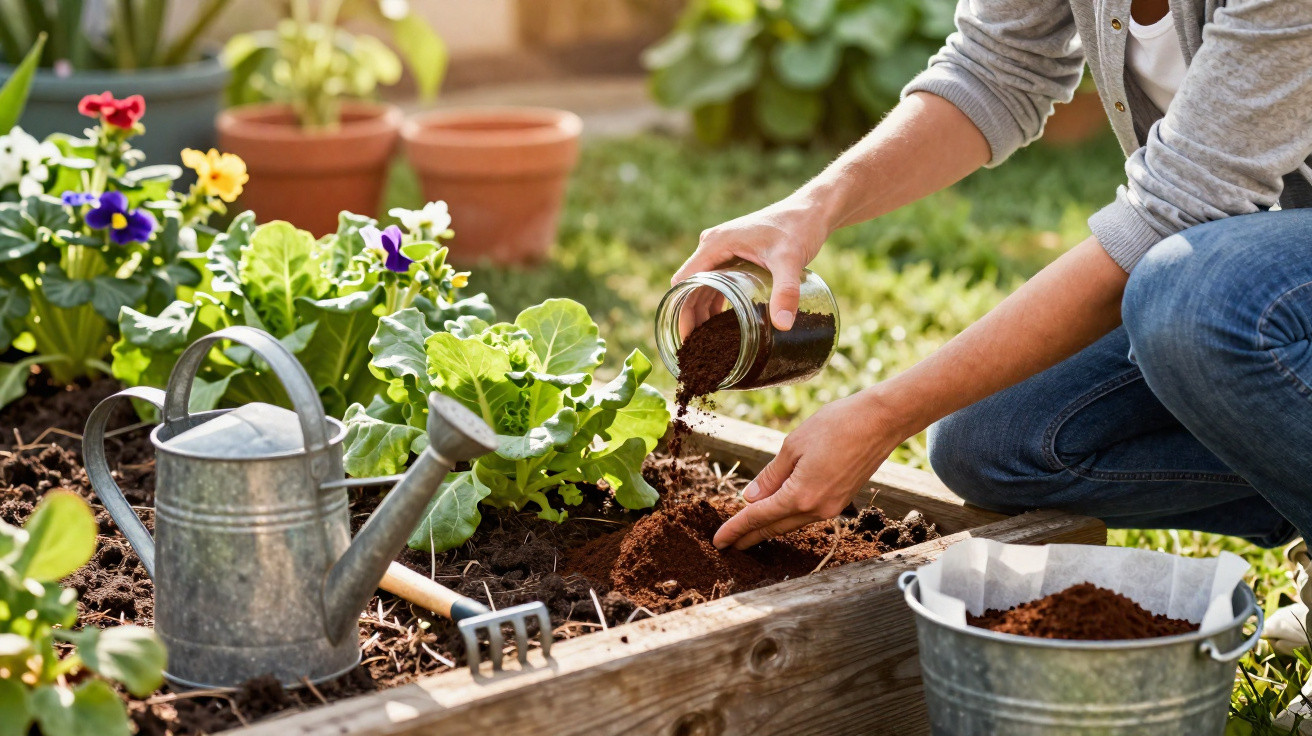
Coffee grounds are a straightforward household leftover that many people now reuse in the garden because they can boost the soil’s organic matter and cut down on kitchen waste. When applied properly and in small amounts, they can support soil structure, feed micro-organisms and complement the care of certain plants.
What do coffee grounds do around plants?
Coffee grounds are not a complete fertiliser, but they do provide organic matter and small amounts of nutrients that can benefit the soil over time. Their main advantage is improving the health of the growing medium, particularly when they are mixed into the soil or added to a compost heap.
They are also a practical way to reuse a common kitchen by-product. Instead of going straight into the bin, the grounds can be returned to the garden as a supplement-so long as they are not overused and are not left as a thick layer on the surface.
How to apply them correctly without harming plants
The most common mistake is tipping a lot of damp grounds straight around the stem. This can compact the surface, reduce airflow, hold too much moisture and encourage mould. The better approach is to use a small amount and spread it out thoroughly.
- Use a small amount: a thin layer is enough.
- Let them dry first: this lowers the risk of bad smells and mildew.
- Mix into the soil: avoid leaving dense patches on the surface.
- Keep away from the stem: leave a few centimetres between the grounds and the base of the plant.
- Repeat sparingly: once a month is usually enough for pots and small beds.
Which plants are most likely to benefit?
Plants that prefer soil rich in organic matter tend to respond best to coffee grounds when used in moderation. They can be useful in vegetable plots, ornamental pots and well-drained beds, especially as part of a broader, ongoing feeding routine.
- Leafy vegetables often do better in soils with good organic content.
- Herbs such as basil and mint benefit from a fertile, light growing medium.
- Rose bushes and ornamental plants can take small amounts worked into the soil.
- Ferns and shade-loving plants like rich soil, but not waterlogging.
- With succulents and cacti, use should be avoided or kept extremely limited.
Other ways to use coffee grounds in the garden
Composting is one of the best uses for coffee grounds. When combined with dry leaves, plant scraps and other carbon-rich materials, they help create a more balanced compost and reduce how much organic waste is thrown away.
They can also be used in small quantities to improve the texture of very poor soils, as long as they are always mixed in. Some people use them as a barrier against slugs and ants, but this effect is limited and does not replace proper control when there is an infestation.
What precautions help you avoid mistakes?
Coffee grounds should be treated as a supplement, not a miracle fix. Using too much can upset the soil balance, make the growing medium heavy and worsen drainage-especially in small pots or with plants that are sensitive to excess moisture.
For the best results, use dry grounds in small amounts and always alongside other essentials, such as correct watering, good light, pruning and balanced feeding. That way, the garden gains organic matter without relying so heavily on manufactured products and without putting plants at risk.



Comments
No comments yet. Be the first to comment!
Leave a Comment