
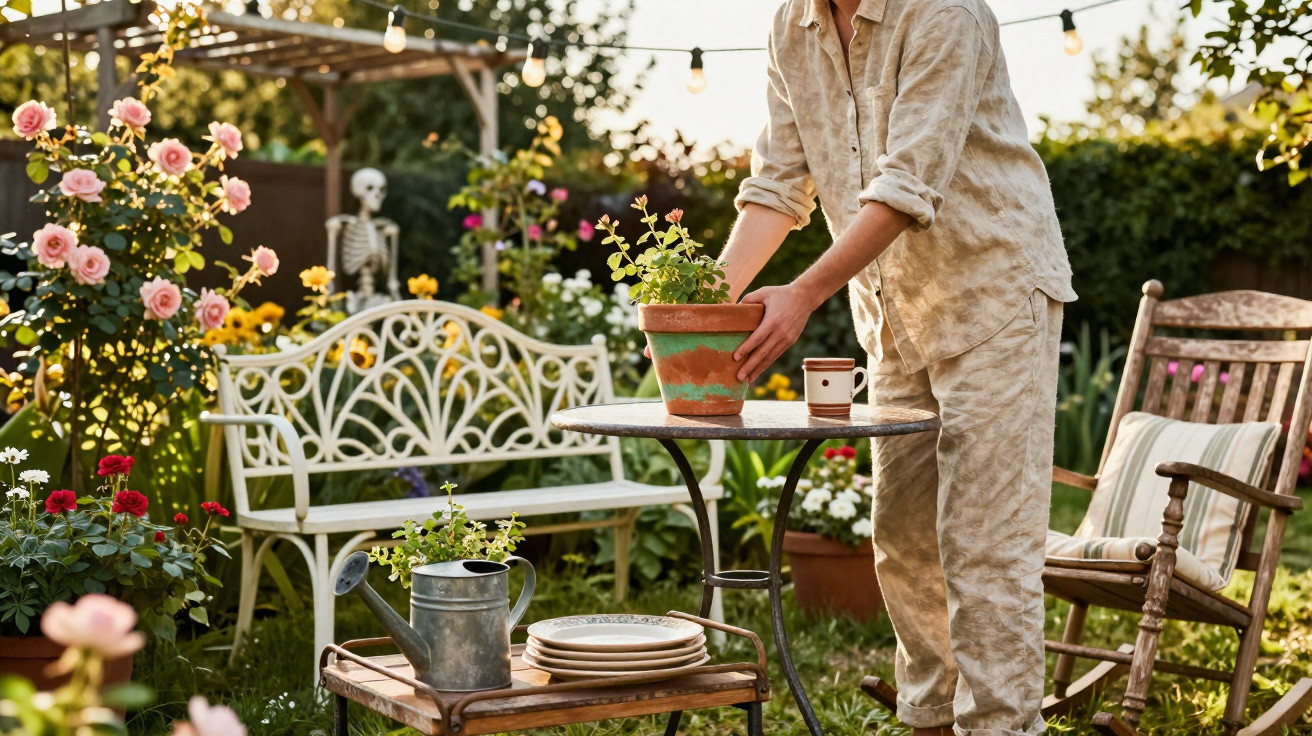
More and more people are treating their home as a personal statement. Now the spotlight has shifted outdoors: balconies, terraces and courtyards are no longer meant to look like they came straight from a DIY superstore catalogue, but like carefully put-together favourite spots. The secret isn’t another online order, but the flea market, local bric-a-brac stalls and classified listings-places where pre-owned pieces with a past can start a second life outside.
Why the garden is suddenly allowed to look like a flea market
For years, interiors got all the attention, while outside spaces often defaulted to the same set-up: plastic table, stackable chairs, a string of lights-job done. That’s changing. Designers and keen gardeners are increasingly choosing one-off items with a bit of roughness around the edges. Think patinated furniture, metal lanterns with a hint of rust, and old urns that look as though they’ve already seen several generations.
“This is how you get a garden that doesn’t feel ‘fully furnished’, but lived-in-like it has its own biography.”
And it’s not only traditional markets that deliver. Online platforms, house-clearance sales and small neighbourhood second-hand shops have become genuine treasure troves. With patience and a trained eye, it’s possible to create an outdoor area on a modest budget that clearly stands apart from the uniform, mass-market look.
1. Vintage lighting: old lamps, a new stage
Even the prettiest garden can fall flat without good lighting. Instead of new LED strings, more and more people are opting for older outdoor lights that seemed to have been written off years ago. In particular, these are in demand:
- Brass lanterns from the 1960s and 1970s
- Glass pendant lights with frosted or textured glass
- Wall lights with visible patina and signs of use
These fittings add atmosphere instantly. A single rusty pendant above the garden table can bring more character than ten brand-new solar lights combined. Safety still comes first, of course: have the electrics checked, replace lamp holders, and use bulbs that are suitable for outdoor use.
“Second-hand lights work like jewellery: they frame the garden, add accents, and quietly tell stories from earlier times.”
When you’re hunting, prioritise robust materials-solid metal, thick glass and sturdy fixings. Small scratches or spots of rust aren’t a problem; they often strengthen the appeal. With fresh wiring and a gentle clean, an old yard lamp can become the standout feature above a balcony dining table.
2. Terracotta pots and urns with patina
Few things make a border or terrace feel established as quickly as large, weathered planters. Terracotta, in particular, develops a surface over the years that you simply can’t buy new: mossy patches, limescale rings, fine hairline cracks and softly chipped edges.
Professionals use these pieces deliberately to give a garden more structure:
- Large urns as a focal point by the entrance or at the end of a path
- Terracotta pots grouped irregularly with herbs, rather than identical planters in a row
- A single oversized pot as a “sculpture” next to a bench
The more obvious the wear, the better these vessels suit naturalistic gardens or older façades. They look as if they’ve always belonged there, visually linking the building to the planting.
When buying, it pays to inspect them closely: hairline cracks are usually fine, but deep splits or loose sections can be risky-especially in freezing conditions. With a saucer, a bit of sand for drainage and hardy planting, these finds can last for many more years.
3. Wrought iron: from pergola to garden bench
Wrought-iron pieces are turning up everywhere again-no longer only as the classic garden chair, but as full-on garden architecture. Typical second-hand finds include:
- Old garden gates and sections of fencing
- Arched rose arches or climbing frames
- Small iron pergolas or arbours
Earlier generations often had these made from high-quality materials, frequently by hand. You can feel that workmanship. An old iron arch with grapevine or climbing roses draped over it can turn a simple path into a proper garden entrance. Even a small balcony can seem more spacious when a delicate iron frame helps define the area.
“A single wrought-iron structure can anchor the entire garden design and turn an otherwise dull corner into a favourite spot.”
Wrought iron is also enjoying a revival in outdoor seating. Vintage sets with ornament, scrollwork or lattice patterns can feel romantic without tipping into kitsch-so long as they’re styled with restraint, for example with plain linen cushions or single-colour seat pads. Light surface rust can be removed with a wire brush, then a fresh coat of paint helps prevent further corrosion.
4. Seating with a story: from rocking chair to lounger
Garden furniture doesn’t have to match perfectly. In fact, a mix of different seats-each second-hand and gently aged-often makes a terrace feel far more inviting. These pieces are especially popular:
- Wooden rocking chairs
- Rattan armchairs with curved backs
- Wooden deckchairs with fabric slings
You’ll often find them at a fraction of the price of new designer pieces. Their appeal lies in their individuality: an armrest that’s been worn smooth, fabric that’s slightly sun-faded, metal frames with fine marks from use. That’s exactly what creates the relaxed, not-over-styled atmosphere many people are after right now.
An old rocking chair on the veranda or by the front door practically begs you to sit down with a drink and watch the world go by. A wooden lounger with striped fabric can bring back memories of historic seaside bathing huts-ideal for small city balconies that could do with a touch of holiday feeling.
What to check when buying second-hand seating
To stop a flea market bargain turning into a building site, run through a quick checklist:
- Check stability: does it wobble? Are all screws present?
- Inspect the materials: splits in wood, broken struts, brittle cane or weave?
- Assess the surface: can it be saved with sanding, oiling or new fabric?
- Sit on it: is the shape comfortable even without cushions?
Many issues are easy to fix: new webbing for deckchairs, a fresh seat cover, a little wood oil for faded surfaces. And if you don’t restore everything to perfection, you keep the patina-precisely what makes these pieces so appealing.
5. 1970s serving trolleys and side tables
Among old vases and glassware at markets, you’ll regularly spot wheeled serving trolleys or small side tables-often metal or wood, sometimes with glass shelves. These can work brilliantly outdoors, as long as they’re sturdy and weather-resistant enough.
A serving trolley can take on several roles:
- As a mobile bar next to the barbecue
- As a tiered stand for herbs and small pots
- As a flexible side table between two loungers
1970s models-often with castors and a rail-bring a distinctive retro feel to a terrace. Add a few glasses, a carafe and a vase, and it instantly reads like a small outdoor buffet. Scratched shelves can be sanded down, while glass surfaces can be refreshed with glass cleaner or polishing paste.
How to find real garden treasures instead of rubbish
If you’re looking for these kinds of pieces on purpose, it helps to approach it with a simple plan. Impulse buys are fun, but they can quickly lead to cluttered corners. A few guiding questions before you pay can help:
| Question | The thinking behind it |
|---|---|
| Does the piece fit my outdoor space in size and style? | Stops a balcony becoming crammed or a garden feeling visually chaotic. |
| Can I refurbish it with a reasonable amount of effort? | Avoids frustration if a bargain threatens to become an endless project. |
| Does it serve a function I genuinely need? | Prevents buying décor that just sits there and never gets used. |
| Does it actually look better outdoors than indoors? | Some pieces only show their full charm in the open air. |
If you’re unsure, begin with smaller items: one old pot, a lamp, a single chair. Even one characterful object is enough to test how well your garden can carry the flea market look.
Care, risks and clever combinations
Second-hand garden pieces do need a bit of care. Metal should be checked regularly for rust and repainted when necessary; wood benefits from oil or a stain; fabrics should be weather-resistant or easy to swap out. If you don’t have space to store things over winter, it’s smarter to choose stackable or folding items.
The biggest strength of this flea market aesthetic is that it openly welcomes imperfection. A mark on the stone tabletop, a chipped edge, a slightly bent chair back-none of it ruins the effect; it actually takes the pressure off. Children can play, plants can spill over the rim, and nothing feels sterile.
It gets particularly interesting when you mix old and new: a modern gas barbecue next to an iron bench, clean glass vases on a table with flaking paint, new cushions on an old rocking chair. That way the garden stays comfortable and practical without losing its individual character.
Once you embrace this way of styling, you quickly notice the shift: the outdoor area becomes less of a showroom and more of a personal living space. Each find brings back a market morning, a trip, or an unexpected online discovery-and that’s exactly what makes this new Brocante trend for the garden so appealing.
Comments
No comments yet. Be the first to comment!
Leave a Comment