
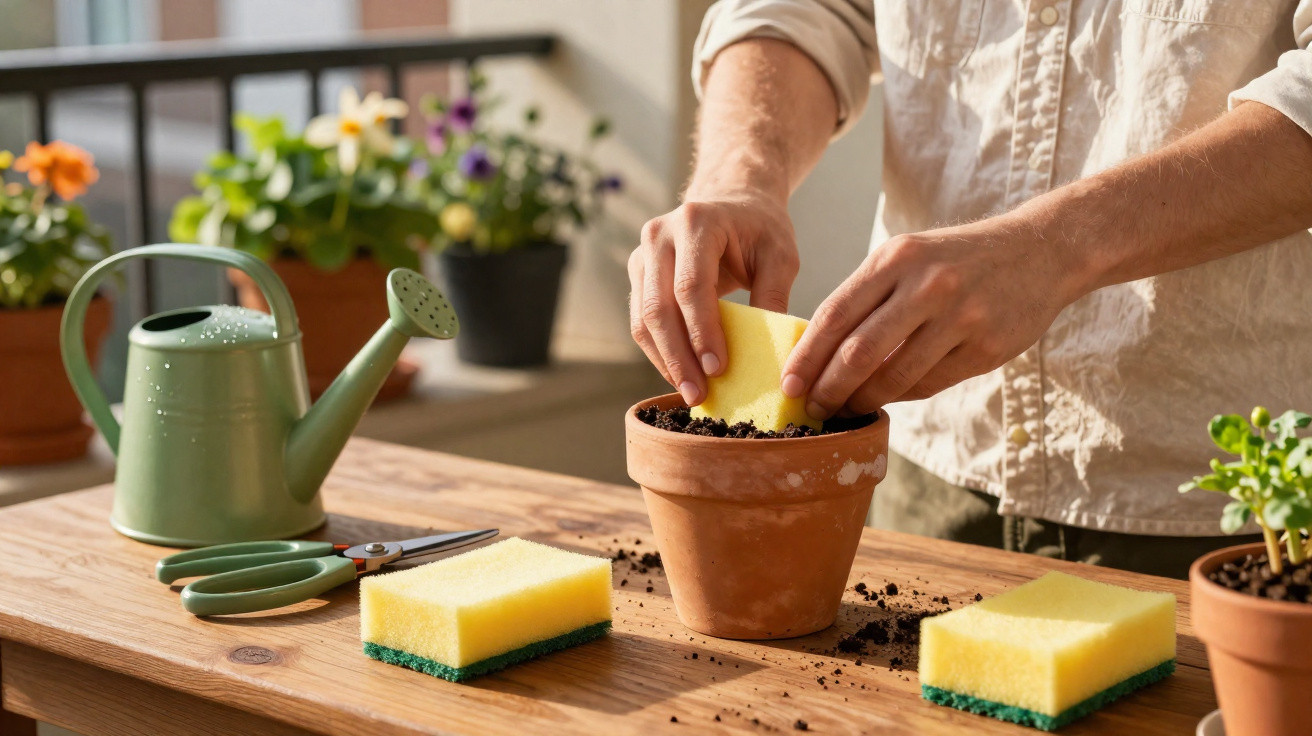
As the gardening season gets going, beds, pots and balcony boxes can quickly be pushed to their limits: young roots, changeable weather, and watering that’s sometimes too heavy and sometimes too light. At the same time, many households throw away a small everyday item in huge quantities-even though, in the garden, it can quietly help retain water and cut waste.
How a kitchen helper turns a pot into a water-storage hub
The idea is straightforward: the soft, porous material that’s finished its life by the kitchen sink works in soil like a mini reservoir. In a pot or balcony box, it sits above the drainage layer (for example gravel or broken terracotta pieces) and beneath the compost.
"Its porous structure soaks up excess watering, holds it, and releases it slowly back to the roots-like a small sponge in the root zone."
Especially in spring, that creates several benefits:
- The compost doesn’t dry out as quickly.
- Plants cope far better with short dry spells.
- On windy balconies, moisture stays in the growing medium for longer.
- A brief absence-such as a weekend away-is less of a crisis for thirsty container plants.
Young plants with fine, delicate roots gain the most. Rather than swinging between waterlogging stress and drought stress, they establish more evenly.
Why spring is the perfect time for this trick
Early in the year, daytime temperatures are often mild while nights remain cool. Sunshine becomes stronger, evaporation increases, and many hobby gardeners water a bit irregularly. That combination can quickly lead to watering mistakes.
A built-in water store in the root area smooths out these ups and downs. The effect is particularly noticeable in common spring scenarios:
- Newly planted containers: roots haven’t grown deep yet, but they still need steady moisture.
- Balcony boxes in exposed, windy spots: wind can dry the compost within hours.
- Young tomatoes, herbs and summer bedding: they handle brief dry periods much worse than older, well-rooted plants.
If you plan this unobtrusive helper in from the start, you reduce stress later on when watering becomes a chore. City balconies with limited compost volume tend to show the difference most clearly.
Natural or plastic: which types work in the garden
Before this kitchen helper goes anywhere near a bed or pot, it’s worth checking what it’s made from. Not every version belongs in soil-or anywhere near the compost heap.
| Type | How it behaves in the garden | Suitable for compost? |
|---|---|---|
| Cellulose / plant fibre | Biodegradable, retains water, still lets air reach the roots | Yes, if it isn’t loaded with chemicals |
| Loofah (sponge gourd) | Pure natural material, very airy, gives good structure in compost | Yes, ideal |
| Synthetic plastic version | Contains plastic; may release microplastics and residues | No-only use as a temporary water store in pots |
For flower beds, veg patches and compost, cellulose or loofah options are clearly preferable. They break down over time and can even support soil structure. Synthetic versions should stay out of compost and should not be left long-term in productive garden soil.
Making the kitchen helper garden-ready
Before anything goes into the soil, it needs a thorough clean. By the sink it collects grease, detergent residue and bacteria-none of which you want turning up in the veg plot.
Cleaning steps before using it in the garden
- Rinse extremely well: squeeze and flush under hot water until there’s hardly any foam or smell.
- Boil it: leave it in boiling water for a few minutes to reduce most germs.
- Vinegar soak: then saturate it with clean water and a little clear vinegar to bind further residues.
- Optional microwave: briefly heat it while damp in the microwave (only if it contains no metal) to reduce additional germs.
After this, it’s done with kitchen duty for good. It shouldn’t return to household use-leave it permanently for garden tasks.
Four smart places to use it in spring
Once properly prepared, the material can be useful in several spots around the home-on a compact city balcony just as much as in a larger veg garden.
1. A water store in pots and balcony boxes
The most common method: place a piece above the drainage layer and cover it with compost. When you water, it absorbs moisture and later releases it back into the compost.
Ideal for:
- Summer bedding in balcony boxes
- Culinary herbs in pots
- Tomatoes, peppers and chillies in containers
2. A moisture booster in the compost heap
Natural versions can simply be cut into pieces and mixed through the compost. They absorb water, keep the heap damp for longer, and create small air pockets.
"Well-moistened, airy compost gets microorganisms moving-the rotting process runs more evenly, and the finished material turns out more crumbly."
Important: only use natural, non-plastic versions, and make sure they’re not heavily contaminated with washing-up liquid or grease.
3. A mini germination station for seeds
If you don’t have space for large seed trays, cut the kitchen helper into small cubes. Place one seed in each cube. The material stays lightly moist, so seedlings have a steady supply of water.
Once the young plant is roughly hand-high, transplant the entire little cube into a pot or the bed. Natural material will simply break down in the soil over time.
4. Light protection and a barrier against pests
Laid flat on the soil and held down with a small stone, it can give tender plants a little protection from cold ground in spring. Air still reaches the soil, but night-time cooling is less severe.
With a few drops of strongly scented essential oils-known for being disliked by certain insects-you can also create a small scent barrier. That offers a bit of protection for individual plants without immediately resorting to harsh chemicals.
When the kitchen helper needs to come back out of the soil
Even in the garden, no material lasts forever. Regular checks help you avoid unpleasant surprises:
- Signs of mould
- A strong, rotten smell
- A crumbly structure that has completely broken down
If any of this appears, a natural version belongs in the compost (provided it isn’t full of cleaner residue), while a plastic version should go in the general waste. In beds with edible plants, it’s wise to be cautious and use it deliberately-especially if the material spent a long time in the kitchen.
Why this trick is good for the climate and your wallet
Every year, billions of these kitchen helpers end up in the bin. Moving some of them to the garden or balcony reduces waste and can also save money on expensive water-retaining granules or specialist gels.
In areas with frequent watering restrictions or rising water costs, any small method that keeps soil moist for longer can help. Cities with lots of balcony gardening benefit too: fewer dried-out plants means fewer replacement purchases of flowering plants and less plastic waste from new pots and bags.
Try this simple spring hack once and you’ll quickly see where it helps most in your own space-whether that’s the herb box on the windowsill, the tomato pot on the patio, or the compost heap behind the shed. A modest kitchen leftover can quietly ensure plants go thirsty less often-without high-tech kit and without much effort.


Comments
No comments yet. Be the first to comment!
Leave a Comment