
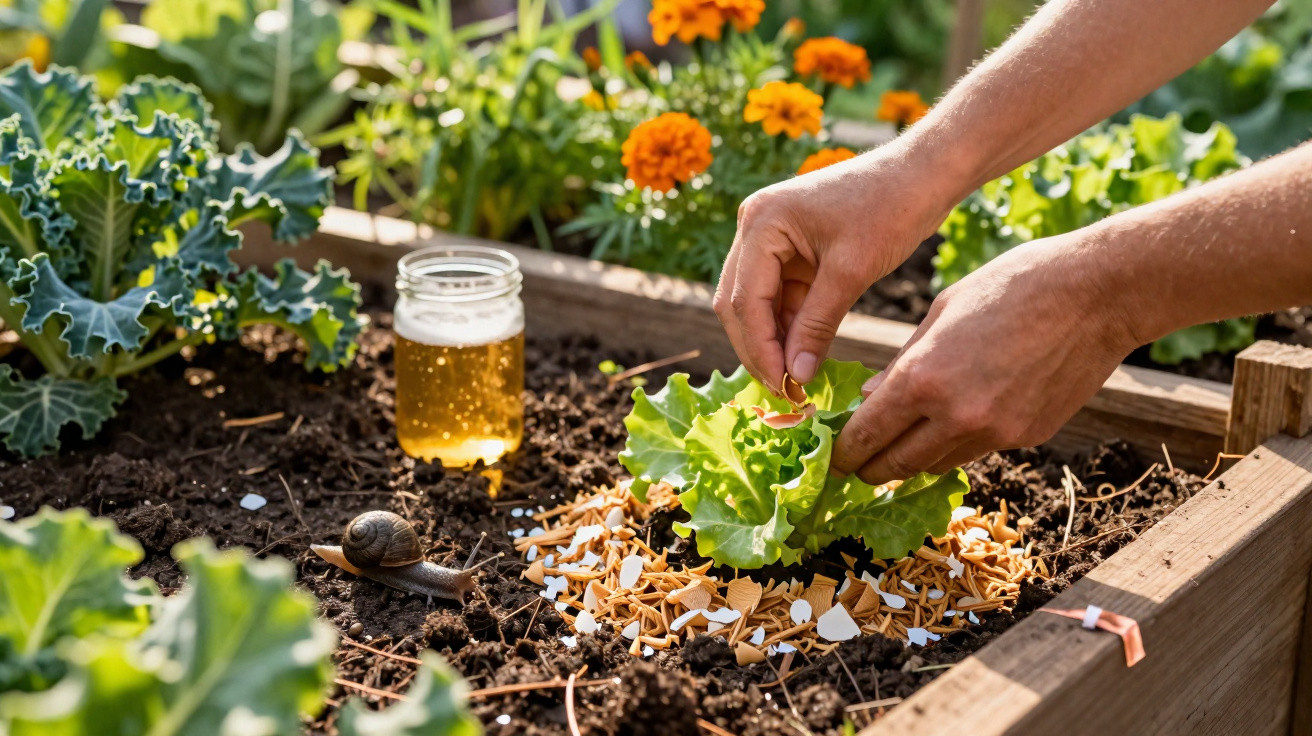
Growing fresh vegetables at home is deeply rewarding, but unwanted visitors can wreck your beds after rainfall. Keeping leaves intact calls for effective ways to deter slugs and snails without upsetting the natural balance of your organic vegetable garden.
How to tell the difference between slugs and snails - and prevent them appearing
These molluscs are active at night, scraping the surface of green leaves and also damaging the roots of orchids and succulents. A slug has no protective shell, whereas a snail carries a hard, dry shell and quickly shows up in the damp beds around the garden.
To stop numbers getting out of hand, the key first move is to remove potential daytime shelters scattered around the plot. They look for cool, dark spots to rest, so it helps to keep the garden tidy and to store empty pots neatly.
Avoid letting these materials build up, as they provide hiding places for the pests:
- Offcuts of wood: Create the ideal daytime shade for molluscs.
- Stacks of bricks: Leave damp gaps that make perfect night-time refuges.
- Unused pots: Trap moisture underneath when left on the ground.
- Old roof tiles: Shield pests from direct sunlight.
- Wood piles: Become long-term shelters if they are not moved.
Which homemade traps help control these animals?
Because slugs move under cover of darkness, many growers collect them by hand at first light. Setting up attractive spots using organic scraps makes it easier to gather these small creatures, keeping management ecological and completely free from harsh substances that could harm nature.
Placing potato peelings or chayote skins around the beds draws molluscs in, concentrating them in specific areas for later disposal. Another popular option uses containers filled with beer: the fermentation attracts the animals and makes it simpler to remove these pests from your crop by hand.
Watch the detailed explanations of biological control directly on the Spagnhol Plantas YouTube channel:
How to apply effective physical barriers in damp beds
Creating obstacles on the soil surface makes it harder for molluscs to travel and helps prevent serious damage to the planting. Burnt rice husks work as an excellent long-lasting natural repellent, producing a rough texture that discourages the animals without harming the plants.
Key care points for barriers
Take care when using ash and lime
Wood ash is temporary and can change the soil pH if overused.
Quicklime must never touch the soil, as it can severely burn roots.
Another workable approach is to apply ash from a wood-burning stove or fireplace in a targeted way. This material acts as a short-term block, but it needs frequent reapplication after heavy watering, so the gardener must stay alert to keep your valuable bed protected from molluscs.
Follow these recommendations to use physical defences effectively:
- Apply a thick layer of burnt rice husks around pots.
- Avoid using large amounts of ash, to prevent harming the soil.
- Sprinkle quicklime only underneath containers and never onto the soil.
Which commercial alternatives exist to tackle major infestations?
When home methods are no longer enough in the face of severe infestations, commercial products may be necessary. Shops sell granular baits designed to kill molluscs, and it is important to choose with care, considering chemical safety for your environment and for animals.
The traditional product known as metaldehyde is bluish in colour and is highly toxic, posing a serious risk if swallowed accidentally. As a safer alternative, ferric phosphate is an excellent commercial bait, effectively eliminating the pests without causing major harm to the ecosystem of your garden.
Consider the features of each commercial option before applying:
- Blue metaldehyde should be avoided because of the high toxicity risk.
- Ferric phosphate works efficiently and is less aggressive.
- Commercial baits must always be handled with attention and care.
Why is ecological management essential for plant health?
Protecting the natural balance helps prevent mollusc populations from turning into destructive pests on foliage. Biological control and gentler tactics safeguard biodiversity, ensuring your vegetables grow strongly without relying on products that could be harmful to health.
Looking after the garden with preventive actions supports a harmonious, productive environment over the long term. Choosing sustainable solutions shows respect, allowing you to harvest clean food while protecting every green leaf from the damage caused by these creatures.
Read also: Goodbye to diesel: scientists develop an engine that uses sea water
Comments
No comments yet. Be the first to comment!
Leave a Comment