
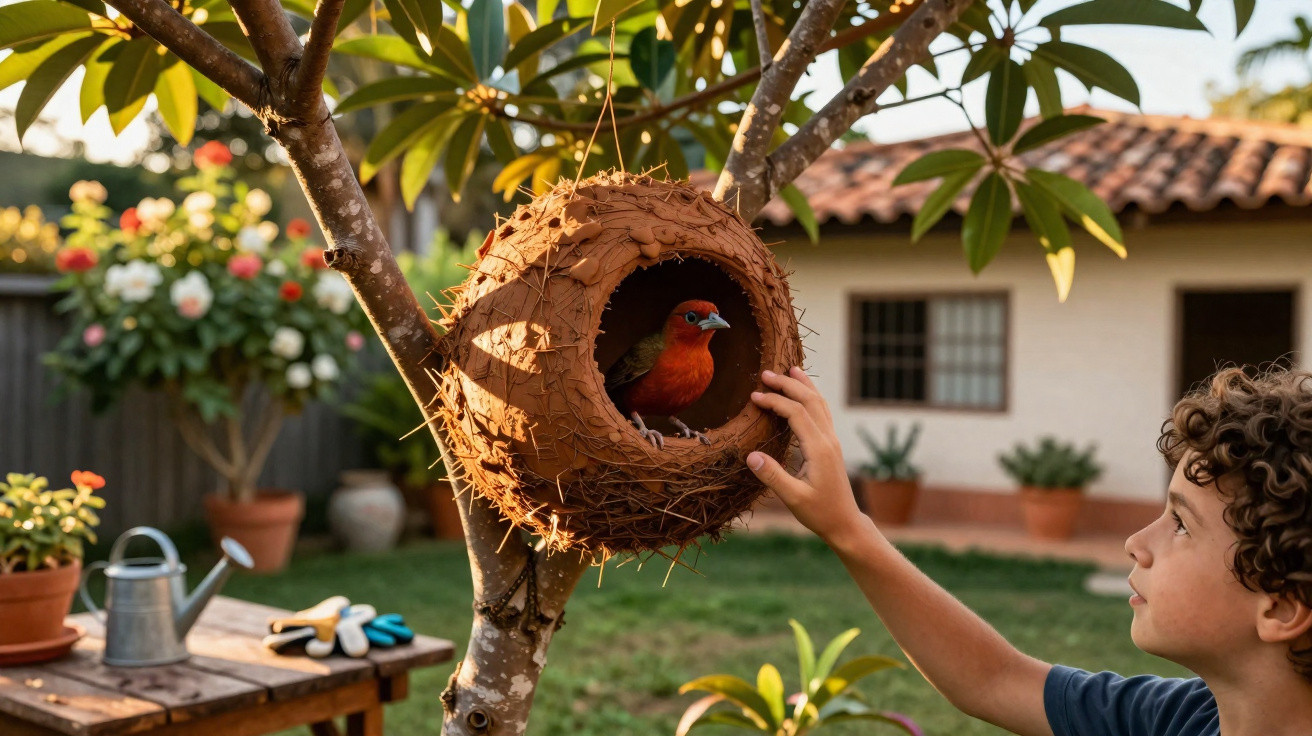
Coming across a joão-de-barro mud nest on a roof, a wall or a tree in the garden is usually a positive sign for the surrounding space. This bird looks for mud, insects, stable supports and a reasonable level of calm before it builds, so its presence can point to a garden with active soil, useful vegetation and a steady flow of small species.
What does it mean to find a nest in the garden?
A mud nest suggests the site meets the basic conditions the bird needs to settle. The joão-de-barro does not rely solely on a branch or a clear ledge; it needs damp raw material, food close by and a place that feels relatively safe to move around.
In popular tradition, this little “house” is also linked with protection, partnership and good luck. Setting belief aside, the practical reality is that the bird chooses locations where it can build, feed and keep away from frequent threats.
Why does the joão-de-barro choose certain places to build?
Before starting work, the joão-de-barro assesses the area. Repeated visits to the same spot, frequent singing and the pair remaining nearby can all indicate the site is being watched as a potential place for the structure.
- there is mud or damp soil available in the surrounding area;
- the garden has insects, larvae and small invertebrates;
- the chosen point is stable on a tree, post, wall or roof;
- movement from people and animals does not put the build at risk.
How is the mud structure made?
The mud nest is built gradually using clay-rich mud, straw and other natural materials that help bind everything together. The pair carries small amounts in their beaks and shapes the nest in layers until it becomes a sturdy, house-like structure.
Inside, there is usually a partition, which helps shield eggs and chicks from wind, rain and predators. A side entrance also reduces direct water entry, one reason the build stands out for its natural engineering.
What benefits does the bird bring to the garden?
Having a joão-de-barro nearby can support garden balance because it feeds on insects and other small organisms found in the soil. This behaviour helps cut down some pests without relying on chemical products.
- helps with natural control of larvae and insects;
- indicates there is life in the soil and resources in the immediate area;
- may attract other native birds to the space;
- turns trees, walls and roofs into shelter points for local wildlife.
What should you do if you find the structure on the roof or in a tree?
If you find a joão-de-barro mud nest, it is best to watch from a distance and avoid disturbing the structure. If the pair is active, or there are eggs or chicks, removal can harm the bird’s breeding and break an important cycle of urban biodiversity.
Keeping native plants, using fewer pesticides and preserving patches of exposed soil all help make the garden more welcoming to native birds. When the joão-de-barro chooses a home or garden, it shows that the space still offers food, shelter and building material for wildlife to remain close by.
Comments
No comments yet. Be the first to comment!
Leave a Comment