
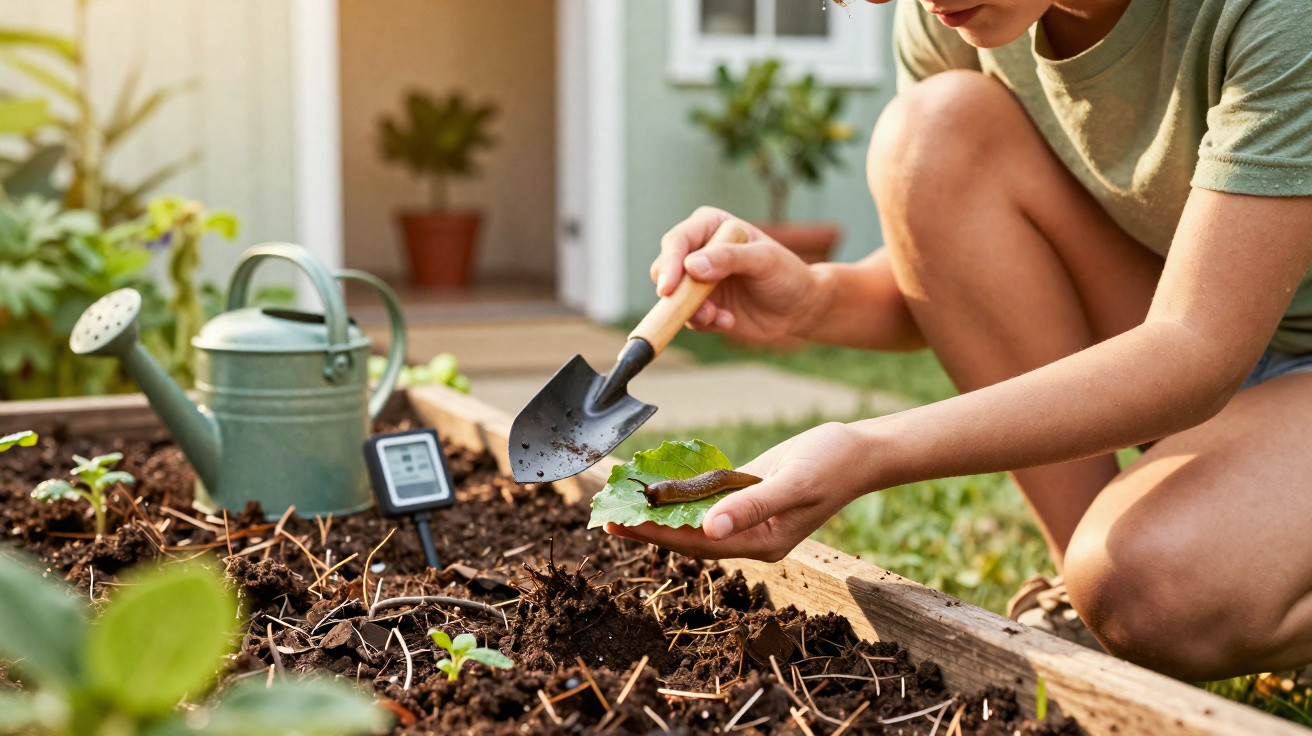
Finding a slug creeping around the house or garden can feel a bit unsettling, but it is not automatically a reason to worry. These small molluscs tend to show up in damp, shaded spots with plenty of organic matter, and their presence can offer clues about how balanced the environment is.
A slow visitor can tell you a lot about the garden
A slug favours cool, moist places that are sheltered from direct sunlight. That is why you are most likely to spot one after rainfall, around pots, under fallen leaves, beside shaded walls, or in well-watered beds.
In the garden, seeing them often suggests there is moisture, cover, and decomposing organic material. All of this can be part of a thriving outdoor space, although it may need managing once it starts affecting more delicate plants.
- Moisture: slugs are more common in wet, cool, shaded areas.
- Organic matter: fallen leaves and plant debris attract these molluscs.
- Living soil: their presence can point to an ecosystem with active decomposition.
- Environmental clue: lots of slugs may indicate excessive damp.
Indoors, damp is worth checking
When a slug turns up inside the house, the usual reason is that it is searching for moisture. It may come in through gaps and cracks, drains, doors, utility areas, or corners close to the garden.
If this keeps happening, it is worth checking for damp patches, leaks, overwatering of houseplants, and dark areas with poor ventilation. A single sighting can be normal, but repeated appearances suggest there is something to put right.
The upside of this small mollusc
As part of a natural balance, a slug in the garden plays a role in breaking down leaves and plant remains. This helps return nutrients to the soil and is part of the largely unseen life within flowerbeds.
Not every slug is a problem
It is the excess that needs controlling One slug here and there may simply show that your garden has shade, water, and available organic matter.
When there are many of them, they can begin to damage seedlings, tender leaves, and more sensitive vegetables.
In popular and symbolic interpretations, slugs are also linked with patience, persistence, and adaptability. This does not replace the natural explanation, but it helps explain why the animal has taken on positive meanings in some traditions.
How to deter them without harming the garden
To reduce the number of slugs, avoid leaving large piles of fallen leaves, water in the morning, and improve airflow between pots. You can also pick them up by hand and move them to a green area away from fragile plants.
Dry barriers-such as crushed shells or other rough materials placed around seedlings-can make it harder for them to cross. It is best to avoid harsh products if children, pets, or edible plants are nearby.
A small sign of an active environment
Spotting a slug does not need to be alarming. Most of the time, it simply indicates that there is moisture, shelter, and organic activity happening around the home.
In the end, what matters is the number you see and the setting. One solitary slug may just be a garden visitor; several together can point to too much damp and the need for a few small adjustments.
If this sparked a new way of looking at your garden, share it with someone else who enjoys plants, nature, and the curious signs of the environment.

Comments
No comments yet. Be the first to comment!
Leave a Comment