
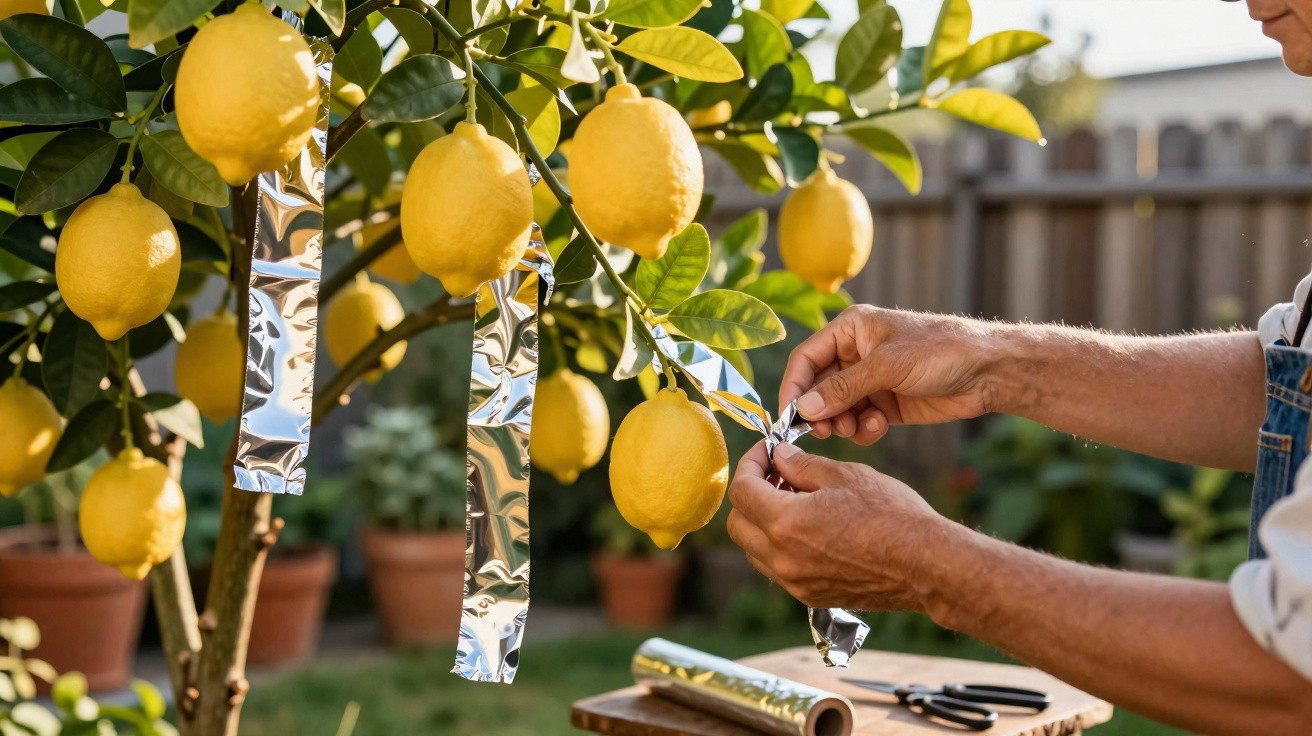
Among fruit trees grown in urban spaces, the lemon tree often turns up in back gardens, small plots and even large pots on balconies. The combined fragrance of its leaves, blossom and fruit-along with how often lemons are used in cooking-means many people look for straightforward ways to care for it better. One popular home tactic is to hang strips of aluminium foil from the lemon tree’s branches.
How does aluminium foil protect a lemon tree naturally?
This method relies on light reflection. When sunlight hits the foil, it creates flashes that shift as the wind moves the strips, making the surrounding area visually unsettled for certain animals.
Flying insects and birds commonly navigate using contrasts of shade, colour and movement. Sudden reflections can read as a warning sign or an unstable surface, discouraging them from lingering on branches and fruit-without creating any physical barrier.
Watch a video on the YouTube channel Spagnhol Plantas explaining the visual trick of using reflective aluminium strips to deter airborne predators and protect the canopy of citrus trees and lemon trees:
https://www.youtube.com/watch?v=pYq7M_eS1p0
Main benefits of aluminium foil on a lemon tree
Aluminium foil acts as an additional layer of protection, particularly handy in small spaces where people want to cut down on chemical products. It can help lower pest pressure and better preserve the skin of developing fruit.
As well as discouraging some unwanted visitors, the shimmer can help bounce light into the inner parts of the canopy, which supports photosynthesis and more even colouring of the lemons. Reported benefits include:
- Fewer flies, mosquitoes and other flying insects that react to strong reflections.
- Harder conditions for aphids and whitefly to establish, as they prefer steadier light.
- Reduced bird damage, since many birds avoid sudden visual stimuli around fruit.
- Extra protection for lemon skins, with fewer punctures and surface marks.
- A natural deterrent that does not release chemical substances onto the plant.
How to hang aluminium foil on a lemon tree the right way
For the technique to work, you need scattered points of sparkle rather than fully wrapping the branches. Too much material can reduce airflow, cast excessive shade over the canopy and even trap moisture in sensitive spots.
It works best with light strips that flutter easily in the breeze and can be adjusted over time. That way the visual effect stays active and doesn’t interfere with the natural growth of branches and new shoots.
- Cut the strips: lengths of 15 to 20 centimetres are enough to create good movement and reflection.
- Gentle fastening: tie on with string or thin twine, taking care not to tighten against the bark.
- Balanced placement: spread strips across different heights and sides of the canopy.
- Regular upkeep: after wind and rain, check, replace and reposition the strips.
- Use in combination: pair with simple traps, aromatic herbs and citrus peel.
General care that keeps a lemon tree healthy all year round
A vigorous lemon tree responds better to any protective trick, including aluminium foil. Combining solid basics with small home solutions tends to produce more consistent harvests and more resilient trees.
It’s worth checking the plant often and adjusting watering, light, feeding and light pruning throughout the year. With that approach, aluminium foil stops being just a garden curiosity and becomes part of a simple, practical routine for keeping a lemon tree balanced-whether in pots, back gardens or urban green spaces.

Comments
No comments yet. Be the first to comment!
Leave a Comment