
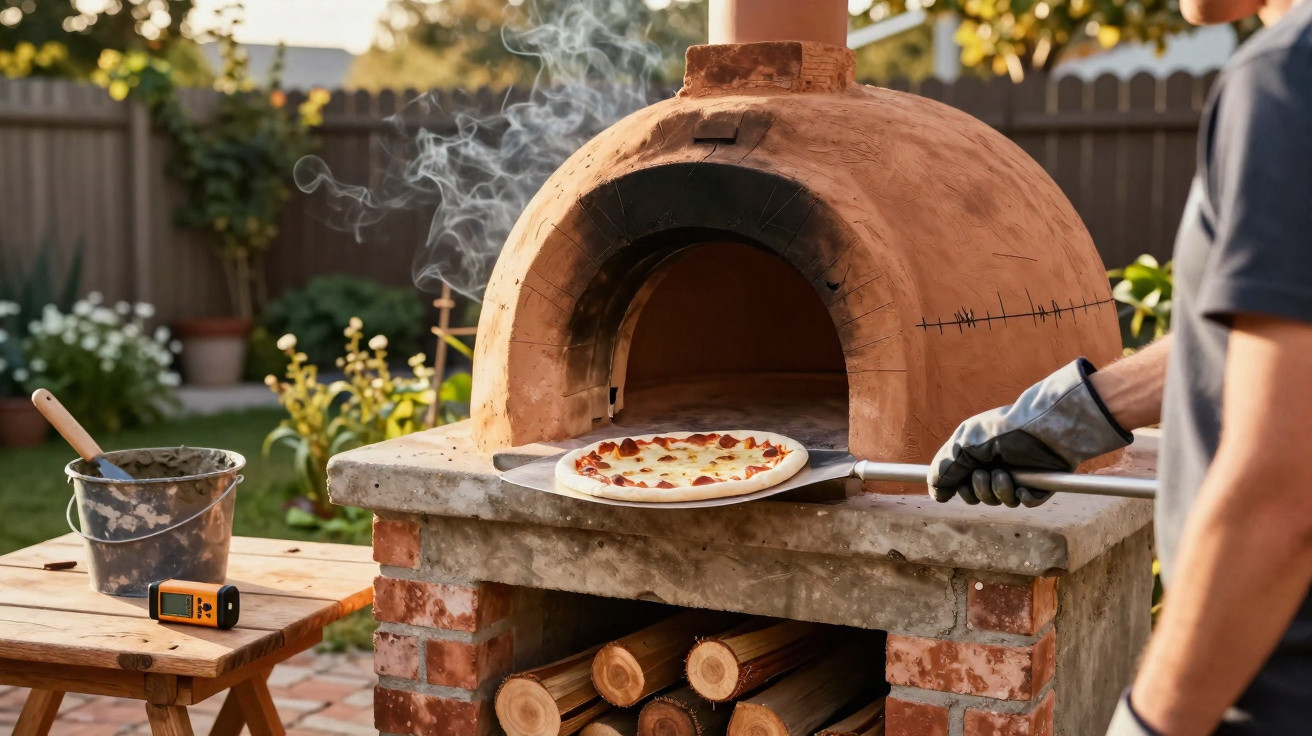
A clay oven can turn a back garden into a place to bake breads, pizzas, empanadas, meats and vegetables with strong, even heat. To build one successfully you need a solid foundation, a well-balanced clay mix, proper thermal insulation and a slow curing period so the dome does not crack in the first few uses.
Which materials are used to build the oven?
Before you start, gather what you’ll need for the base, the floor, the dome and the outer covering. A clay oven must cope with weight, high temperatures and expansion, so each layer has a specific job.
- Standard bricks for raising the base and part of the supporting structure.
- Firebricks, or well-laid standard bricks, to form the internal cooking floor.
- Clay-rich soil, sand and straw to make the clay mix.
- Coarse salt, glass, or another thermal insulation material to reduce heat loss through the base.
- A metal door and a flue pipe for the smoke outlet.
How do you make a safe base in the back garden?
Set the base at a comfortable working height-around waist level-so it’s easier to put trays in and take them out. Choose a flat, well-ventilated spot, away from flammable walls, dry plants, low roofs and anywhere children regularly pass through.
Once the supporting walls are built with bricks and mortar, add an insulating layer on top of the structure. This step keeps more heat inside the clay oven rather than letting it leak downwards while you are cooking.
Why do the floor and dome need so much care?
The inner floor is in direct contact with embers, baking trays and food, so it needs to be level and firmly set. Lay the bricks tightly side by side over a thin layer of clay, and avoid using too much cement in areas that will expand when heated.
- Mark the centre point of the oven before starting the dome.
- Use half bricks to make the rounded shape easier to form.
- Keep the front opening in proportion to the internal size.
- Leave room for the chimney or smoke outlet.
- Add an outer clay-and-straw layer to improve insulation.
How do you cure the oven before first use?
Curing is what prevents major cracking. After construction, the clay still holds moisture, and lighting a strong fire too early can heat the trapped water too quickly, opening up fissures in the dome.
The right approach is gradual: light small fires on consecutive days, watching for smoke, fine cracks and surface drying. When the inside begins to turn lighter from the heat and the structure stays firm, the oven is better prepared for a full burn.
How do you use a clay oven safely once it’s finished?
Use the clay oven with dry wood, controlled airflow and tools designed for high temperatures. Thick gloves, an oven peel and close attention to smoke help prevent burns, accidents and heat build-up near other areas of the garden.
After it has heated through, it holds its temperature for a long time and lets you bake different items one after another. Pizzas and breads make the most of the strongest early heat, while meats, vegetables and slow roasts work better once the embers have dropped and the dome is radiating heat steadily.



Comments
No comments yet. Be the first to comment!
Leave a Comment