
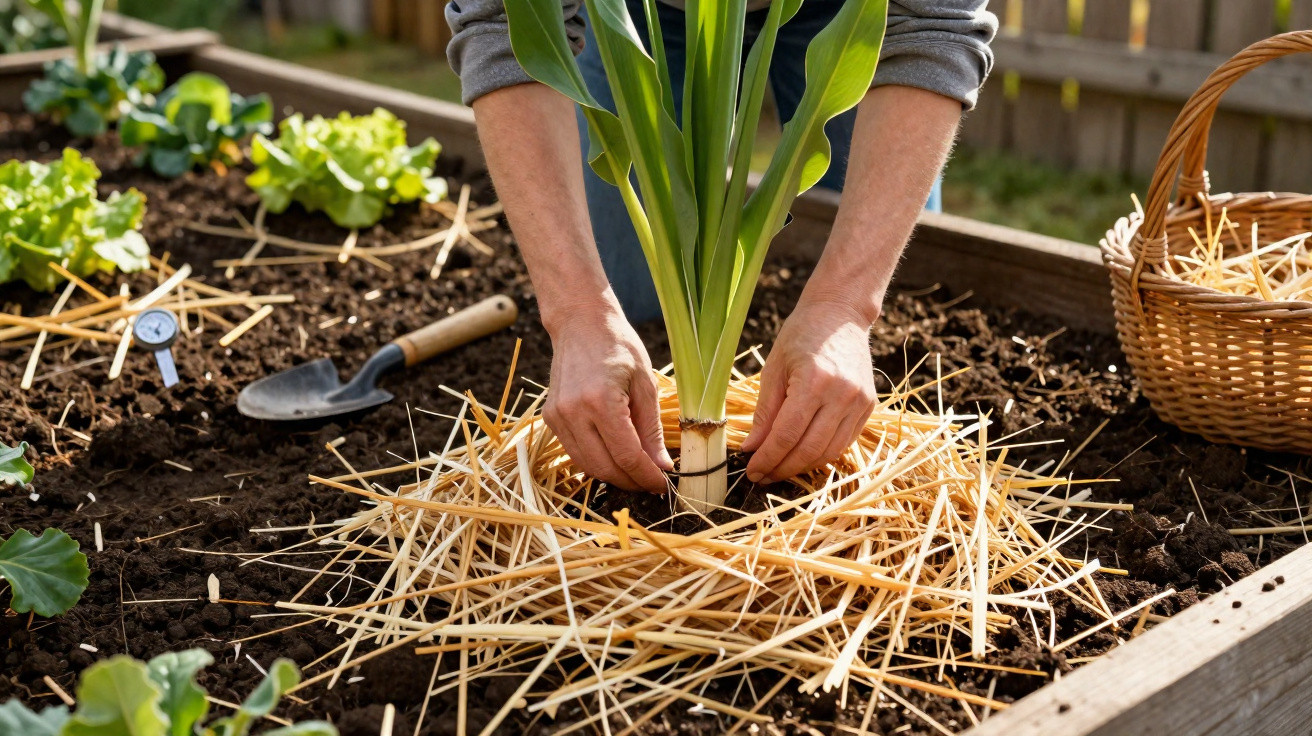
During winter, a layer of dry straw around plants works like a simple blanket over the soil, cutting down heat and moisture loss. This mulching approach shields delicate roots and gradually improves the planting bed over time.
Why put dry straw around plants in winter?
Mulching with straw forms a buffer between the soil and cold air, reducing sudden swings during frosty early mornings. Because the roots sit beneath this layer, the temperature fluctuates less and moisture is retained for longer.
This care is particularly helpful for pots, vegetable patches, young seedlings and newly planted fruit trees, which tend to suffer more when the soil cools quickly. Straw also helps prevent rain splash, reduces compaction, and protects the bed’s surface.
The main advantages show up in the following ways:
- Insulation: creates a light blanket over the soil.
- Moisture: slows water loss after watering.
- Cold: softens sharp changes on freezing nights.
- Roots: protects the most sensitive part of young plants.
- Soil: improves structure as the organic matter breaks down.
What is mulch and how does it work in the soil?
In gardening and agriculture, mulch means applying dry organic material or a covering film over the soil. The technique helps guard against erosion, moisture loss and temperature extremes, acting as a physical protective barrier.
When dry straw, leaves or sawdust are used, the layer can also suppress weeds and reduce some disease pressure, while limiting the direct impact of rain. Over time, that organic matter decomposes, supporting a more stable and fertile soil.
How do you apply straw without harming the stem?
To apply it, spread straw around the plant in a wide ring, but avoid letting it touch the stem directly. Leave a few centimetres clear at the base, because constant damp contact can lead to rot, fungal problems and damage.
Straw protects, but it needs breathing space
Do not let the mulch touch the stem
The straw should cover the soil while keeping the base of the plant ventilated. If the layer stays wet and clings to the stem, the risk of fungus and rotting increases.
The layer should be thick enough to cover the soil, but not piled into a heavy mound that restricts airflow. In small pots, keep it thinner; in larger beds, spread the straw more evenly and check it again after rain.
Follow this simple application order:
- clear away diseased leaves and weeds before mulching;
- spread dry straw in an even layer over the soil;
- keep a few centimetres clear around the stem;
- top it up when the layer thins or breaks down.
Which plants benefit most from this protection?
Vegetables, culinary herbs, flower seedlings, young fruit trees and tropical plants grown outside their ideal zone often respond well to this protection. The benefit is greatest in areas with cold nights, where the soil loses heat quickly in winter.
The method also makes weed germination harder, because straw blocks direct light from reaching unwanted seeds. It also reduces evaporation, prevents bare soil and supports microbial activity, bringing better balance to the home garden for months at a time.
It is commonly useful in these situations:
- young seedlings newly planted in pots or beds;
- vegetables that are sensitive to cold and soil drying out;
- herbs such as basil, mint and parsley on cold nights;
- new fruit trees whose roots are still relatively shallow.
When is it worth using dry straw as part of your gardening routine?
Anyone growing plants at home and aiming for healthier growth can use straw as an easy winter habit. It combines thermal protection, water saving, weed control and simpler day-to-day maintenance.
The best approach is to check the bed after a hard cold spell, heavy rain or thorough watering, and adjust the layer when needed. Kept dry, loose and away from the stem, straw becomes a steady ally for healthy roots in the garden.

Comments
No comments yet. Be the first to comment!
Leave a Comment