
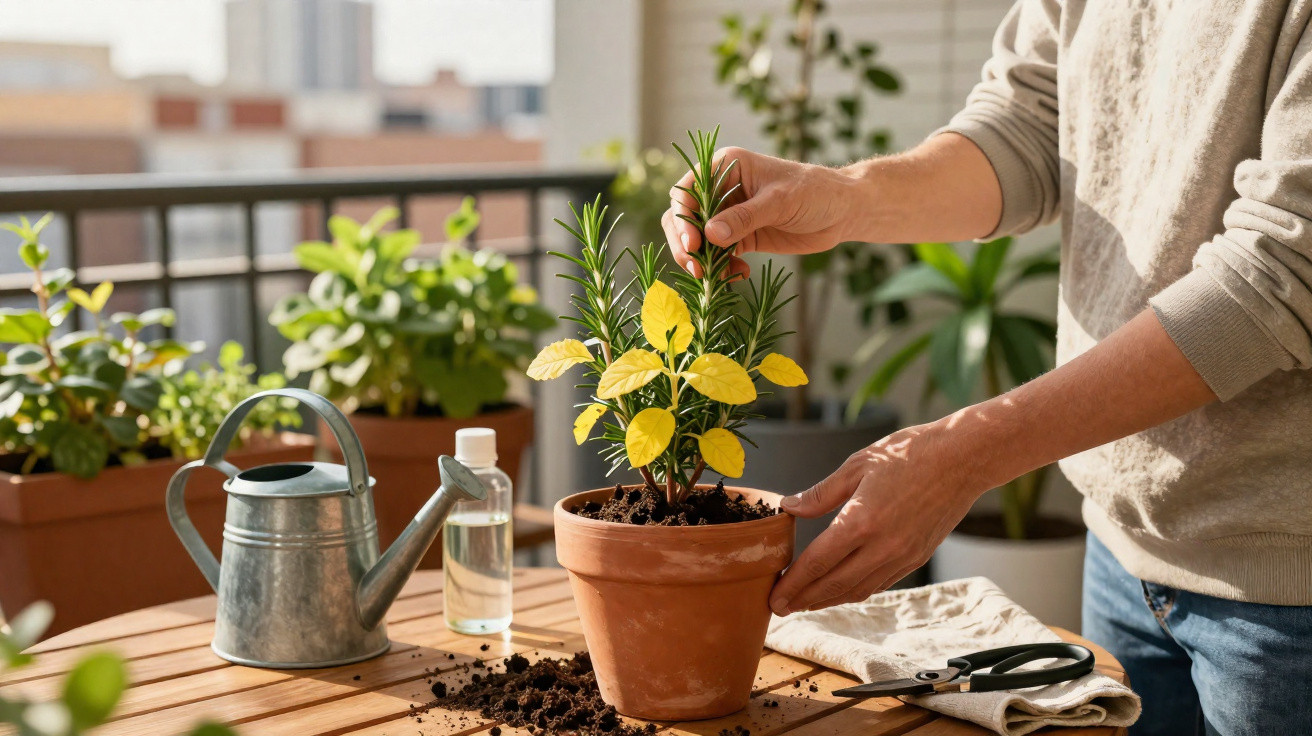
When you notice your rosemary leaves losing their rich green colour and turning yellowish or a bit grey, it is as if the plant is signalling: “hey, something isn’t quite right here!”. A shift in colour like this is a clear hint that the rosemary is not happy with its water, light, soil, or nutrient conditions. The good news is that, if you spot it early, you can make a few adjustments and help the plant bounce back much more easily.
Why do rosemary leaves start to lose their colour?
Rosemary is a tough herb, typical of Mediterranean areas with a drier climate, but it shows quickly when conditions are off. Faded foliage, dry tips, and a generally wilted look almost always mean the watering, sunlight, or soil is not quite right and needs prompt correction.
The most common culprit behind yellowing rosemary is overwatering. Because it is adapted to drier conditions, rosemary copes better with a few days without watering than it does with waterlogged soil. Saturated compost suffocates the roots, encourages fungal problems, and eventually leaves the top growth weak and washed-out.
Watch a video on the YouTube channel Spagnhol Plantas about how to save rosemary with dry or faded leaves through the correct management of watering and sunlight:
https://www.youtube.com/watch?v=pYq7M_eS1p0
What are the main causes of weakened rosemary?
A lack of direct sun quickly reduces rosemary’s strength. In low light, it tends to stretch, producing spindly stems and paler leaves. Indoors this is especially common when the pot is positioned far from a window.
Soil choice matters as well: a heavy or compact growing medium holds too much water and makes waterlogging worse, particularly in pots without drainage holes. When rosemary stays in the same container for years, the compost can become “tired” and depleted, leaving the plant short on nutrients and more vulnerable to pests and diseases. With older rosemary plants, this can also noticeably reduce the leaf fragrance and the production of essential oils.
How to recover and care for yellow rosemary day to day?
To understand how to revive rosemary, start by getting watering right: do not water simply out of routine. A useful method is to test moisture with your finger a few centimetres down into the compost; if it still feels damp, wait. If it is dry at that depth, then it is time to water.
It also makes a big difference to provide more sunlight and improve pot drainage. Repotting into a container with drainage holes, adding a layer of small stones at the bottom, and using a mix of soil, coarse sand, and well-rotted organic matter helps prevent sogginess and gives roots more air. In very rainy areas, it can even be worth placing the rosemary somewhere sheltered from direct rain and watering by hand only when the growing medium has dried out.
- Water only when the growing medium is dry at a good depth, rather than sticking to a fixed schedule.
- Put rosemary where it receives 6 to 8 hours of direct sun or very bright light.
- Use pots with drainage holes and a drainage layer so water does not sit at the bottom.
- Replace part of the compost periodically to avoid poor, compacted soil.
- Prune dry or weak stems to encourage new shoots and keep the plant bushier.
What signs show that rosemary is recovering?
After you make changes, rosemary needs some time to respond, but a few signs tend to appear fairly quickly. Fresh shoots at the ends of stems, with a stronger green colour, indicate that sap flow is improving, even if older leaves remain a bit dull.
Another encouraging sign is firmer stems and the return of a strong scent when you rub the leaves between your fingers. Carefully trimming back dry branches helps the plant direct energy into healthy growth, and once conditions are stable, a light feed suitable for herbs can provide the final boost to keep rosemary green, full, and fragrant for longer. If it starts producing very aromatic new growth and bluish or purplish flowers at certain times of year, that is a sign it is genuinely healthy and well adapted to its spot.




Comments
No comments yet. Be the first to comment!
Leave a Comment