
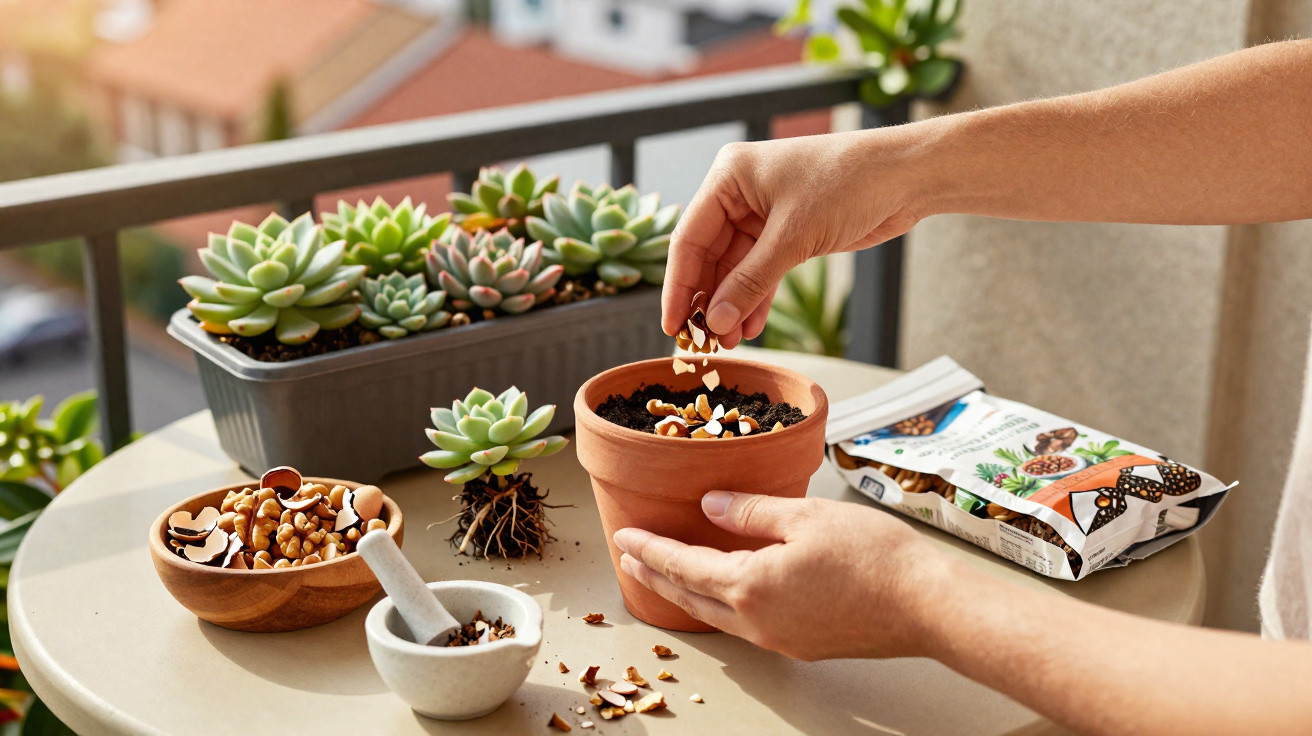
Many amateur gardeners are surprised: one type of kitchen waste prevents Sedum and other succulents from drowning in water in pots and beds.
Anyone who grows stonecrop, biting stonecrop or other Sedum varieties may know the issue: these plants are considered tough, yet they suddenly collapse, turn yellow or rot. Fertiliser is rarely to blame; the cause is nearly always the soil – specifically, the very bottom of the planting hole. That is where it is decided whether water can drain away or whether a hidden puddle forms.
Why Sedum often dies despite being so resilient
Sedum has a reputation for being easy-going: it copes with heat, cold, poor soil and little attention. It sounds like the ideal plant for anyone who prefers low-maintenance gardening. Even so, many gardeners struggle with it in practice – and are puzzled because they “haven't actually watered it that much”.
The problem is that Sedum cannot tolerate waterlogging. Its fleshy roots need access to air. When water collects in the lower part of a pot or planting hole, the roots gradually begin to rot. The soil may look dry at the surface while water remains below – a classic gardening trap.
“What matters is not how often you water, but whether the water can drain away quickly enough.”
Especially in pots and window boxes, the growing medium compacts a little more with every watering. Its pores close, the soil settles lower down and creates a kind of dense layer at the base of the container. Once that happens, even expensive succulent composts are only of limited help.
Clay pebbles or gravel are the usual choice
The standard advice from a garden centre is to put broken clay pots, expanded clay or gravel in the base of a container, then add soil on top. This works, but it has drawbacks:
- Bags of expanded clay are bulky and awkward to carry
- Gravel is heavy, particularly if you do not have a car
- The material costs money, despite ending up out of sight inside the pot
- For small urban balconies, transporting it alone can be off-putting
As a result, many people skip the drainage layer altogether, fill the whole pot with soil and then wonder why the plant begins to weaken after one or two rainy spells.
The unexpected solution: nut and eggshells from the kitchen
This is where an overlooked form of kitchen waste comes in. Environmental bodies such as the French ADEME have long encouraged people to use organic waste directly in the garden. For Sedum, one particular category is especially useful: hard shells.
These include, for example:
- Walnut shells
- Hazelnut shells
- Almond shells
- Shells from unsalted pistachios
- Crushed cherry or plum stones
- Coarse pieces of eggshell
This material can be used to create a surprisingly effective drainage layer at the bottom of the planting hole – entirely free of charge.
How to make a drainage layer from shells
Step 1: Collect and prepare the shells
Preparation is quick. In practice, proceed as follows:
- Collect shells gradually in the kitchen and allow them to dry thoroughly.
- Use only unsalted shells so that no salt enters the growing medium.
- Put the shells into an old fabric bag or a sturdy freezer bag.
- Give them several firm blows with a hammer until they break into coarse pieces.
Important: do not crush the shells into powder. The aim is to create fragments that mechanically form gaps. For eggshells, pieces measuring around one to two centimetres work well. Their natural curve creates small air spaces.
Step 2: Create the layer in a pot or bed
Then install the layer as follows:
- Spread a layer of shells around three to five centimetres deep across the bottom of the planting hole or pot.
- Cover it with a thin layer of sandy soil so the roots do not sit directly on the sharp-edged pieces.
- Only then plant the Sedum and fill the container with free-draining growing medium.
This straightforward step noticeably changes water management in the lower area – and does so for a surprisingly long time.
Why shells loosen soil so effectively
The reason lies in their structure. The hard shell fragments create larger voids, known as macropores. Air can circulate through these spaces, while excess water has unobstructed routes downwards. The soil above cannot become as compacted through watering because the shells act as supporting material.
“Shells create air pockets and drainage routes – exactly what Sedum roots need.”
While expanded clay is industrially manufactured, nut and eggshells offer a similar function as recycled material from your own kitchen. They decompose extremely slowly. Their drainage effect remains largely intact for two to three years. Over that period, the shells gradually break down and release a little organic matter without drastically changing the soil.
Ideal for window boxes and urban gardens
This method is particularly useful on balconies. Anyone without a cellar, a car or much storage space may think twice about whether bagged materials such as gravel or expanded clay are really necessary. Shells, by contrast, arise naturally in the kitchen, weigh very little and cost nothing.
A typical example is a tenant planting Sedum in containers on a south-facing balcony. Rather than carrying heavy bags of gravel up from the garden centre, she saves nut and eggshells over winter, crushes them in five minutes and uses them to form the drainage layer – job done. The containers remain noticeably lighter, which also benefits the structure and balcony railings.
Is expanded clay still necessary for Sedum?
Expanded clay and gravel remain useful materials. They can be worthwhile for very large containers or plants that will remain in place for years without being moved. For many Sedum pots and smaller beds, however, the shell method is entirely sufficient if three simple rules are followed:
- Use only unsalted shells
- Crush the shells coarsely rather than grinding them
- Always add a very sandy, loose layer of growing medium above them
The point is not to feed the plant. The aim is to establish a stable base through which water can drain downwards instead of collecting around the roots.
When the layer should be renewed
Over the years, the shells become more fragile and break into smaller particles. Their drainage effect then declines. At the latest, when Sedum is replanted or the pot is planted up again, it is worth checking the base: if the pieces are barely recognisable, add a fresh layer.
For beds with carpets of Sedum, a regular approach is suitable: whenever an area is replanted or rejuvenated, work another three to five centimetres of shell material into the base. This keeps the site permanently free-draining.
What else Sedum likes – and what it does not
Anyone wanting to keep stonecrops healthy in the long term should consider a few points in addition to drainage:
- Position: full sun to light partial shade
- Soil: relatively poor, preferably sandy or gravelly
- Water: water less often but thoroughly, then allow the soil to dry again
- Fertiliser: use very sparingly, as too many nutrients produce soft, unstable shoots
Heavy, clay-rich garden soils are particularly challenging. In these conditions, a combination of sand, coarse material such as shells and a slightly raised bed level is often the only solution, allowing rainwater to run off more quickly.
Risks and limits of the kitchen-waste trick
As clever as using shells may be, a few points require attention. Salty leftovers, such as shells from salted pistachios, have no place in plant containers. They can damage the roots. Mouldy shells are also better added to the compost rather than placed directly in a pot.
If you use very large quantities of eggshells, avoid concentrating them in the top layer of soil. In high amounts, they can slightly alter the pH value over the long term. In a drainage layer at the bottom, however, normal household quantities are hardly significant.
Why it is worth looking in the food-waste bin
The move towards sustainable gardening has brought tricks like this into sharper focus. Rather than buying materials transported across the country, you use what is already available. Nut shells and eggshells are among the most durable parts of kitchen waste – making them ideal for creating structure in the soil.
Anyone who has seen how well Sedum in a pot with shell drainage survives rainy summers will soon make the technique routine. The logic is simple: air and drainage below, a resilient succulent above – and the plant will even forgive the occasional watering mistake.
Comments
No comments yet. Be the first to comment!
Leave a Comment