
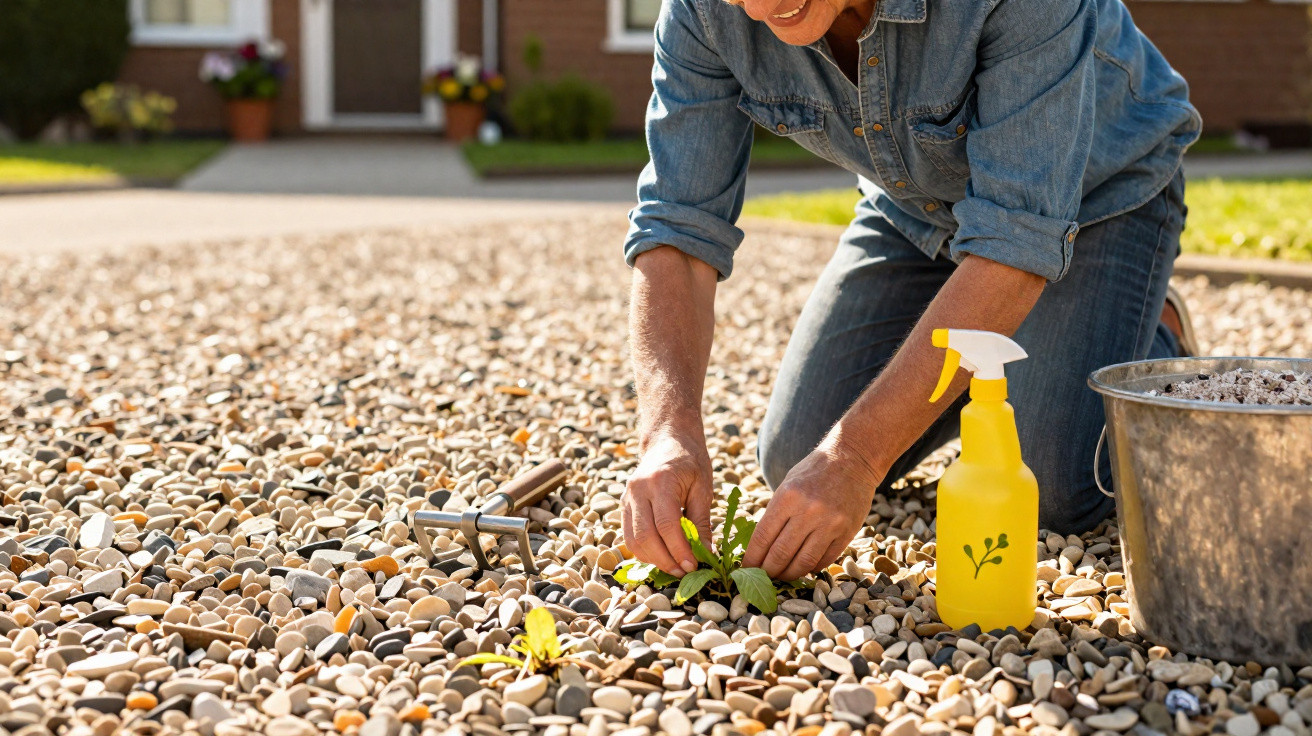
Many homeowners know the routine: in April, the gravel path still looks tidy; by June, they are spending hours kneeling among the stones, pulling out shoots that return two weeks later. At the same time, local authorities are tightening their rules on water use, chemical sprays are increasingly under scrutiny, and enthusiasm for gardening is falling rapidly. Three relatively straightforward natural measures can make this repetitive cycle far more manageable.
Why a gravel path becomes overgrown so quickly
Gravel has a neat, contemporary appearance, but it comes with one drawback: it does not seal the ground completely. Dust, leaves and tiny pieces of plant matter gradually collect between the stones. This creates a thin layer of nutrient-rich debris where seeds can establish themselves easily.
Wind, birds and even a neighbouring meadow continually bring in fresh seed. If the gravel layer is too shallow or consists of very rounded stones, considerably more light also reaches the soil. That is exactly what wild plants thrive on, and they soon take hold.
As temperatures rise, growth speeds up. Hot ground followed by brief, heavy summer downpours creates almost perfect conditions. Plant roots bind the substrate together, retain moisture and can partly form a mat-like layer. This not only looks untidy, but may also become slippery when wet.
Many people then reach for chemical weed killers. However, these often contain active ingredients that can find their way into groundwater and affect beneficial insects too. Especially on private property, this can be avoided by using three deliberately selected mechanical and thermal methods.
“Anyone who improves their gravel path before the heat arrives will save hours of work in high summer – and can manage without poison or constant watering.”
First step: the right base with mineral mulch
The most important factor is the construction of the driveway. A properly prepared base makes it difficult for weeds to gain a foothold in the first place.
Geotextile and sufficient gravel depth
Before summer, it is worth carrying out a thorough refurbishment, at least in the areas where weeds repeatedly emerge. This involves:
- Removing existing plants and their roots as thoroughly as possible
- Laying a water-permeable, light-blocking fabric (geotextile)
- Adding a layer of crushed gravel with a grain size of around 6–14 mm
- Compacting the gravel layer to a depth of roughly 5–7 cm
Crushed gravel interlocks more effectively than rounded pebbles. As a result, there is less movement, the surface remains stable for longer, and the stones do not shift as easily. Together with the fabric, it allows far less light to reach the soil, making germination harder for seeds.
Edging around the area is equally important. Defined borders, such as lawn edging stones or metal strips, stop roots from neighbouring grass growing beneath the gravel and reappearing within it.
Clean regularly to prevent a layer of soil forming
Even the best base offers limited protection if organic matter gradually builds up on top again. A simple maintenance routine is therefore essential:
- Remove leaves, faded flowers and twigs from the gravel once or twice a month
- Clear fine dust and debris using a stiff outdoor broom or leaf blower
- Check for puddles and compacted patches, topping up the gravel where necessary
This prevents another thin, fertile layer from developing. The less “replacement soil” there is on the surface, the fewer opportunities there are for new growth.
Second step: brush rather than bend
No system can keep out every single plant entirely. The occasional seedling will always appear, and that is where the second step comes in: regular brushing.
Use a wire brush or specialist broom
Special brushes for gravel paths are available with wire bristles or very stiff plastic bristles, often on long handles. They allow you to work while standing, reducing strain on your back and knees. Short, firm strokes dislodge young seedlings together with their roots before they become properly established.
The best time to do this is when the gravel is slightly damp, such as early in the morning when there is dew or after very light watering the previous evening. Roots then release from the substrate more easily.
For many driveways, a schedule of roughly once every two weeks is sufficient. If you notice particularly heavy germination after intense thunderstorms, brush a little more often during that period.
“The earlier a young plant is removed, the less effort it takes – and the less often you need to reach for the brush at all.”
Always clear away the plant debris
One point that is often underestimated is the need to collect the brushed-off material promptly. If it is left in place, it may dry out, but it then becomes organic matter again, providing somewhere for the next seeds to land. An outdoor broom or leaf rake is enough to gather it roughly together before disposing of it with garden waste.
Third step: hot water for persistent clumps
Despite all these measures, particularly resilient species can sometimes persist. Deep-rooted dandelions, couch grass and broadleaf plantain are difficult to remove fully by hand. This is where the third step comes into play: boiling water.
How thermal treatment works
Boiling water destroys a plant’s cell structure within seconds. Annual species with fine roots, such as purslane or chickweed, are especially sensitive. Stronger roots can also be damaged if the treatment is repeated.
The method is straightforward:
- Bring water to the boil in a saucepan or kettle
- Carefully pour it into a watering can or saucepan with a spout
- Slowly pour it directly into the gravel at the base of the plant
- Take care not to hit neighbouring beds or lawns
For particularly persistent perennials, a second treatment may be needed after several days. During the main growing season, an interval of ten to fifteen days is generally enough to keep recurring problem areas under control.
Saving water despite using hot water
People living in areas with strict water restrictions can make deliberate double use of the boiling water: use it first for pasta, potatoes or tea, then use it as a “weed stopper” on the driveway instead of simply tipping it down the drain. The additional amount of water is minimal, while the effect is clear.
How to combine all three measures effectively
The strongest results come from timing the three steps well. Ideally, the routine works as follows:
| Phase | Measure | Aim |
|---|---|---|
| Spring | Check the base and improve the fabric and gravel layer | Greatly worsen germination conditions |
| Late spring | Establish regular brushing | Remove young plants early |
| Summer | Apply boiling water to problem areas | Contain persistent clumps |
Anyone who maintains this routine for a few months will often notice a clear reduction in growth by the second year. The surface stays clean for longer, and the time required falls noticeably.
What else helps in heat and water shortages
Where watering is restricted, it is worthwhile looking at the surrounding areas too. Adjacent surfaces also affect how much maintenance a gravel path requires.
A closely mown, thirsty lawn dries out quickly and suffers during watering bans. Converting it into a drought-tolerant herb lawn or a mown wildflower meadow saves water while also reducing the pressure from runners growing into the gravel.
Steel or concrete lawn edging prevents grasses and ground-cover plants from spreading beneath the driveway. On slopes, small channels or rows of paving can help stop soil being washed in during heavy rain.
Risks, limitations and alternatives
As effective as these three measures can be, one point remains essential for children and pets: keep a safe distance when handling boiling water. Never pour it near playing children or animals, and do not leave hot containers unattended.
On very old driveways with a softened, root-filled base, brushing and geotextile will eventually reach their limits. In such cases, it may make sense to rebuild sections completely, for example with permeable paving, or to plant the area permanently while retaining only a firm driving strip.
Anyone planning new gravel areas should consider early on whether the entire courtyard driveway really needs to be gravelled. A clearly defined route for vehicles is often enough, while the rest can be designed with robust perennials, ground cover or mulch. Every square metre less of gravel also means less weed control.
With sound planning and preparation, a gravel driveway can remain comparatively low-maintenance despite summer heat and water restrictions. Three consistent actions – a stable base, brushing as a routine and hot water for problem areas – can replace the constant use of weed killer and make the notorious summer “weed chore” much more bearable.



Comments
No comments yet. Be the first to comment!
Leave a Comment