
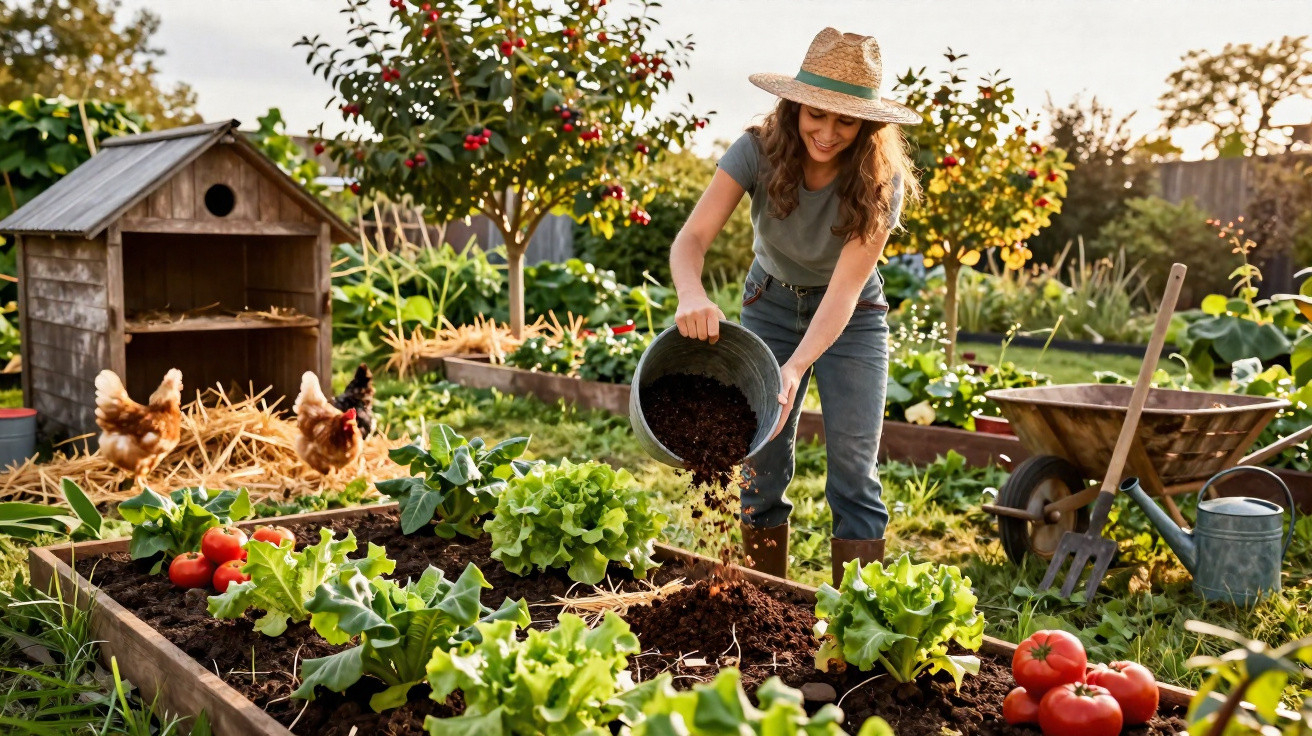
Many amateur gardeners buy expensive fertiliser, yet an overlooked treasure in their own chicken coop can give beds and trees a powerful boost.
Anyone keeping a few chickens scratching around in the back garden gets more than fresh eggs. The coop produces a daily by-product that can be almost as valuable in the vegetable patch and around fruit trees as a bag of professional fertiliser. Unfortunately, most people put it in the garden-waste bin, effectively throwing money away. Prepared properly, this material becomes “black gold” that breathes new life into tired soil.
What lies unnoticed in the chicken coop is pure fertiliser gold
The mix beneath the perches: far more than dirt
The real treasure is found in the place you may sweep out with frustration during cleaning: beneath the perches. The bedding collects a potent blend of:
- straw or wood shavings
- a few feathers
- and, above all, chicken droppings
This very mixture is packed with nitrogen, phosphorus and potassium - the nutrients plants urgently need for growth, flowering and fruit production. Many gardeners simply spread the soiled bedding somewhere in a back corner of the garden. A better approach is to collect it carefully and use it deliberately as the basis for high-quality compost.
“Bedding from the chicken coop is not waste, but a raw material for one of the most powerful natural fertilisers available in a home garden.”
Why fresh chicken manure can literally scorch plants
Although this nutrient-rich mix is highly effective, it is also hazardous in its raw state. Fresh chicken droppings are known as a “hot” fertiliser because they contain extremely high levels of readily available nitrogen. Applying them directly to beds or young plants can lead to the following:
- roots are burnt
- leaves develop brown edges
- plants stop growing or die altogether
For this reason, fresh bedding should never go straight onto a vegetable bed. Only after it has decomposed properly does it become a mild, plant-friendly source of nutrients.
Six months of patience: turning chicken manure into fine compost
Slow decomposition takes the “explosive power” out of it
The key is patience. Chicken bedding needs to rest and compost for at least six months. There are two options:
- add it to an ordinary compost heap along with other garden material
- or create a separate manure heap
Temperatures rise considerably inside the heap, which has several benefits:
- germs and pathogens are largely destroyed
- weed seeds lose their ability to germinate
- the material becomes finer, while its smell and “harshness” fade
After several months, what remains is a dark, crumbly material with no unpleasant odour that breaks up easily between your fingers. That is when it is ready to use in the garden.
Moisture and air: good compost needs attention
To ensure the material transforms properly, the heap needs a little care. Two factors determine whether it succeeds or fails:
- Moisture: The material should feel like a well-squeezed sponge - neither dust-dry nor dripping wet.
- Oxygen: Turn it with a garden fork or mix it thoroughly roughly every three to four weeks.
If the heap becomes too dry, decomposition simply stops. If it is too wet, it begins to rot, the compost smells unpleasant and its quality declines. Regular loosening introduces air and speeds up the work of the microorganisms.
How to spread this “black gold” correctly around the garden
An ideal boost for hungry vegetable plants
Once it has matured, compost from the chicken coop can finally be added to the beds. The following crops particularly benefit from its nutrient boost:
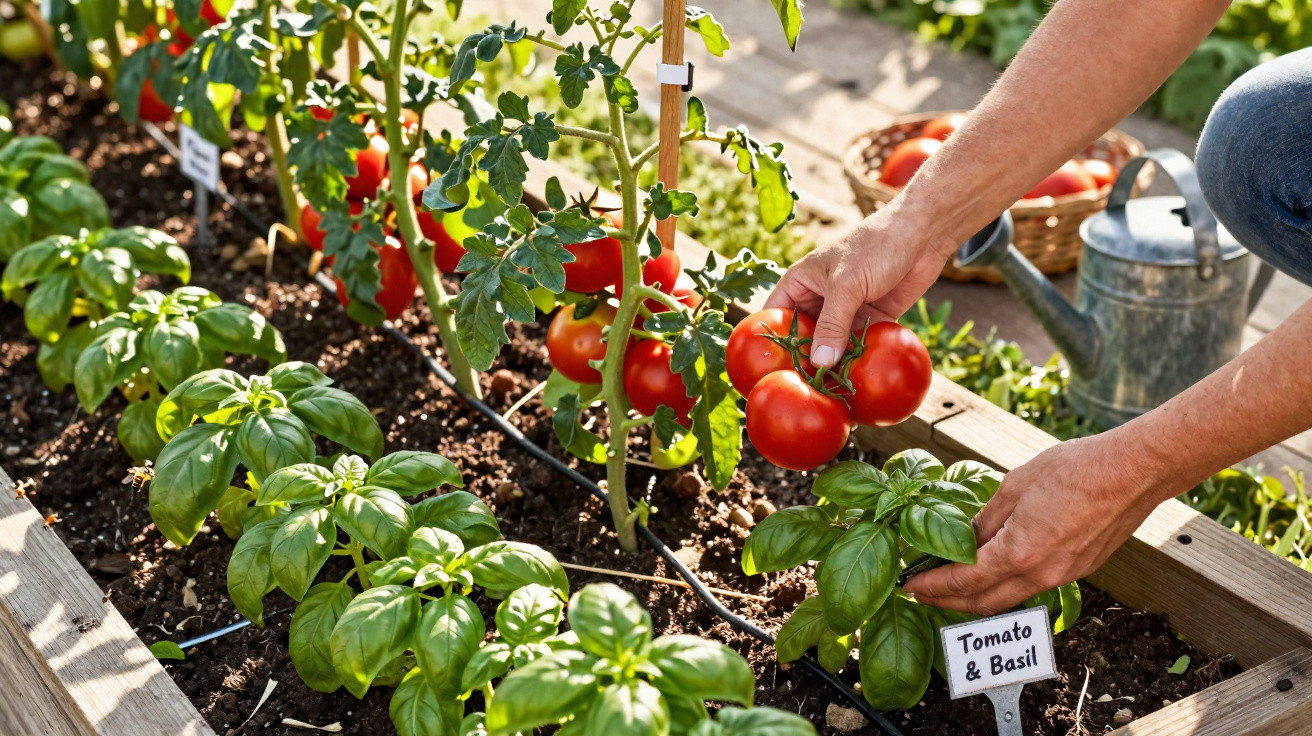
- tomatoes
- pumpkins and courgettes
- aubergines
- brassicas such as Savoy cabbage, red cabbage and broccoli
The method is straightforward, but should be followed precisely:
- spread a ring of compost 2 to 3 centimetres deep around each plant
- always leave a little space around the stem so that nothing touches it directly
- water thoroughly afterwards
“A thin ring of well-matured chicken compost acts like a slow-release nutrient source, providing a little more with every watering.”
Fruit trees and berry bushes love chicken fertiliser
This method is not limited to the vegetable garden. Fruit trees also benefit significantly. It is especially suitable for:
- apple and pear trees
- plums, damsons and cherries
- berry bushes such as blackcurrants, gooseberries and raspberries
Rather than placing the compost directly against the trunk, spread it in a wide ring beneath the outer edge of the canopy. This is where most of the fine roots are found. A layer 2 to 3 centimetres deep around the tree is entirely sufficient to strongly support flowering and fruit set.
Add a protective layer: why mulch is essential
Straw, hay and grass cuttings keep nutrients in the soil
Leaving compost exposed wastes some of its potential. Sun, wind and heavy rain can remove nutrients or dry out the soil. A mulch layer prevents this. Suitable materials include:
- clean straw
- hay with few seeds
- slightly dried grass cuttings
The layer can easily be several centimetres thick. It acts like a protective cover for the soil: moisture is retained for longer, the ground heats up less, and rain cannot simply wash away valuable components.
How tiny organisms turn compost into living soil
Over the following weeks, a small ecosystem develops beneath the mulch layer. Earthworms and countless insects move into the area where compost and mulch meet. Something important happens there:
- worms draw material into deeper layers and create fine tunnels
- these tunnels loosen the soil and improve its air and water balance
- organic matter is converted into valuable humus
The result is dark, loose soil that roots can easily penetrate. Plants can access water and nutrients more readily, roots can grow deeper, and plants generally cope more robustly with dry spells.
Why keeping chickens pays off twice for self-sufficient gardeners
From “waste” to a closed cycle in your own garden
Anyone who keeps chickens knows how much bedding accumulates. Managed correctly, this issue becomes a resource. Instead of carrying home costly bags of shop-bought fertiliser, you can establish a closed nutrient cycle in your own garden.
| Starting point | Result in the garden |
|---|---|
| Bedding containing chicken droppings | highly nutrient-rich compost |
| Compost ring around tomatoes and fruit trees | vigorous growth, improved harvest |
| Mulch layer of straw or grass | more stable soil moisture, less watering |
Anyone maintaining this cycle for a few years will usually notice clear changes: soils become looser, weed pressure decreases, plants look more vigorous, and problem plants prone to disease become more resilient.
Practical advice, risks and useful combinations
When caution is needed
As useful as this material is, a few rules will prevent problems:
- Never apply fresh chicken droppings directly to vegetables.
- Allow at least six months of composting time, preferably nine months.
- Do not use bedding contaminated with medicines or strong disinfectants.
- In very sandy soils, mix in leaf mould or green-waste compost as well so that the effect lasts longer.
How to combine chicken compost effectively
Those wishing to go a step further can combine coop compost with other materials. Coffee grounds, for example, add structure and trace elements, while rock dust slightly buffers the pH level and supplies minerals. In vegetable beds, a mixture of chicken compost, a little mature green-waste compost and a mulch layer works particularly well.
For smaller urban gardens or raised beds, a thin layer in spring and a second application in late summer is often enough. Anyone working this way consistently year after year will quietly turn their chicken coop into a small private fertiliser factory - entirely without chemicals, but with noticeably stronger growth and more abundant harvests.
Comments
No comments yet. Be the first to comment!
Leave a Comment