
When the ground begins to warm after winter, snakes also emerge from hibernation. Adders and other species then look for sheltered, warm hiding places – often right in our front gardens. Certain highly popular ornamental plants create exactly the right conditions, without many amateur gardeners realising it.
Why snakes move into gardens as early as March
Snakes are ectothermic animals, meaning they rely on their surroundings to regulate body temperature. Once daytime temperatures reach around 12 to 15 degrees, they leave their winter shelter.
“From around mid-March, the typical home garden becomes the perfect sunbathing spot and refuge for snakes in many regions.”
After hibernation, these animals need two things: warmth and cover. They need to raise their body temperature without becoming easy prey for birds of prey or hedgehogs. Particular combinations of plants around the house provide precisely this combination of “warmth and shelter”.
The key factor is less the snake species than the garden’s structure: thick layers of leaves, tightly growing shrubs, stone walls and banks in sunny positions. Three plant groups are especially notable – and one of them now appears in almost every residential area.
Autumn grasses and XXL ornamental shrubs: ideal shelter in the front garden
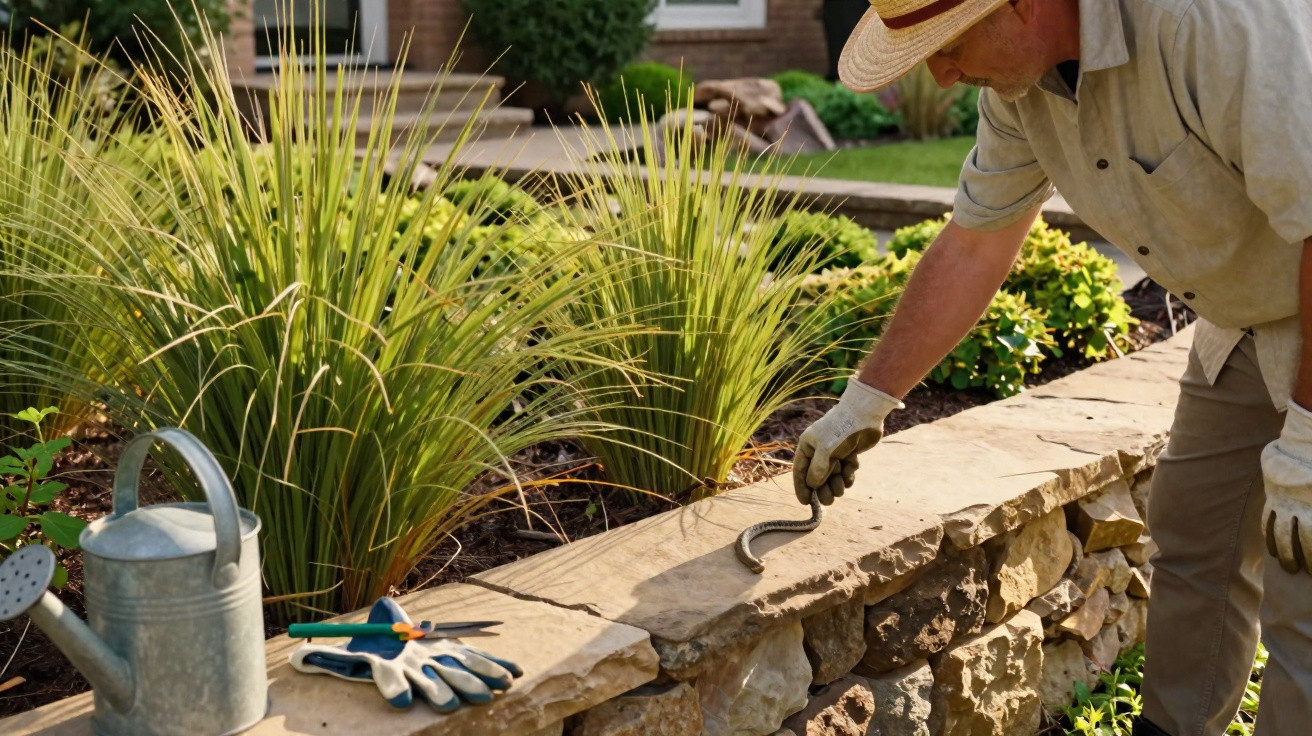
Large clump-forming ornamental grasses, such as the familiar pampas grass variety often planted as a striking feature in front gardens, may be visually impressive, but they also provide excellent snake hideaways. These grasses develop dense, wide-spreading clumps with sharp-edged leaves.
The compact base of the plant acts like a small tent: plenty of foliage above and a protected cavity beneath. Heat builds up there, the soil stays pleasantly warm, and predators can barely get in.
- Dense clumps leave very little light at ground level
- Heat accumulates around the plant base
- People and animals have little visibility into them
- There is ample room for hiding or hunting
Anyone who has placed such large grasses beside a patio, house entrance or seating area may unintentionally be creating potential snake shelters – especially if stones, walls or banks are nearby.
Ground cover as snake tunnels: attractive above, hollow below
The same principle applies to exceptionally dense ground-cover plants. Popular options including creeping juniper varieties, cotoneaster, and some creeping cranesbill and bugle species form closed carpets. From above, all that is visible is greenery, while a semi-dark cavity develops underneath.
Several factors come together here:
- The foliage creates a “roof” that shields the area from view.
- The ground stores the sun’s warmth and releases it gradually.
- Small passageways form between branches, roots and gaps in stonework.
Combined with a south-facing stone wall or a sunny slope, this produces a microclimate that acts like a natural radiator. It is ideal for snakes: they can lie in the sun at the edge of the planting and retreat into the dense greenery in an instant if threatened.
Rockeries, walls and patios: the perfect combination for reptiles
The situation becomes particularly problematic when several features meet: a sunny patio or house wall, a stone surface or dry-stone wall in front of it, and trailing or ground-cover plants. The stones absorb heat during the day and release it again in the evening.
“A typical problem scenario: a south-facing patio with ornamental grasses, ground cover and a stone wall – visually attractive, but a luxury resort for snakes.”
Leaves, dead plant material and soil collect between the stones. Cracks and cavities develop that can remain dry and warm for days. If these areas are rarely cleared, they can become stable shelters where snakes rest during the day.
What to do in the garden before mid-March
Anyone hoping to reduce the chance of snakes close to the house should focus on the garden structure, not on the animals themselves. Many of the measures fit easily into a spring garden tidy-up.
Clear space around the house
Before warmer weather begins, a thorough cut-back is worthwhile:
- Thin out the bases of shrubs and grasses so that there are 15 to 20 centimetres of clear space between the soil and the first foliage.
- Remove piles of leaves and branches near patios.
- Keep dense strips of ground cover directly beside the house narrower, or replace them with more open-growing perennials.
This removes cover immediately beside paths and seating areas without requiring you to completely “tidy up” the whole garden.
Make stone areas and joints less inviting
Rock gardens, walls and paved surfaces deserve particular attention:
- Where possible, seal gaps in dry-stone walls and retaining walls on south-facing sides.
- Clear accumulated leaves and dry plant material from joints and between stones.
- Replace thick bark mulch layers along patios with a pale mineral surface, such as chippings.
Pale stones do not heat up as intensely and offer far fewer hiding places than dark gravel or organic material.
How to guide animals rather than fight them
Snakes are strictly protected in many countries. Killing or catching them is generally prohibited and is also problematic from a conservation perspective, as snakes help regulate mouse and vole populations.
“The most sensible approach is to make the area around the house and patio unattractive – while deliberately allowing refuges elsewhere.”
Those who do not want to drive local wildlife away altogether can create a dedicated refuge at the far end of the plot. A conventional option is a “reptile pile” made from roughly stacked stones, dead wood and leaves, ideally more than 20 metres from living areas.
Such a habitat shelters not only snakes but also lizards, hedgehogs and insects. At the same time, areas immediately around the house and patio remain more open and easier to see into.
What to do if you encounter a snake in the garden
People who spot a snake in the garden often react instinctively with panic. That increases the risk for everyone involved. Most incidents occur because people or pets corner animals that have been startled.
- Keep your distance and slowly take a step back.
- Leave the snake a clear route to escape; do not block its path.
- Do not attempt to drive the animal away using sticks, spades or similar objects.
If an animal remains for a long time directly beside entrances or regularly used paths, regional services such as the fire service or conservation groups can usually advise on a sensible course of action. In many cases, it is enough to alter the structure of the spot later so that it no longer works as an attractive hiding place.
Practical tips for safe gardening during the warm season
Anyone who spends a lot of time gardening can substantially reduce the risk of a bite by following a few simple routines:
- Always wear sturdy, closed footwear when weeding in dense planting.
- Use gloves when reaching into leaf piles or beneath ground-cover plants.
- Before lifting stones or boards, briefly tap underneath them with a stick.
- Carry out garden work in very dense vegetation in daylight where possible, rather than at dusk.
Snakes do not want to attack people; they defend themselves only when they feel cornered or are suddenly startled. Keeping this in mind and giving the garden a little structural maintenance can reduce the risk considerably.
Which plant choices make sense in the long term
Anyone planning new planting or redesigning the garden can account for the issue from the outset. Individual shrubs with clear, easily visible trunk areas are far less appealing than continuous, dense carpets directly at ground level. Mixed planting of loosely growing perennials, moderately dense ornamental grasses and clearly defined open paths creates a pleasant garden appearance while also providing fewer refuges at critical points.
Many amateur gardeners report that, after making their patio area slightly less accommodating – with less ground cover, more open space and paler stones – they encounter snakes far less often without having to sacrifice a green look. This balance between a wildlife-friendly garden and safety around the home is worthwhile when temperatures start to rise from March onwards.


Comments
No comments yet. Be the first to comment!
Leave a Comment