
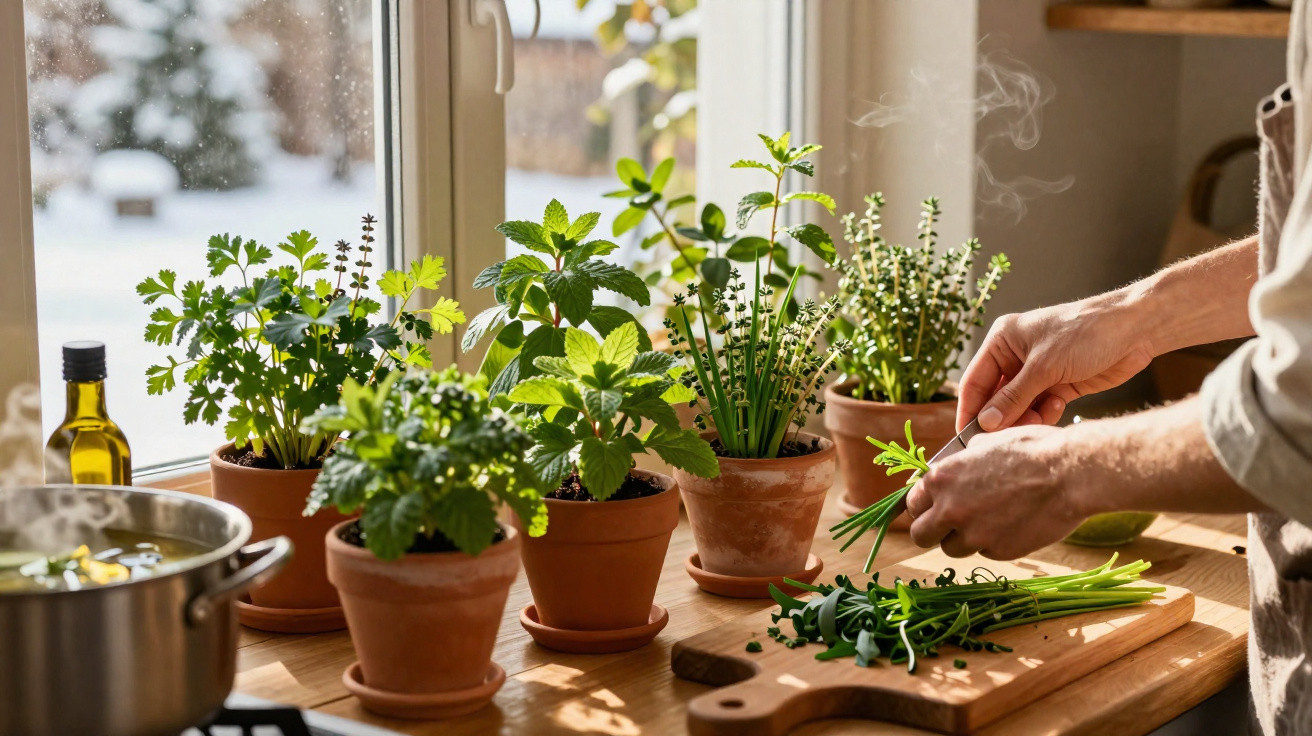
While most amateur gardeners are still leafing through catalogues and dreaming of tomatoes, peppers and courgettes, certain herbs are already producing fresh greenery in late winter. The secret is not complicated propagation on the windowsill, but a selection of hardy varieties that simply wait out winter before springing back into action with very little help.
Why now is the ideal time for long-lasting herbs
Late January and early February can make a garden appear to be deeply dormant: beds are wet, paths are muddy and there may be a few forlorn leek remnants. Many people wait until spring has properly arrived. However, this misses an opportunity. Choosing perennial and long-lived herbs now gives you a head start that pays off for years.
“Perennial herbs are like a savings account in the garden: establish them once, and they reliably credit your kitchen account with flavour every year.”
Rather than investing their energy in leaves and flowers, these plants store it in their root systems. As soon as days lengthen and temperatures climb slightly above freezing, they send up fresh growth – often at a time when supermarkets offer only costly imported produce.
The seven perennial herbs that cope with almost any winter
The good news is that there is no need for unusual specialist varieties. You probably already know most of these returning herbs from the kitchen, although their potential during winter is often underestimated.
1. Chives – the early riser in the bed
Chives are among the first plants to shed their winter covering. Even with patches of snow still on the ground, their slender green tubes begin pushing through the soil. A well-established clump can provide enough leaves in February and March for quark, scrambled eggs or baked potatoes.
Tip: Cut old, dried stems down close to ground level. This lets sunlight reach the centre of the plant more easily, warms the soil sooner and speeds up new growth.
2. Sorrel – bright acidity for tired winter cooking
Sorrel is easily overlooked, yet it is a genuinely long-lasting plant. Its young, tender leaves add lively sharpness to:
- Omelettes and scrambled eggs
- Sauces for fish or potatoes
- Delicate herb soups
The younger the leaves, the gentler their flavour. Quality is especially high in late winter, when the first new shoots emerge.
3. Parsley – the overlooked winter treasure
Many people regard parsley as a typical annual, but in a sheltered position, especially the curly variety can survive the winter. Once it has developed a strong root system, it produces new growth surprisingly early in the year.
One useful tip: do not grow parsley in the same spot every year, as it reacts sensitively to tired soil. If you find a well-rooted clump, look after it as though it were a treasure.
4. Mint – apparently gone, then back with vigour
Whether peppermint or Moroccan mint, the growth above ground often looks completely dead in winter. Below the surface, the opposite is happening: its runners are preparing for a fresh start. The first shoots frequently appear during mild spells in late winter.
A single freshly cut stem of mint in hot water is enough to bring the scent of summer into the kitchen. If you plant mint, it is best kept in a large container or planted in the bed with a root barrier – otherwise it is inclined to take over.
5. Thyme – a small shrub with impressive winter strength
Thyme often retains some of its foliage even in winter. The leaves may be smaller then, but they remain rich in essential oils. That is precisely why they are so well suited to braised dishes and roasted vegetables during the colder months.
When thyme grows in free-draining, relatively dry soil, it tolerates frost far better than it does in wet, heavy ground. Waterlogging is more dangerous to it than cold.
6. Oregano – the Mediterranean long-distance performer
Oregano, closely related to wild marjoram, is tougher than many people realise. In the UK, it will usually survive for several years with light winter protection. Its leaves can still be harvested in January if the winter is not too severe.
Dried oregano is a kitchen staple, but fresh hardy leaves have a noticeably finer aroma and work perfectly in bakes, tray-baked pizza and hearty stews.
7. Tarragon – a quiet starter with powerful flavour
Tarragon retreats completely below ground in autumn before growing again from its roots. As soon as the soil becomes a little warmer, it develops fresh shoots with its distinctive, lightly aniseed-like flavour.
It is ideal in mustard sauces, chicken dishes and refined herb butter. Anyone who loves tarragon should choose a hardy variety where possible and give it a bright, sheltered site away from wind.
How these herbs thrive without elaborate propagation
The strength of these varieties lies in their underground energy reserves. While annual herbs complete their whole life cycle in a single season, perennials build up stores in their roots, rhizomes or bulbs during autumn.
“The plant’s real ‘engine’ sits in the soil – the green parts are merely the visible tip of the system.”
As daylight increases, the plant switches from dormancy back to growth. For you, that means no seed trays, no lamps and no daily misting. A quick check around the garden, perhaps with a little leaf litter or dead stem material cleared away, is often all the work required in late winter.
Plant now for many years of aromatic harvests
If these seven herbs are not yet growing in your garden, you can still lay the foundations in late winter. The simplest option is to buy young potted plants from a garden centre once the ground is frost-free.
Points to consider:
- Position: Thyme, oregano, tarragon and chives prefer sun, while parsley and sorrel will also tolerate partial shade.
- Soil: It should be free-draining and enriched with a little compost. Avoid damp hollows, especially for thyme and oregano.
- Watering: Water thoroughly after planting, then be more restrained – excess water weakens the plants.
- Care: Cut back old growth in late winter and divide plants occasionally, particularly chives and mint, to rejuvenate them.
| Herb | Lifespan | First harvest of the year |
|---|---|---|
| Chives | Perennial | Often from February/March |
| Sorrel | Perennial | From early spring |
| Parsley | Biennial to perennial | During mild spells in spring |
| Mint | Perennial, spreads vigorously | From the first shoots in spring |
| Thyme | Perennial | Possible almost all year round |
| Oregano | Perennial | From spring |
| Tarragon | Perennial | Once the soil warms up |
How these herbs transform winter cooking
In late winter, root vegetables and cabbage often dominate the plate. Fresh herbs can make these rather substantial ingredients feel far lighter and more interesting.
A few practical examples:
- Potato soup with chives and parsley instead of relying only on nutmeg
- Roasted carrots and parsnips with thyme and oregano
- A warm lentil salad with strips of sorrel for a fresh acidic note
- Simple chicken thighs marinated with thyme, oregano and tarragon
- Hot mint tea as a warming evening ritual after a walk around the garden
“Even a handful of fresh herbs can turn a ‘leftovers dish’ into a deliberately cooked winter meal.”
Sustainable enjoyment: less plastic, less transport, more flavour
Growing these herbs saves not only work but resources too. Supermarket bunches are usually wrapped in plastic and often come from heated glasshouses or distant locations. All of that is avoided when you simply step outside and cut exactly what you need.
Perennial herbs rarely need fertiliser, almost never require pesticides and use considerably less water than many thirsty summer flowers. Placing them deliberately around the edge of a vegetable bed or beneath fruit trees creates small havens for insects and helps stabilise the garden’s microclimate.
Practical additions for beginners and experienced gardeners
For anyone just starting out, it is worth creating a small herb strip close to the house. The shorter the walk, the more often you will use it. A narrow bed alongside the patio, or a large container planted with mint, chives and parsley, makes reaching for fresh herbs far more likely.
More experienced gardeners can experiment with mixed planting: grow thyme and oregano among low-growing perennials, put parsley along the edge of a vegetable bed, and keep mint in its own container beside the seating area. This combines visual appeal with practical value.
Once you understand how these perennial herbs work, you begin to view the winter garden differently: not as a dead space, but as a resting system that is still at work. A brief look at clumps of chives producing fresh green shoots as early as February is often more motivating than any seed catalogue. And when parsley, thyme or sorrel reaches your plate that evening, you can feel very clearly how worthwhile this small but strategic planting decision has been.




Comments
No comments yet. Be the first to comment!
Leave a Comment