
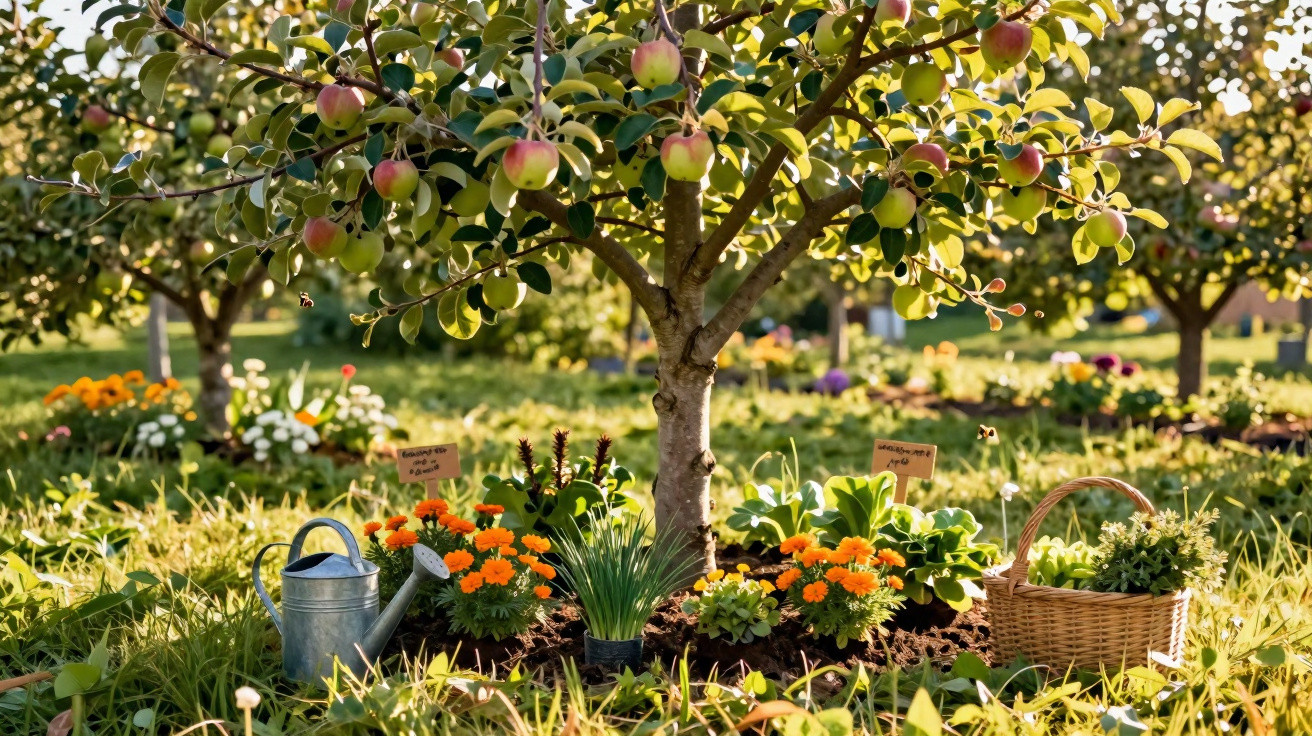
The ground beneath fruit trees is often left bare or ends up covered only with soil and dry leaves. Yet, with the right choices, you can turn that space into something that actively supports the orchard. Using a method known as companion planting, you combine species that help hold moisture in the soil, draw in pollinators, deter certain unwanted insects, and even improve soil fertility-creating better conditions for fruit trees to grow and crop well.
How do companion plants benefit fruit trees?
By selecting compatible plants, you can build a small, functioning ecosystem around each tree. Some act as living ground cover, limiting weed growth and reducing water loss through evaporation. Others attract bees and other beneficial insects, which are essential for pollination and fruit set.
Certain companions also enhance soil quality. White clover, for instance, naturally fixes nitrogen, while flowers and aromatic herbs can help reduce the presence of some pests, leaving the orchard more stable and balanced.
Which plants are recommended to grow under fruit trees?
Not every plant will compete heavily with a tree for nutrients. Some species coexist well in the same area and provide clear advantages to cultivation.
Common suggestions include low-growing ground covers, culinary herbs, and flowering plants that bring pollinators and beneficial insects into the garden.
- White clover to add nitrogen to the soil
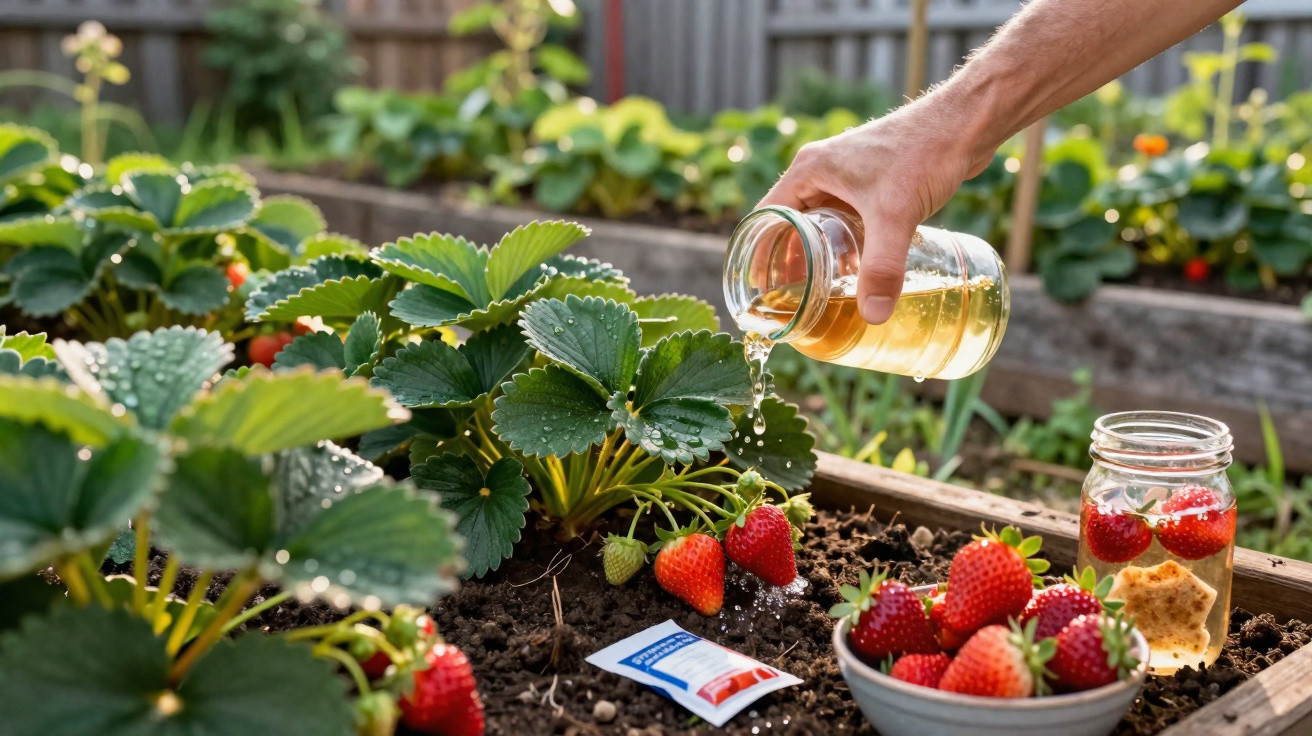
- Strawberries as living ground cover
- Chamomile to attract beneficial insects
- Chives to help deter certain insects
- Garlic chives for their strong scent
- Marigolds to support the control of some pests
- Daffodils to discourage rodents and deer in areas where they are a problem
What precautions should you take when planting under fruit trees?
Although companion planting has real benefits, it is best not to plant right up against the trunk. Keeping a small clear ring around the base improves airflow and lowers the risk of excess moisture building up close to the bark.
It is also important to choose plants with similar needs for water and light. Very vigorous species, or those with invasive roots, may compete for nutrients and can hinder the tree’s development over time.
- Leave a clear area around the trunk
- Use mulch between plants when needed
- Choose low-growing species
- Avoid invasive plants
- Prune periodically to keep growth under control
- Watch for competition for water during dry spells
Is companion planting worth using in the orchard?
Companion planting can make an orchard more productive and better balanced when species are chosen carefully. As well as making smarter use of space, the approach supports biodiversity, improves the soil, and creates conditions that better suit fruit tree growth.
With a little planning and straightforward upkeep, the area beneath your trees stops being wasted ground and starts contributing to a healthier garden and a more abundant harvest.

Comments
No comments yet. Be the first to comment!
Leave a Comment