
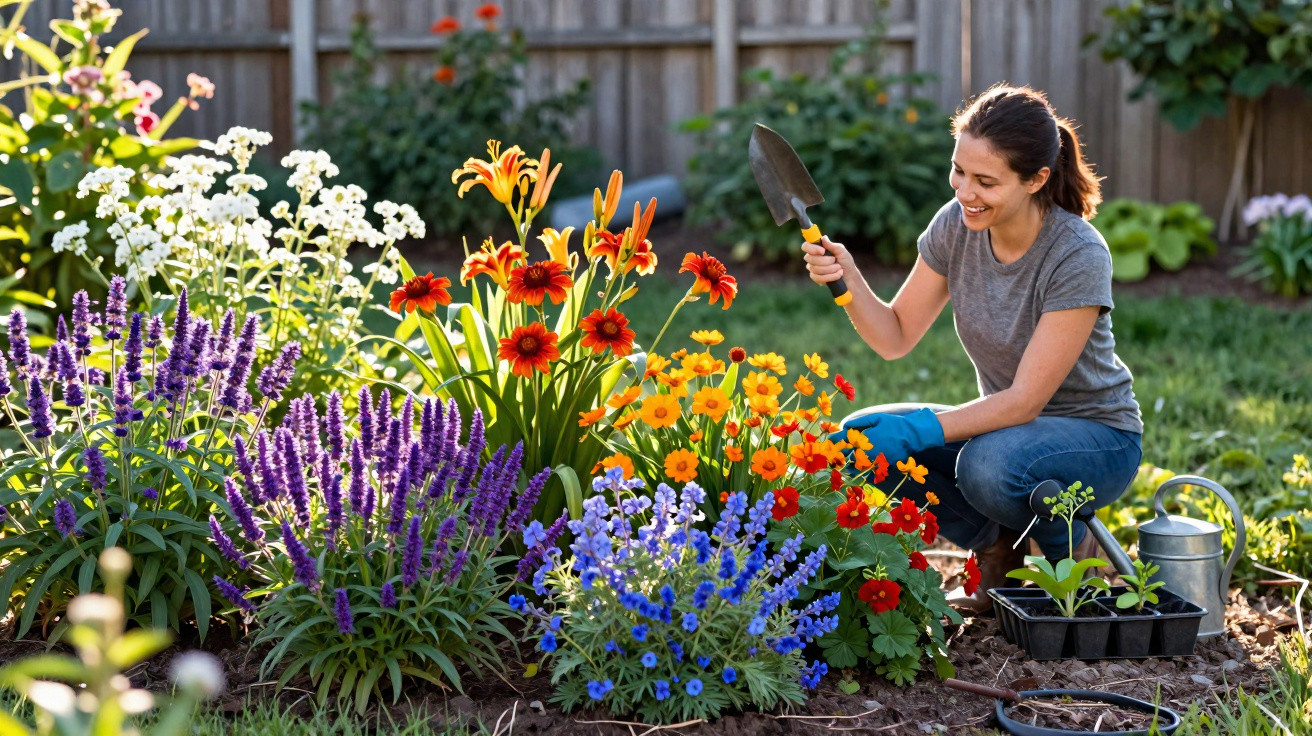
Many amateur gardeners will recognise the pattern: you plant perennials, water diligently, wait patiently - and yet the border still looks half-empty for years. The good news is that there are hardy, long-lived plants that get going at surprising speed, knit gaps together, and at the same time draw in bees and butterflies. This article focuses on those rapid starters.
Why fast-growing perennials are genuine problem-solvers
Perennials return year after year, so there’s no need to sow them from scratch each season. Over time they spread, their roots help hold the soil together, and they gradually outcompete many weeds. If you choose varieties that put on growth quickly, you can shave years off the process of “building” a full-looking bed.
"Fast-growing perennials turn an empty bed into a dense, lively display of flowers in a short time - and they’ll do it for many years to come."
A lot of these plants also provide generous nectar and pollen. That makes them an important food source for wild bees, butterflies and other beneficial insects. Step by step, you end up with a garden that looks good and also makes ecological sense.
Perennials often follow a three-year pattern: in year one they settle in and root well, in year two they noticeably bulk up, and by year three they look properly established and fill their allotted space. The species featured here shorten that timeline in a very noticeable way - especially when they’re planted in the right light conditions. “Full sun” means at least six hours of direct sunshine a day; “partial shade” is roughly half of that.
How to help your perennials take off quickly
Most “turbo” perennials have one key preference in common: they perform best in free-draining soil. Waterlogged ground slows them down - and can even cause them to fail altogether. That’s why it’s worth doing a quick soil check and a bit of prep before you plant.
- Remove weeds and old grass thoroughly
- Loosen the soil with a garden fork rather than heavily turning it over
- Work in compost to improve structure and nutrient levels
- Water the plants well - before planting and immediately after
- Keep the soil evenly moist for the first season; after that, they usually need far less attention
A reliable approach is to buy perennials as slightly larger container plants with a well-rooted rootball. They may cost a few pounds more than tiny pots, but they close gaps much faster. A mulch layer of bark chips, shredded prunings or straw helps the soil retain moisture for longer and suppresses germinating weeds.
10 perennials that fill beds at speed
1. Agastache – scented flower spikes for sun and bees
Agastache (often sold as anise hyssop) thrives in warm, sunny spots with relatively lean soil that drains and dries readily. In its first or second year it can already form impressive clumps with long flower spikes in purple, pink or orange.
The foliage is strongly aromatic, commonly reminiscent of aniseed or mint. Bees and bumblebees are drawn to the flowers in large numbers. Planting several together quickly creates a colourful, buzzing focal point that lasts well into autumn.
2. Catmint (Nepeta) – an easy blue cushion with no fuss
Catmint is one of the most straightforward perennials you can grow. It rapidly forms broad, loose mounds and becomes covered in countless blue-violet flowers. Give it sun, a well-drained soil and a trim after the first flush, and it will often respond with a second wave of bloom.
In borders it’s ideal as a “gap-filler” along path edges or in front of taller plants. If you have cats, you’ll already know the side-effect: some of them can’t resist sprawling on the fragrant cushion.
3. Tickseed (Coreopsis) – long-flowering in yellow and red
Coreopsis adds an airy feel to a planting scheme. Its fine, often delicate stems carry simple flowers throughout summer in yellow, red or bicoloured mixes. Many varieties fill out quickly into bushy plants and produce an impressive volume of blooms.
It prefers full sun, copes well with heat, and is happy in relatively poor soil. Regularly removing faded flowers keeps fresh buds coming right through to autumn.
4. Blanket flower (Gaillardia) – a red-orange burst of colour
Gaillardia brings instant warmth to a bed. Its intensely coloured flowers - typically red and yellow or orange and yellow - sit on sturdy stems that don’t grow too tall. It develops quickly while staying neat, rarely flops, and flowers for weeks on end.
It’s particularly suited to dry, sunny positions. Paired with ornamental grasses or silver-leaved plants, it creates a modern look with a lightly Mediterranean feel.
5. Beeblossom (Gaura lindheimeri) – a floating cloud of flowers
The delicate, butterfly-like flowers of Gaura seem to hover and dance in the breeze. Within a year it can grow into loosely arching clumps and it flowers from early summer well into autumn. It looks especially effective in groups or at the edge of gravel areas.
Soil must drain freely, and it’s best kept on the drier side through winter. In colder, exposed gardens, a protective mulch helps prevent damage from bare frost.
6. Red hot poker (Kniphofia) – exotic torches in the perennial border
Kniphofia (red hot poker) adds a touch of the exotic with upright flower spikes in yellow, orange or red. Its long, grass-like leaves soon build into strong clumps.
It does best in sun and in deep, free-draining soil. Combined with ornamental grasses or dark-leaved perennials, the flower spikes look particularly dramatic.
7. Cranesbill (hardy geranium) – the quick ground-cover option
Many hardy geranium varieties spread fast and reliably cover open soil. As a result, they suppress a large share of unwanted weeds while keeping the ground shaded and cooler.
The airy flowers - pink, blue or white - appear from late spring into summer. Some varieties also reward you with attractive autumn leaf colour.
8. Perennial salvia – weeks of violet flower spikes
Perennial salvia puts on strong growth even in its first year and produces dense, upright flower spikes. The characteristic violet and blue shades add depth to a border and make yellow or white neighbours stand out even more.
If you cut it back after the first flowering, it often delivers a second flush. Beyond sun and well-drained soil, it asks for very little and proves impressively tough.
9. Daylily – a low-maintenance flowering workhorse
Daylilies quickly form substantial clumps of long, strap-like leaves. Each individual bloom lasts just one day, but the plant carries so many buds that it reads as a long-flowering performer for weeks.
Colours range from cream through yellow and orange to deep reds and purples. It suits positions from sun to partial shade and even tolerates heavier soils, as long as water doesn’t sit around the roots.
10. Bee balm (Monarda) – bright colour and an insect magnet
Monarda spreads via short runners and can fill empty spaces in a bed fairly quickly. Its distinctive, shaggy-looking flowers in red, pink or violet sit on sturdy stems and are visited eagerly by bees and butterflies.
Avoid very dry sites; a fresh, lightly moist soil is ideal. Good airflow between plants helps reduce powdery mildew, which can sometimes affect Monarda.
Quick combinations for borders that look full
If you’d rather not spend ages planning, simple mixes in a sunny spot are an easy starting point. Here are three:
| Combination | Effect |
|---|---|
| Agastache, perennial salvia, catmint | Blue-violet tones, lots of insects, long flowering period |
| Tickseed, blanket flower, beeblossom | Warm colours, playful and light overall impression |
| Daylily, cranesbill, red hot poker | Strong structure, a border that looks “grown-up” quickly |
These combinations also work well in smaller gardens or front gardens. The key is a simple height arrangement: tall plants at the back, medium growers in the middle, and low species such as catmint or cranesbill along the edge.
Practical tips for less frustration and more flowers
When perennials disappoint, it’s often down to the wrong location rather than the plants themselves. Putting sun-lovers in shade, or planting thirsty species into bone-dry ground, costs you growth - and patience.
- Keep to recommended planting distances so plants can develop properly
- Remove weeds consistently in the first months until the perennials take over
- Avoid overfeeding - many species become soft and flop if given too much fertiliser
- After a few years, divide large clumps to keep plants vigorous
If you’re just getting started, it helps to jot down a few observations: where does the sun linger longest in summer, where does water collect, and which corner dries out quickly? Those notes make choosing the right turbo perennials much easier.
Once the first seasons are behind you, the effort pays off. Borders look fuller, maintenance drops, and during hot spells you’ll see just how resilient well-established perennials can be. At best, the garden hums and flutters all summer long - and the once-bare bed becomes your favourite spot.


Comments
No comments yet. Be the first to comment!
Leave a Comment