
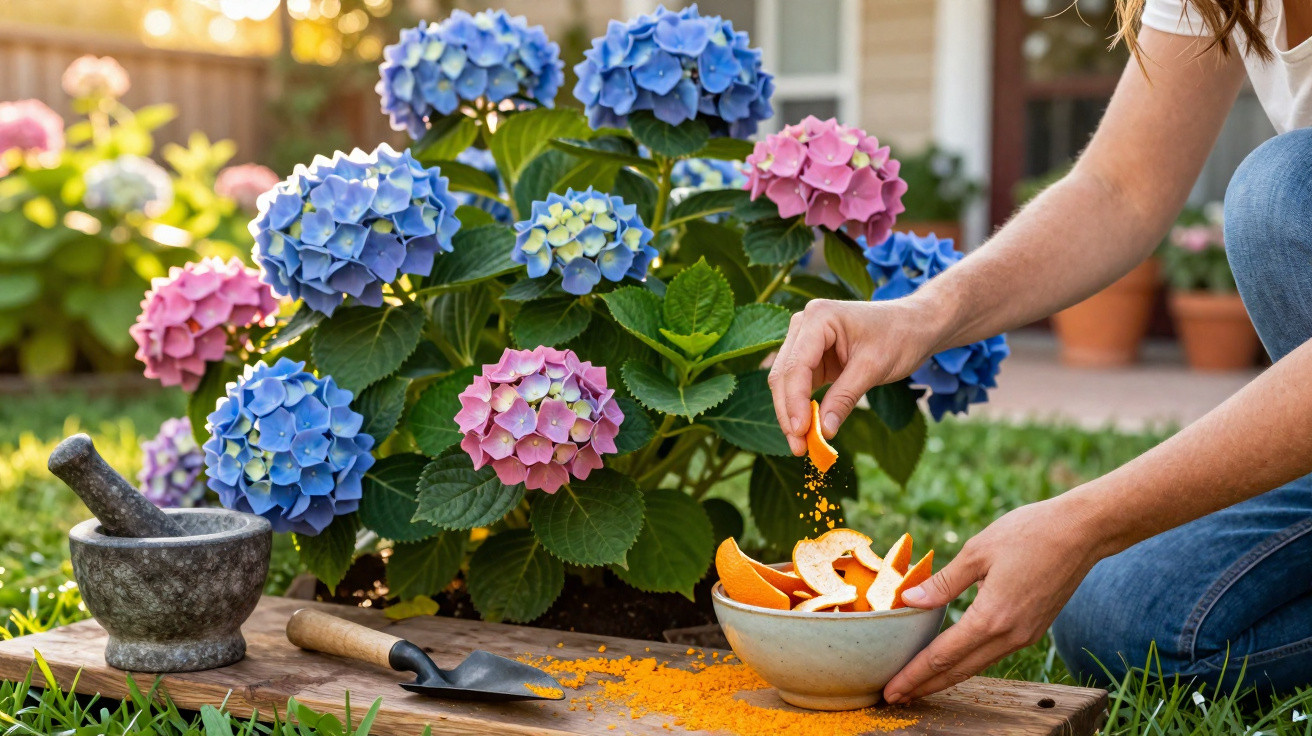
The answer often isn’t found at the garden centre at all - it’s sitting in your kitchen bin.
Anyone who adores hydrangeas will recognise the familiar disappointment: you buy pricey compost, try specialist feeds, the weather refuses to cooperate - and the shrubs still look weary. Yet a simple natural material, produced regularly in most homes, can noticeably perk up both soil and blooms. No chemicals, no extra spending - just a little know-how and a few straightforward steps.
Why many hydrangeas suddenly go limp
Hydrangeas are among the classic acid-loving (ericaceous) plants. They perform best in slightly acidic conditions, ideally with a pH of around 5 to 6.5. In many gardens the reading is much higher, either because the ground is naturally chalky or because frequent watering with limescale-heavy tap water gradually raises the pH.
You’ll usually spot the effects quickly:
- Leaves turn yellow while the veins often remain green (chlorosis)
- Flower heads stay small and look sparse
- The plant produces weak new growth and generally appears “tired”
- Feed only helps briefly - or not at all
The real issue is in the soil: when the pH climbs too far, hydrangeas can’t access several nutrients properly. In other words, they’re effectively starving while surrounded by food.
Anyone who gently acidifies the soil and enriches it organically helps hydrangeas far more effectively than by constantly buying new fertiliser products.
The underrated wonder material: orange peel
In most kitchens, orange peel goes straight into the bin or compost. For hydrangea fans, however, it’s a small treasure. Peels work as a natural, gentle supplementary feed for plants that prefer acidic soil - hydrangeas in particular.
So what do orange peels actually do?
- They provide small amounts of potassium, which supports sturdy shoots and plentiful flowers.
- They contain magnesium, which is essential for deep green foliage.
- They add a little calcium, helping to strengthen cell walls and plant tissue.
- Used regularly in modest quantities, they can slightly acidify the soil.
At the same time, the peels support soil life. Microorganisms break the material down and release nutrients gradually to the roots. For hydrangeas, this slow “long-term buffet” is ideal.
How to prepare orange peel properly for hydrangeas
A common mistake is simply placing fresh peel on top of the soil. That attracts small flies, can smell unpleasant, and decomposes very slowly. A quick preparation step makes all the difference.
Step 1: Dry the peels completely
Only fully dried peel is clean to use and avoids unwanted side effects. Do it like this:
- After peeling, roughly remove any remaining bits of fruit.
- Spread the peel out in a single layer on a baking tray or a tray.
- Leave it to dry for a few days in a warm, well-ventilated spot or dry it in the oven at a low temperature (fan setting, door slightly ajar, checking regularly).
- The peel is ready when it’s hard and properly brittle.
In this form it won’t go mouldy and it’s easy to process further.
Step 2: Chop or grind for better results
The finer the material, the faster the soil can break it down. Two simple options:
- Grind to a powder in a blender or an old coffee grinder
- Finely chop with a knife or crush with a pestle and mortar
Dried, finely processed orange peel becomes an easy-to-measure fertiliser booster that’s simple to dose.
Applying it directly around the hydrangea
When it comes to quantity, the rule is: small amounts, applied regularly. Too much throws the plant out of balance and can do more harm than good.
How much and how often?
For a medium-sized shrub, about a small handful of finely chopped peel (or powder) per application is enough. Aim for roughly once a month during the growing season - approximately from April to August.
How to apply it:
- Sprinkle the fine pieces or powder thinly around the root zone, but don’t press it right up against the stems.
- Cover lightly with soil or a little well-rotted compost.
- Water thoroughly afterwards so the compounds move into the soil.
Important: avoid a thick pile. Think of a thin, even layer around the shrub - it spreads the effect more gently and consistently.
Orange peel is only one piece - these companions matter just as much
Orange peel can improve conditions, but it doesn’t replace the basics of good care. For genuinely vigorous hydrangeas, it’s best used as part of a broader routine.
Soil care for tricky locations
In gardens with very chalky ground, a wider approach is especially worthwhile:
- work leaf mould compost into the top layer of soil regularly
- mulch with bark or pine needles to keep the soil slightly more acidic
- if your tap water is very hard, water with rainwater whenever possible
- test the pH every few years using a simple kit
Orange peel works best as a companion to compost and acidic mulch, not as a stand-alone fertiliser.
Other plants that benefit from orange peel
Hydrangeas aren’t the only ones to respond well to this kitchen recycling idea. Many other acid-loving plants will also appreciate small amounts.
| Plant | Position | Usage note |
|---|---|---|
| Rhododendron | Part shade, ericaceous bed | Work in only thinly; keep soil slightly moist |
| Blueberries | Sunny to part shade | Use only in containers or well-prepared ericaceous beds |
| Azaleas | Part shade | Especially grateful for small applications in pots |
| Skimmia, camellia | Sheltered, part-shaded spot | Dose sparingly; avoid disturbing the root area |
Risks, limits and sensible additions
As handy as orange peel is, the method has its limits. If you overdo it, you can put stress on both soil and plant.
What to watch out for:
- Choose organic fruit where possible to reduce pesticide residues.
- Don’t lay thick, damp layers of fresh peel on the soil surface.
- If you notice mould or unpleasant odours, remove the layer.
- Keep observing your plants: if leaves become very dark, leathery or curled, reduce feeding.
On very nutrient-poor soils, an additional balanced feed may still be sensible - for example a specialist hydrangea fertiliser or well-rotted garden compost. Orange peel contributes certain nutrients, but not all of them in sufficient amounts.
Practical, everyday tips for better results
If you use citrus fruit regularly, it’s easy to build a small supply for the gardening season. Once dried, the peels will keep for months in a jar or tin - as long as you store them somewhere dry and dark. That way, the natural booster is always ready when your hydrangeas need a lift.
There’s another plus: a lingering citrus scent near patios or balconies can deter ants and some other small crawlers a little. It’s not dramatic, but day to day it can be noticeable enough to avoid harsher products.
Gardeners who feed their hydrangeas over several years with orange peel, compost and mulch often see a gradual but clear change: stronger spring growth, richer green leaves, larger flower heads, and plants that cope better with dry spells. This is exactly why such an unremarkable kitchen leftover has become so appealing to many home gardeners.

Comments
No comments yet. Be the first to comment!
Leave a Comment