
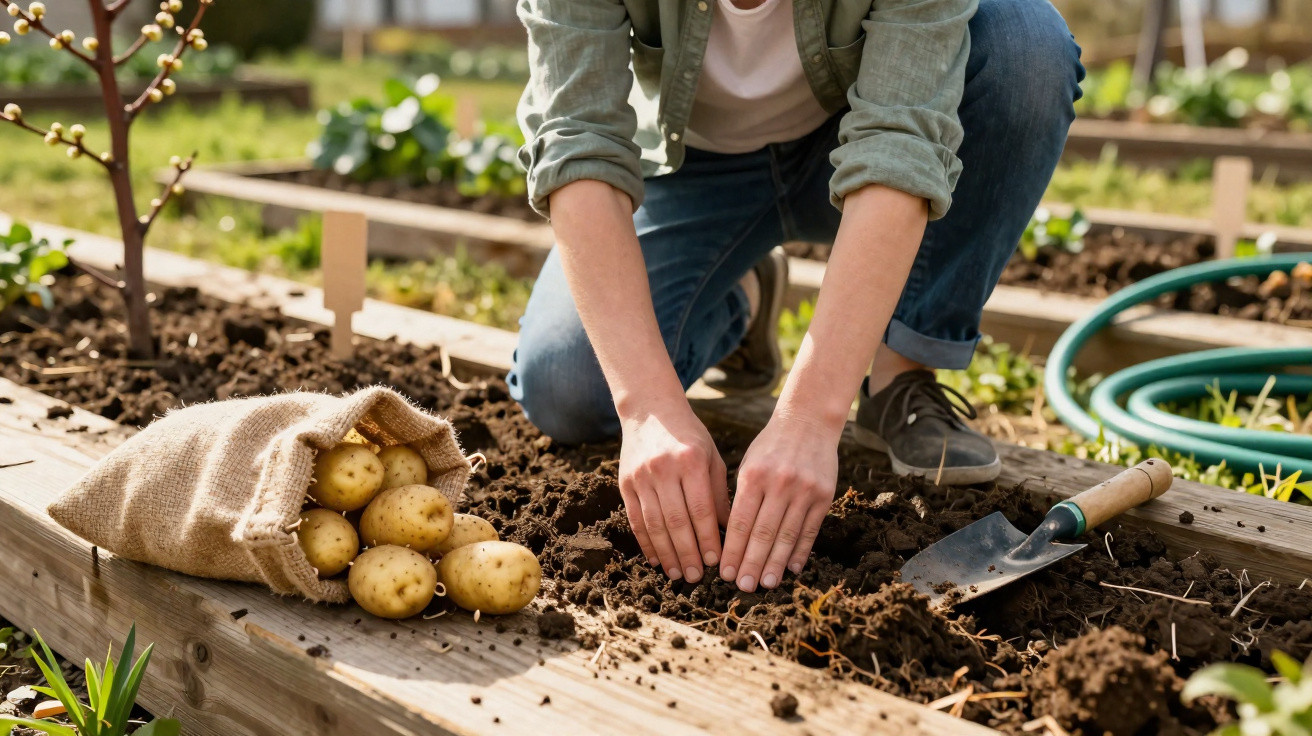
Between the date printed on the seed-potato bag, well-meant advice from next door and the lunar calendar, it’s easy for potato planting to descend into confusion. A garden professional’s guidance is simple: stop fixating on a fixed day and start reading the signs-your soil, your local weather and the tubers themselves. If you understand how these factors work together, you’ll be lifting full crates from the bed in late summer instead of a handful of puny potatoes.
The right moment: what the soil tells you
The key question isn’t “Which day does the calendar say?”, but “How warm is the soil?”. Potatoes react badly if they go into cold, wet ground. In those conditions they can rot, or just sit there without getting going.
"Ideally, the soil temperature at planting is at least 7 to 10 degrees, measured at around 10 centimetres deep."
In practical terms, for many areas across the German-speaking region this usually means:
- Mild wine-growing areas, the North Sea coast, the Rhine Valley: often possible from the end of March
- Central Germany, lower-lying areas in Austria and Switzerland: roughly from mid-April
- Cooler areas, low mountain ranges, the Alpine foothills: often not until late April to early May
A simple soil thermometer costs very little and helps you avoid the most common mistake: starting too early just because a few warm days raise hopes. If you want to play it safe, it’s better to wait an extra week than to put tubers into a damp, chilly “cold store”.
The sitting test: a rule of thumb for the impatient
Alongside instruments, experienced growers also rely on feel. One straightforward real-world check is to sit directly on the bare soil for a few minutes.
- If you can do it comfortably without getting cold, that’s a good sign you can begin.
- If you feel the chill in your back after a short time, the ground still isn’t ready.
This “sitting test” doesn’t replace a thermometer, but it’s a surprisingly dependable everyday guide-especially on allotment plots where nobody measures every day.
Bringing the season forward with black film
If you’re keen to get going, or you’re aiming for early potatoes, you can give nature a nudge. Black mulch film or a dark horticultural fleece typically lifts soil temperature by about 2 to 3 degrees. That can move planting forward by one to two weeks.
What matters is timing: put the film down several days before planting so the soil has time to warm through. In cooler locations, that often makes the difference between an average harvest and a truly generous one.
Without good soil you won’t get big tubers
Even perfect timing won’t help much if the ground underneath isn’t suitable. Potatoes do best in loose, airy, well-drained soil. Heavy, waterlogged ground slows growth and encourages disease.
"If a handful of soil forms a sticky, firm ball, there’s too much clay and loam in it-the tubers will struggle."
Preparing the soil: start thinking in autumn
Ideally, professionals begin the groundwork in autumn, well ahead of planting season:
- Spread 3 to 4 centimetres of mature compost over the area
- Work it in lightly with a garden fork or a broadfork-style tine, rather than deep rotavating
- On very heavy soils, mix in a little sand or fine grit
- Leave the plot over winter-frost and thaw will break down the clods
It’s also worth planning a crop rotation. If potatoes are grown in the same bed year after year, pests and fungal problems build up. A gap of four years between potato crops is a solid rule of thumb.
The right tuber: why supermarket potatoes are risky
Another common home-growing habit is to buy a net of eating potatoes from the supermarket and simply plant those. It can work, but it comes with several drawbacks.
These tubers are often treated to suppress sprouting, may carry hidden diseases and do not come from inspected propagation stock. You’ll do better with certified seed potatoes from a garden centre or a local farm.
"From around 1.5 kilograms of certified seed potatoes you can-given good care-harvest about 10 to 20 kilograms."
Chitting for a head start
If you want to get ahead, chit the tubers four to six weeks before planting. It’s very straightforward:
- Lay the tubers out in egg cartons or shallow trays
- Keep them bright but cool: 8 to 12 degrees, out of direct sunlight
- Don’t stack the tubers; place them singly
- Wait until short, sturdy shoots of 1 to 2 centimetres appear
This gives the plants a clear advantage once they go into the ground. Harvest often starts two to three weeks earlier, and the plants make better use of the warming spring.
On planting day: position, depth and spacing
Once you’re ready to plant, choose a spot in full sun with soil that dries quickly after rain. Potatoes dislike having their roots sitting in a permanently wet puddle.
| Parameter | Recommendation |
|---|---|
| Planting depth | 8 to 10 cm of soil above the tuber |
| Spacing within the row | 30 to 40 cm |
| Row spacing | 60 to 70 cm |
| Orientation of shoots | Shoots facing upwards |
Place the tubers into shallow furrows you’ve drawn beforehand. Cover them with soil so no light reaches them-sunlight turns tubers green and makes them inedible.
Earthing up: the turbo boost for higher yields
As soon as the young plants reach about 20 centimetres tall, it’s time for the main job: earthing up. Use a hoe or rake to pull soil up from the sides towards the stems, forming a small ridge.
- The developing potatoes stay reliably in the dark.
- The plant produces additional roots and more tubers along the lower stem.
- Less light on tubers means less greening and solanine.
A second earthing-up two to three weeks later helps the ridges hold their shape. In wet summers in particular, this pays off because the tubers aren’t left sitting in water.
Potatoes in a container or on the balcony
No garden doesn’t have to mean no home-grown potatoes. With large pots, sacks or purpose-made grow bags, you can raise potatoes on a balcony or terrace too.
Key requirements:
- At least 30 to 40 litres of volume per container
- Drainage holes so excess water can run out
- A loose mix of garden soil, compost and a little sand
- Full sun for several hours a day
Planting is much like planting in a bed: start with a layer of compost and soil, place the tubers, then add more soil gradually as the shoots grow. That way you create a mini ridge within the container.
Important extra factors: water, diseases and choosing a variety
Beyond timing and soil, several other details influence whether you get a generous crop. Potatoes are sensitive to extremes in watering: a long dry spell followed by constant rain often leads to cracking and rot.
Watering steadily during dry periods helps. Avoid waterlogging, and avoid leaves staying wet into the evening-both increase the risk of late blight on foliage and tubers.
Variety choice affects more than flavour and how the potatoes cook; it also shapes your growing approach. Early potatoes usually go into the ground slightly sooner, mature faster and produce smaller but more aromatic tubers. Late varieties take longer, but often give the biggest yields and store better.
If you’re just starting out, a combination of one early and one second-early variety is a sensible approach. It spreads harvest over several weeks and reduces the risk from storms or heatwaves.
It also helps to pay attention to neighbouring plots: if potatoes are grown right next to your bed year after year, pests can move easily from one plot to the next. Changing the site within your own garden breaks that cycle and ensures your carefully chosen planting time can deliver its full benefit.

Comments
No comments yet. Be the first to comment!
Leave a Comment