
Many homeowners invest in CCTV, smart-home alarms and heavy-duty doors. What is often overlooked is that your garden can act as the first line of defence. With the right plants in the right places, access becomes so awkward and risky that burglars are more likely to move on to an easier target.
Why burglar-deterrent plants genuinely work
Most intruders are looking for three things: quick access, minimal noise and as little chance of injury as possible. The more obstacles you put in their way, the less appealing your property becomes.
A dense, thorny hedge combined with a crunching gravel surface forces intruders to move more slowly, make more noise and become far more noticeable.
A well-planned “defensive hedge” delivers several benefits at once:
- Pricks and scratches: Thorns and tough shoots injure unprotected skin and snag clothing.
- Noise: Gravel or coarse chippings crunch underfoot - particularly easy to hear at night.
- Visibility: A neatly kept garden removes hiding places and makes it obvious to neighbours if someone is forcing their way through.
- Psychological effect: The sight of a spiky barrier puts many off - why take the risk when the next house looks simpler?
These plants are not a replacement for security tech such as an alarm or motion sensors; they work best alongside it. However, if you let hedges become overgrown, you can end up with the opposite effect: dense shrubs that provide perfect cover. Regular trimming and clear sightlines from the street are essential.
Four plants that create a natural defensive line
Garden professionals most often recommend four species that have proven effective for building a natural “security zone” around the home.
Pyracantha: the thorny classic for boundaries and fences
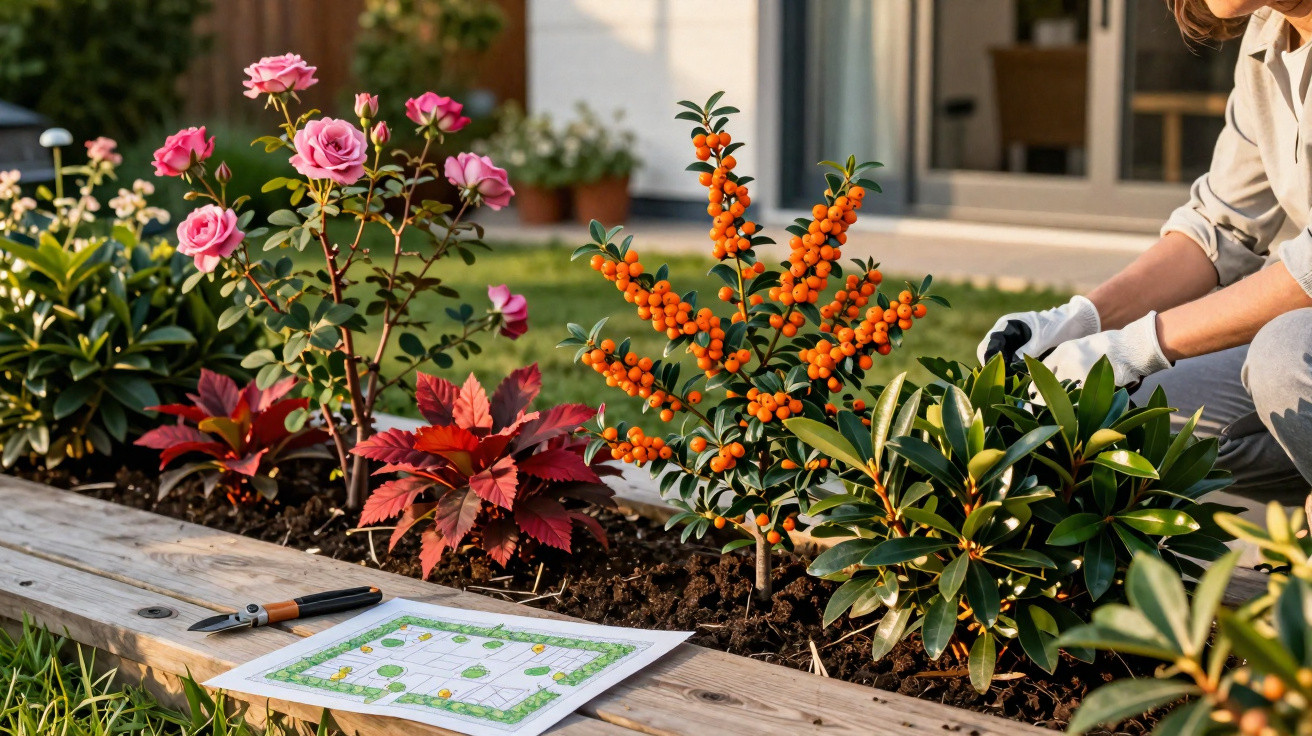
Pyracantha - often called firethorn - is among the most painful plants to push through. Its spines are stiff, plentiful and difficult to avoid.
- Where to use it: Along fences and walls, or directly beneath lower windows.
- Effect: Any attempt to squeeze through usually ends with scratches and torn clothing.
- Bonus: In autumn it produces striking berries that look attractive and draw in birds.
For a continuous hedge, plant firethorn about 50 to 70 centimetres apart. Within a few years, this creates an almost impenetrable, thorny barrier around 1.5 to 2 metres high.
Barberry (Berberis): a compact blocker for hidden access routes
Berberis (barberry) is a compact, highly defensive shrub with strong thorns. It shapes well and is ideal for areas nobody should be walking through by choice.
- Where to use it: Side passages, narrow paths along the house, concealed rear entrances.
- Advantage: Dense, branched growth - excellent for filling gaps where a simple fence is not enough.
- Maintenance: One trim a year is often sufficient to keep its shape and deterrent effect.
A narrow corridor bordered by a wall on one side and a barberry hedge on the other quickly becomes an extremely unattractive route for strangers.
Rosa rugosa: the tough, intensely thorny rose barrier
Rosa rugosa is a particularly hardy wild rose and noticeably more prickly than many modern garden roses. It grows dense and bushy, while staying relatively low.
- Where to use it: Beneath easily reachable windows, in front of basement light wells, along terrace edges.
- Appearance: Attractive flowers in summer and rose hips in autumn - protection and decoration combined.
- Growth habit: Over time it forms wide, unfriendly mounds that few people would want to climb through.
A broad strip of these roses directly in front of floor-to-ceiling windows makes climbing in not only painful, but also slower and far more conspicuous.
Cherry laurel: privacy screening for patios and glass fronts
Cherry laurel does not have thorns, but it provides a different kind of protection: it blocks views and prevents would-be burglars from quietly assessing what is inside.
- Where to use it: In front of large glazed areas, along the street-facing boundary, and around seating areas.
- Advantage: Evergreen - year-round screening and fewer sightlines into the home.
- Best paired with: Gravel surfaces and targeted lighting.
If you would rather passers-by could not easily see a new television or high-value garden furniture, cherry laurel positioned near the patio is a sensible choice.
How to place the four plants without ruining the garden
The key is to combine security with good design. Your plot should feel welcoming, yet be hard work for anyone without permission to enter.
The best security gardens do not look like fortresses - they look cared-for, friendly and cleverly structured.
A proven basic layout:
- Facing the street: A cherry laurel hedge with a strip of gravel in front. This reduces nosy sightlines while making footsteps immediately audible.
- Side boundaries: Plant firethorn or barberry along the length of the property - exactly where intruders often try to slip past unnoticed.
- Under vulnerable windows: Bands of Rosa rugosa or other heavily thorned roses.
- Main route to the house: Lay the approach largely with gravel and edge it with low shrubs so nobody can creep up unseen.
Important: keep extremely thorny plants away from children’s play areas, pools and heavily used seating spots. Children and pets should be able to move around without constantly encountering spines.
Don’t forget lighting, maintenance and legal planting distances
Thorny hedges offer limited benefit if dark corners stay completely unlit. Motion-activated lights on the house wall or garage significantly strengthen the deterrent effect. Someone caught in a beam of light while stuck in a thorny shrub will often abandon the attempt immediately.
A few points homeowners should keep in mind:
- Pruning: Cut back at least once a year so hidden gaps and hiding places do not develop.
- Visibility from the street: Avoid boxing in the entrance completely - neighbours and passers-by should be able to spot anything suspicious.
- Boundary distances: For hedges over 2 metres tall, allow at least 2 metres from the property line as a general rule (check local council requirements).
- Access for emergency services: Do not block emergency entry points for the fire service or ambulance crews.
If you are already planning to redesign the garden, it makes sense to factor security in from the start. Often it is enough to rework existing beds intelligently or to close gaps in fences using the species above.
Practical examples and extra tips for better security
A common scenario is a detached house on the edge of town with an unlit side passage leading to the patio. A strong solution here is to combine a barberry hedge along the boundary, a gravel run beside the house, and a motion-activated light above the patio door. For many offenders, the thought of a getaway route through thorns under sudden floodlighting is enough to deter them.
Another classic is a corner plot with large street-facing windows. In this case, cherry laurel provides a dense green screen. If you want to go further, add a narrow strip of firethorn in front - barely noticeable from outside, but extremely unpleasant for any attempt to climb through.
Terms like “defensive hedge” can sound aggressive, yet in everyday life these plantings tend to read as a normal, well-kept garden. That is part of the appeal: few people want to live in a fortress, but almost everyone appreciates flowers, birds and a bit of privacy. Thorny shrubs can deliver all of that - while also reducing the risk of an unwanted visitor.
Comments
No comments yet. Be the first to comment!
Leave a Comment