
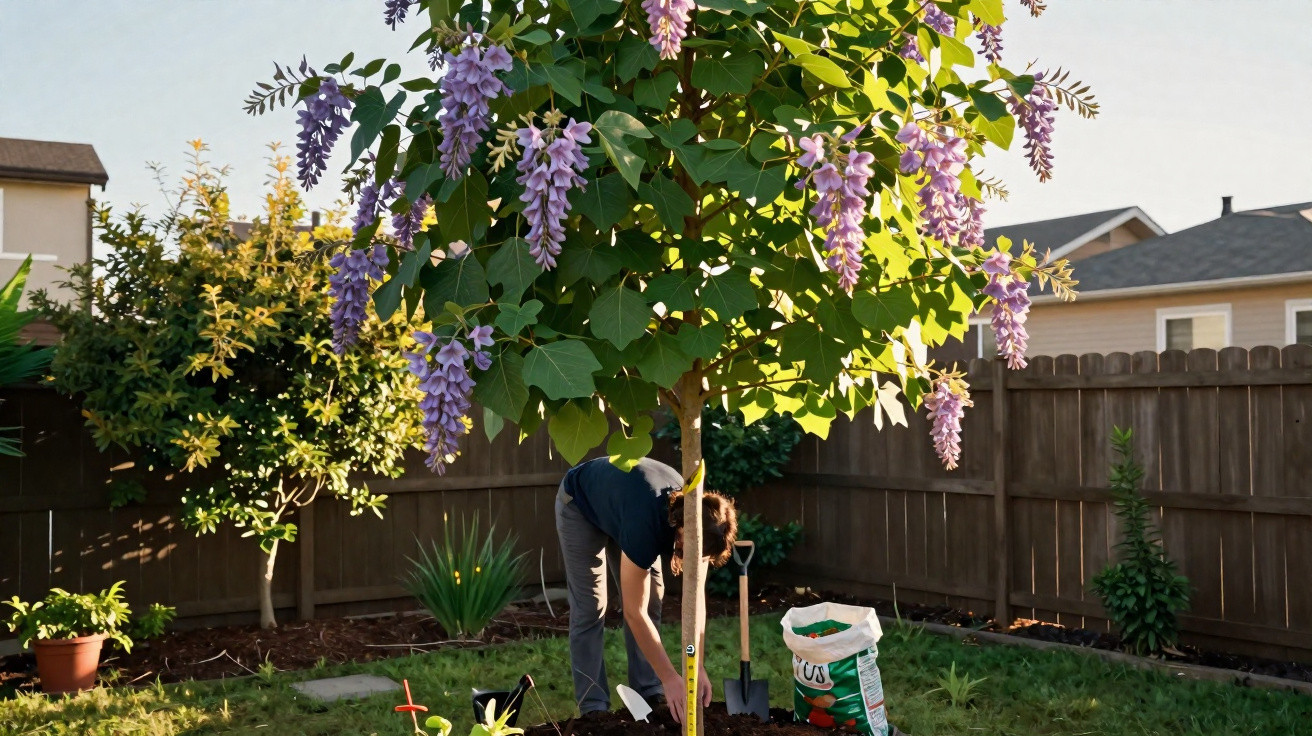
Many keen home gardeners want fast privacy without gambling on bamboo that spreads and takes over. That is exactly where Paulownia comes in, often known as the “empress tree” or “bluebell tree”. It rockets upwards, remains straightforward to manage, and in spring puts on a floral display reminiscent of magnolia and lilac - only larger, wilder and far more eye-catching.
A tree that dominates the garden within a few years
Paulownia is among the quickest-growing trees you can plant in a garden. In the right conditions, a young tree commonly adds about 1.5 to 2.5 metres in a single year. After three years, 5 to 7 metres in height is entirely plausible, and over time it typically reaches 10 to 12 metres. In other words, plant one now and you may literally be sitting in the shade of your own empress tree after only a handful of seasons.
Its hallmark is a straight, upright trunk topped by a broad, airy crown. The foliage is instantly striking: large, soft, heart-shaped and almost tropical in feel. Individual leaves can easily exceed the size of a dinner plate. That quickly creates a dense, cool patch of shade - perfect beside the patio, near a seating area, or as a living parasol over a hammock.
Unlike many bamboo species, Paulownia does not produce aggressive runners. It will not send rhizomes through borders and into next door’s garden; it stays where you plant it. Pruning and keeping it in check is therefore much more relaxed than trying to tame a thicket of bamboo.
“Paulownia combines the growth speed of bamboo with the look of a majestic flowering tree - without swamping the garden.”
The flowers are what set it apart: a pastel spring spectacle
The real show begins in spring. Before the first leaves appear, the bare branches are covered with countless buds that open into large panicles of bell-shaped flowers. Shades range from soft mauve to violet with a faint bluish cast. From a distance, the crown can look like a floating purple cloud.
The blooms carry a pleasantly sweet scent and draw insects in with ease. Paulownia is considered a classic nectar plant: bees, bumblebees and butterflies find plenty of nectar here early in the year. If you are aiming for a more insect-friendly garden, this tree can be a genuine ally.
Why the blossom is so valuable for the garden
- An early nectar source for wild bees and honey bees
- A strong visual focal point, even in smaller gardens
- Fragrance creates a distinctive spring atmosphere on balconies and patios
- Flowers drop relatively neatly, without constantly leaving messy leaf debris behind
Depending on the variety, the precise shades and flower shape can differ slightly. If you prefer a softer, more pastel look, choose subtler types; for maximum impact, opt for more strongly coloured forms.
How home gardeners should plant an empress tree correctly
Choosing the site and preparing the soil
Paulownia thrives on warmth and light. A position in full sun, ideally sheltered from wind, suits it best. Cold draughts and exposed hilltop sites are best avoided, because the early buds are sensitive to late frosts.
Soil can be rich, but it must drain well. The tree dislikes waterlogging. If you have heavy loam or clay, improve it with sand and plenty of compost to open the structure.
A generously sized planting hole works well:
- Dig at least 60 x 60 x 60 cm
- Mix the excavated soil with 10–20 litres of well-rotted compost
- Position the tree so the root collar sits just above ground level
- Water in thoroughly, about 20 litres at planting
- Finish with a 5–8 cm mulch layer around the trunk
Mulch made from bark chips, leaves or shredded branches helps retain moisture and protects young roots from temperature extremes.
Care in the first few years
The establishment period largely determines both speed and long-term health. During the first two to three summers, Paulownia needs consistent watering. Depending on the weather, 10 to 20 litres per week is a sensible guideline. The aim is to encourage deep rooting, rather than merely dampening the surface every day.
After flowering, remove dead growth and any branches that are in the way. A light tidy-up and shaping prune is usually enough. This keeps the crown stable and helps the tree flower well again the following year.
In harsher locations, extra protection is worthwhile: horticultural fleece around the crown of young trees, plus a 10 to 15 cm mulch layer at the base, can help them through severe frosts.
Where the risks are - and how to keep them under control
Frost and flower buds
Paulownia’s biggest weakness is the fact it forms buds early. If a spell of mild spring weather is followed by a sharper night frost, the buds can be damaged. The result: flowering may be sparse that year, or fail altogether.
If you live in a known frost pocket, it is wiser to plant the tree near the house, where a wall can offer a little extra warmth. Should frost damage occur, cut away the affected shoot tips once the cold spell has passed. The tree generally responds by producing vigorous new growth.
Unwanted seedlings and local rules
Paulownia produces very light seeds that can be carried by the wind. In some areas, a few seedlings may pop up in cracks, borders or beds. If you do not want them, simply pull them out while they are still young.
In protected areas, special rules for non-native trees may apply depending on the region. A quick check with your local council or a conservation group is sensible, particularly near sensitive habitats.
Which varieties are suitable for gardens
In the trade, two species are especially common: Paulownia tomentosa and Paulownia fortunei. Both grow quickly, but they differ in details such as habit, leaf character and flower structure.
| Variety / species | Features | Suitable for |
|---|---|---|
| Paulownia tomentosa | Broad crown, classic violet flowers, very rapid growth | A specimen tree in the garden, fast-growing shade provider |
| Paulownia fortunei | Slightly slimmer habit, finer flowers, sometimes subtly different colour tones | Slightly smaller plots, ornamental planting with emphasis on floral effect |
If you have enough space, place the empress tree as a standalone specimen in a lawn area and allow 6 to 8 metres of clearance on all sides. For an avenue or a loose row along a driveway, planting distances of at least 6 metres are advisable.
Garden design ideas using the empress tree
Because of its size and its early flowering, Paulownia works brilliantly as a focal point in a spring garden. Underplanting with bulbs such as tulips or daffodils extends the seasonal interest. In summer, shade-tolerant perennials like hostas or ferns can create calm, green groundcover beneath it.
If your seating area bakes at midday, you can position the tree specifically as a natural sunshade. Pair it with a simple timber fence and a border of wild-style perennials and you can quickly create a semi-natural, gently Mediterranean feel - without relying on tropical plants.
Feeding and long-term use
In spring, adding about 10 litres of compost per tree is worthwhile. It supports rapid growth without unbalancing the soil. In most private gardens, Paulownia does not require mineral fertiliser.
The wood is regarded as light, dimensionally stable and easy to work. In professional plantings, the tree is therefore also used for energy and timber production. In a home garden, its ornamental value usually comes first, but if you ever prune it back more heavily, the timber can be used for simple craft or woodworking projects.
What garden owners should consider before planting
Before you put a spade in the ground, it pays to do a quick reality check: this tree grows fast and becomes large. On very small terraced-house plots it can look overpowering over time, particularly if planted too close to the building. A better choice is a position where it can grow freely upwards without permanently shading windows.
If you are happy to water regularly in the first few years, add frost protection in spring when needed, and pick up a saw every few years, you will be rewarded with a tree that offers far more than a plain screening fence. Its combination of turbo growth, huge leaves and that almost surreal cloud of blossom makes the empress tree one of the most intriguing choices for anyone who wants a single tree to give their garden an entirely new story.


Comments
No comments yet. Be the first to comment!
Leave a Comment