
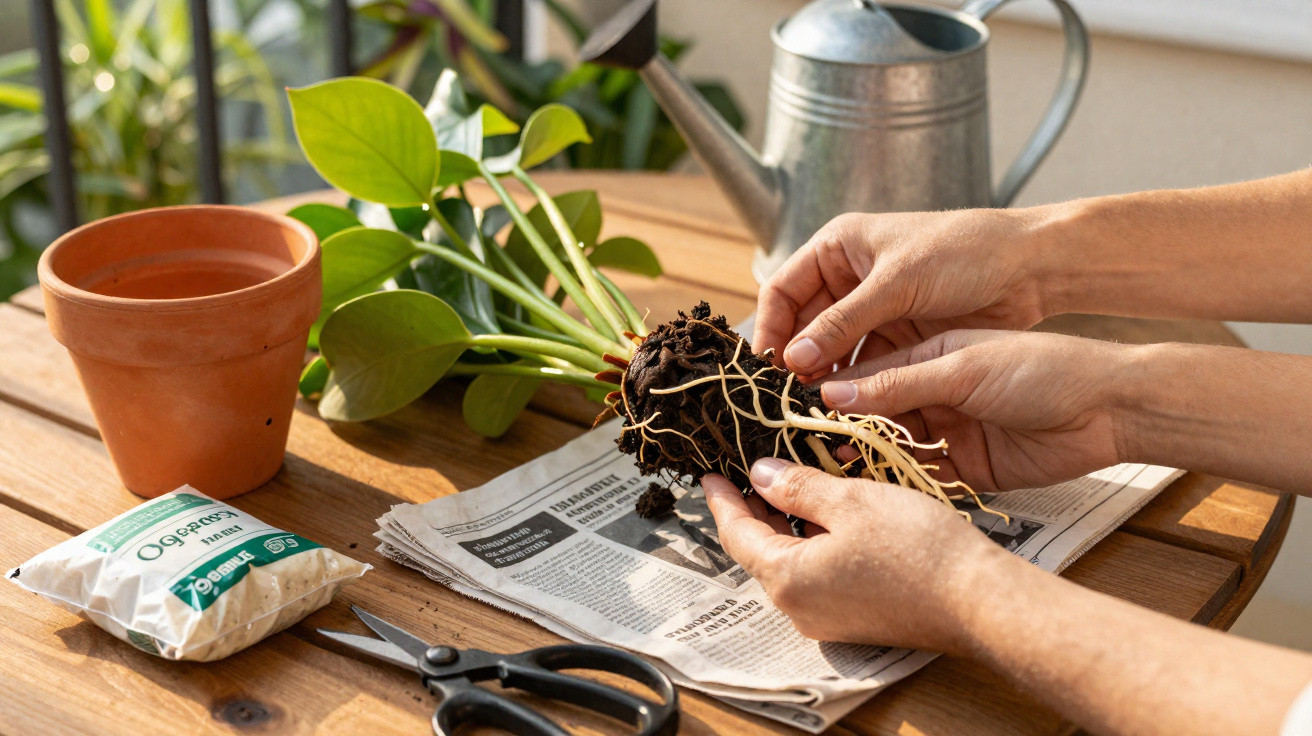
Overwatering is one of the most frequent mistakes in plant care and it is also a leading cause of root rot. When compost stays waterlogged for too long, the roots stop getting enough oxygen, which encourages fungi and bacteria to take hold. The good news is that, if you catch it early, many plants can still be saved. A widely used trick among experienced gardeners is to let the roots dry out for a few hours before repotting, helping to remove excess moisture and allowing any trimmed areas to start healing.
How can you tell if a plant has rotten roots?
The earliest warning signs usually show up in the leaves. Even when the compost is damp, the plant may develop yellowing leaves, look limp, or drop foliage for no obvious reason. In many cases, growth also slows down.
Once you lift the plant out of its pot, the contrast is clearer. Healthy roots are pale and firm, whereas roots affected by rot tend to be dark, soft, and give off an unpleasant smell.
What is the trick used to try to rescue the plant?
This method takes a little patience, but it can improve the odds of recovery as long as some healthy roots remain.
The key is to remove every damaged section and lower the moisture level before placing the plant into fresh compost.
- Gently take the plant out of the pot.
- Clear away all the soggy compost from around the roots.
- Using clean, disinfected scissors, trim off any roots that are dark, soft, or smell bad.
- Keep only the roots that are firm and light in colour.
- Leave the roots to dry for a few hours in a well-ventilated spot, out of direct sun.
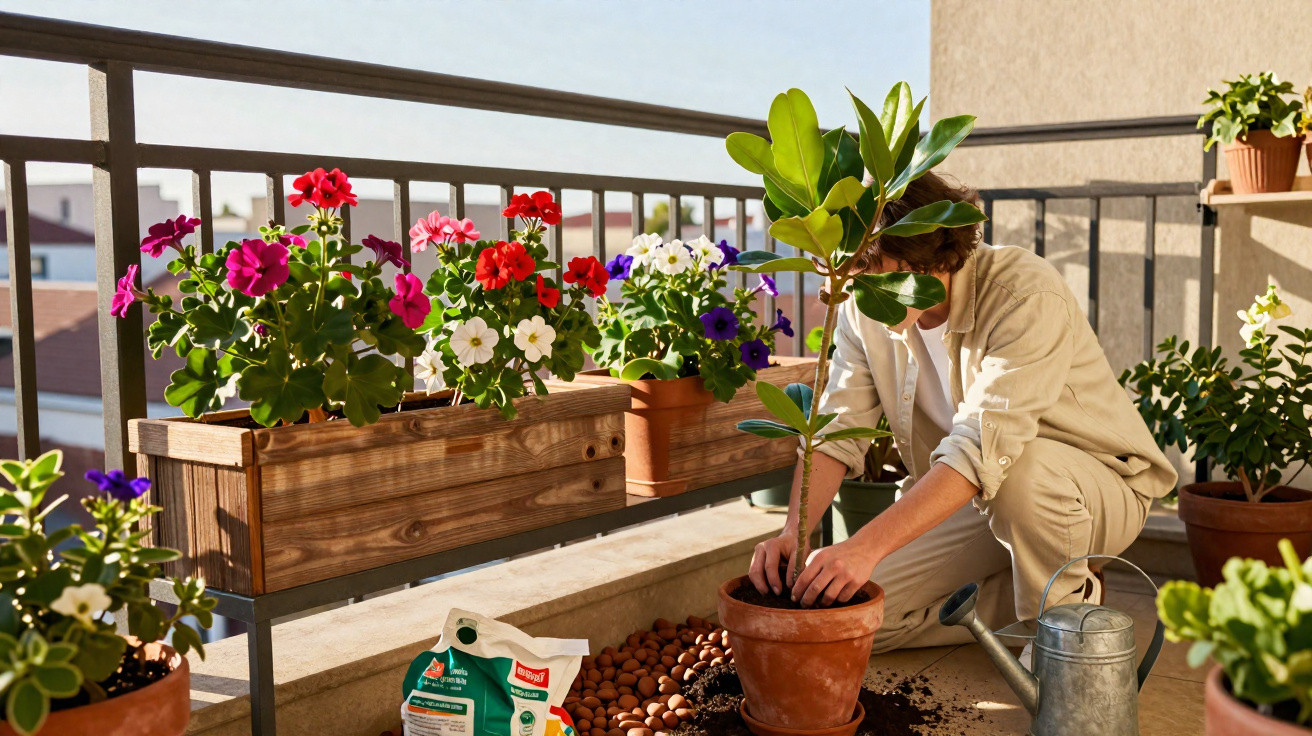
- Repot into fresh, light, free-draining compost, using a pot with drainage holes.
What should you do after repotting?
A very common mistake is watering straight after transplanting. It is usually best to wait a few days before the first watering, giving the cut root ends time to seal and reducing the risk of fungal infection.
After that, only water when the compost begins to dry out. How often this is needed depends on the species, the weather, and the type of compost, so it is important to check moisture before adding more water.
- Always choose a pot with good drainage.
- Do not let water sit in the saucer.
- Water only once the compost is partly dry.
- Keep the plant in a bright position, according to the species’ needs.
- Pause feeding until you can see fresh signs of growth.
- Remove badly damaged leaves to reduce the strain on the plant.
Can every plant recover?
Not always. If almost all the roots have rotted, recovery may not be possible. However, when part of the root system is still healthy, this approach greatly increases the chances of survival.
The sooner root rot is spotted, the better the likelihood that the plant will produce new roots and return to healthy growth.
Comments
No comments yet. Be the first to comment!
Leave a Comment