
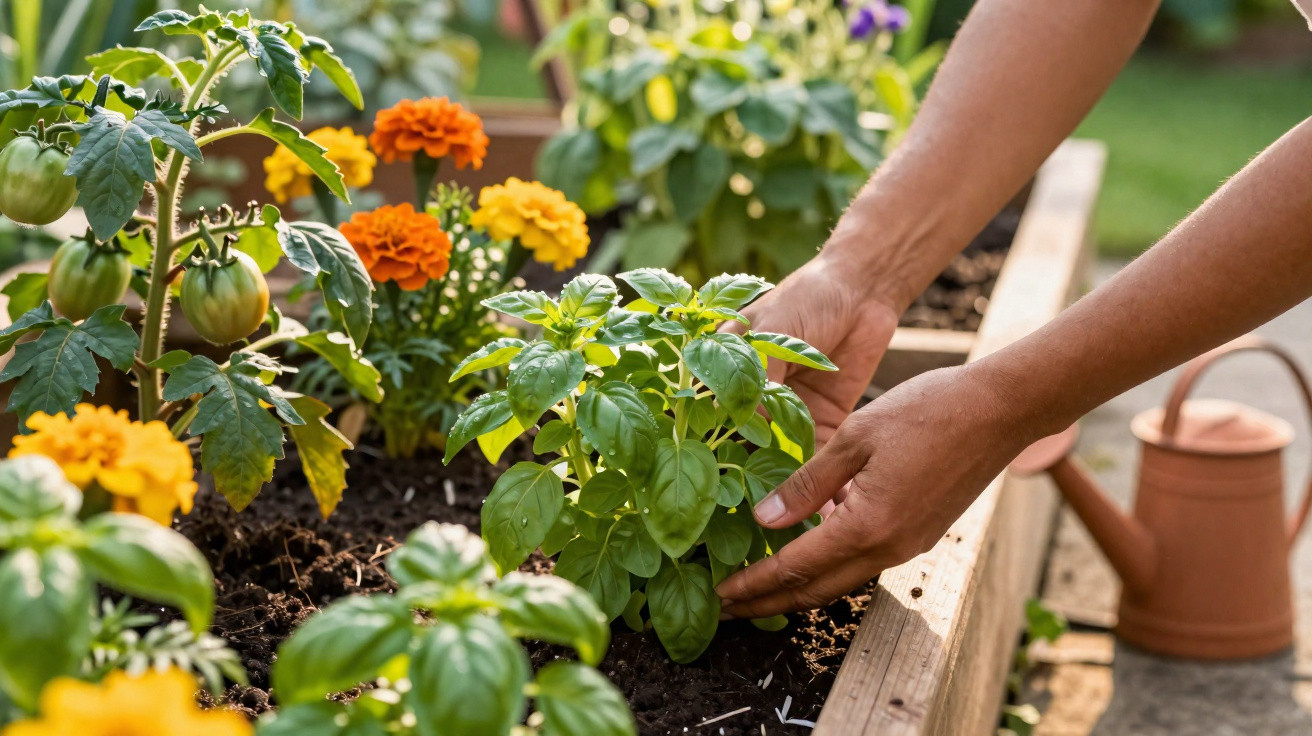
Many amateur gardeners think of oregano mainly as a pizza herb. In a bed, however, this Mediterranean perennial does far more: it acts like a natural protective shield, attracts beneficial insects and can even help to boost yields. If you know which plants pair especially well with oregano - and which do not - you can get noticeably more from every square metre of garden.
Why oregano is a secret weapon in the vegetable garden
Oregano is one of the toughest herbs you can grow. It thrives in full sun, prefers lean, well‑drained soil and copes surprisingly well with dry spells. Those strengths make it a powerful companion for a wide range of vegetables and ornamentals.
“The essential oils in oregano confuse pests, attract beneficial insects and, at the same time, create a natural scent barrier in the bed.”
Because it forms a dense, carpet‑like mat, oregano shades the soil surface, suppresses weeds and helps hold moisture in the ground. When it flowers, it also draws in large numbers of pollinators - a big advantage for productive crops such as tomatoes, peppers and squash-family plants.
The best vegetable companions for oregano
Tomatoes: a classic pairing with a built‑in shield
Tomatoes and oregano belong together not only in the kitchen, but in the plot as well. Tomatoes are often troubled by tomato hornworms and aphids. Oregano’s strong fragrance can mask the tomato scents that pests use to locate their target.
- Spacing: around 30–45 cm from the tomato plant
- Benefit: less feeding damage and potentially fewer fungal issues in the soil
- Bonus: oregano can enjoy a little shade in midsummer from the tomato foliage
Many gardeners plant oregano as a ring around the tomato bed. Done this way, it lowers pest pressure while creating a convenient harvesting strip right alongside the vegetable row.
Peppers and chilli: more fruit thanks to pollinators
Peppers and chilli like sun and warmth - exactly what oregano wants too. The herb stays low, so it does not steal light from the crop. Instead, it brings in bees and butterflies, improving pollination of the flowers.
At the same time, oregano’s aromatic compounds may discourage spider mites and aphids, two common nuisances on peppers. A gap of about 25–35 cm is enough for both to grow comfortably.
Brassicas: a natural barrier against cabbage white butterflies
The brassica group includes, among others:
- White cabbage and red cabbage
- Broccoli
- Cauliflower
- Brussels sprouts
These crops regularly face caterpillars from cabbage white butterflies and other moths that lay eggs on the leaves. With its intense scent, oregano can disrupt how these insects find the brassicas.
“Several small oregano plants between rows of brassicas work like ‘scent islands’, making it harder for butterflies to locate the cabbage plants.”
Another advantage: oregano attracts parasitic wasps, which consume eggs and larvae of brassica pests - a free form of biological pest control.
Cucumbers and squash-family crops: defence against beetles and bugs
Cucumbers, courgettes, pumpkins and related plants often suffer from cucumber beetles and squash bugs. These can spread diseases such as bacterial wilt and severely weaken plants.
Oregano can help by confusing these pests; its scent compounds cover up the cues the insects rely on. Important: position the herb at the edge of the bed, not among sprawling or climbing vines.
| Vegetable partner | Main benefit from oregano | Recommended spacing |
|---|---|---|
| Tomatoes | Fewer hornworms and aphids | 30–45 cm |
| Peppers / chilli | More pollinators, fewer mites | 25–35 cm |
| Cucumbers | Protection from cucumber beetles, better flavour | 45–60 cm |
| Courgette / pumpkin | Confuses squash bugs, less infestation | 60–75 cm |
Perfect herb partners and flower friends
Basil and oregano: a kitchen duo with a garden advantage
Basil and oregano often end up together in a pasta dish - and they also make sense as neighbours in the bed. Each draws in different beneficial insects, which can lift pollination across the surrounding area.
They do not, however, want identical soil conditions: basil prefers consistently moist soil, while oregano tolerates dryness much better. If you want to grow both in the same bed:
- place basil closer to where you water
- plant oregano towards the drier edge
- avoid waterlogging around the oregano
Thyme: a dream team for sunny spots
Thyme and oregano have almost the same needs: sun, free‑draining soil and minimal feeding. Together they create a strongly scented ground layer that can deter many leaf‑eating pests.
“If you want a low‑maintenance, insect‑friendly strip in the garden, combine oregano and thyme as a low, strongly scented herb hedge.”
The fine thyme leaves and the slightly larger oregano leaves also give a pleasing contrast, making them ideal along bed edges or in a rock garden.
Pot marigolds and French marigolds: protection on two levels
Pot marigolds (calendula) and French marigolds (often sold as tagetes) are real workhorses in the garden. Their roots release compounds that can interfere with harmful nematodes in the soil. Above ground, their blooms attract beneficial insects such as hoverflies and lacewings.
Combined with oregano, you get a kind of two‑tier defence: below the surface against nematodes, and above it against aphids and other sap‑suckers. In mixed plantings with tomatoes, cucumbers or brassicas, this trio can offer a clear advantage.
Nasturtium: a lure crop for aphids
Nasturtium works brilliantly as a “sacrificial” plant. Aphids often prefer its leaves and flowers. If you plant nasturtium right beside oregano, or slightly offset from it, you can draw pests away from more sensitive vegetables.
Meanwhile, oregano attracts ladybirds and other beneficial insects that then feed on the aphids on the nasturtium. This creates a natural loop in which aphids are eaten in large numbers without any need for chemicals.
Plants that are better kept at a distance
Fennel: chemical competition in the soil
Fennel releases substances through its roots that can inhibit the growth of nearby plants. Oregano is particularly sensitive to this: it grows more weakly and develops less aroma.
If you want both in your garden, allow at least 1.2 m between them or grow fennel in a separate bed.
Lettuce and other moisture lovers
Cut‑and‑come‑again lettuce, lettuces and many other leafy crops need consistently moist soil. Oregano, by contrast, prefers the soil to dry a little between waterings.
When they are planted right next to each other, problems follow:
- oregano may rot if watered too often
- lettuce suffers if you water too sparingly to suit the oregano
The fix is simple: separate the lettuce bed and the herb bed - or at least create a small dry buffer zone between them.
How to get the most from oregano in a bed
Location, care and pruning
Over time, oregano spreads into a mat. In a vegetable plot that can be helpful - as long as it does not smother weaker neighbours. Regular trimming keeps the plant compact and also encourages fresh, aromatic growth.
“Harvesting oregano more often increases the aroma and prevents the plant from becoming too woody or crowding other crops.”
A few practical pointers:
- every two to three weeks, cut back shoots by around a third
- remove flowers early if your main goal is leaf quality
- in spring, cut older, woody parts back hard
Smart placement in the garden plan
With thoughtful positioning, oregano can act like a green bodyguard across the whole garden. Proven approaches include:
- planting it as a border along beds to create scent barriers
- placing it at the corners of raised beds as visual anchors and protective plants
- growing it beside paths, where the fragrance is released with every step
- under fruit trees to suppress weeds and draw in pollinators
- in rock gardens and on dry‑stone walls, where water drains quickly
Oregano can also be useful near the compost heap: it attracts beneficial insects to the area and can help to mask unpleasant odours slightly.
Choosing the right soil and nutrients
Oregano prefers relatively low fertility. Too much nitrogen may speed up leaf growth, but it dilutes flavour and can reduce the herb’s pest‑repelling effect.
If your soil is heavy clay, work in coarse sand and a little compost. Waterlogging should always be avoided. In the right conditions, oregano can stay in the same place for many years and remain a dependable companion for tomatoes, peppers, cucumbers and more.
For small gardens and balconies, it is also worth noting that many of these mixed plantings work well in a large container: a tomato in the middle, oregano around the edge, and perhaps a low pot marigold - creating a compact, functional planting with aroma, protection and good looks all in one pot.


Comments
No comments yet. Be the first to comment!
Leave a Comment