
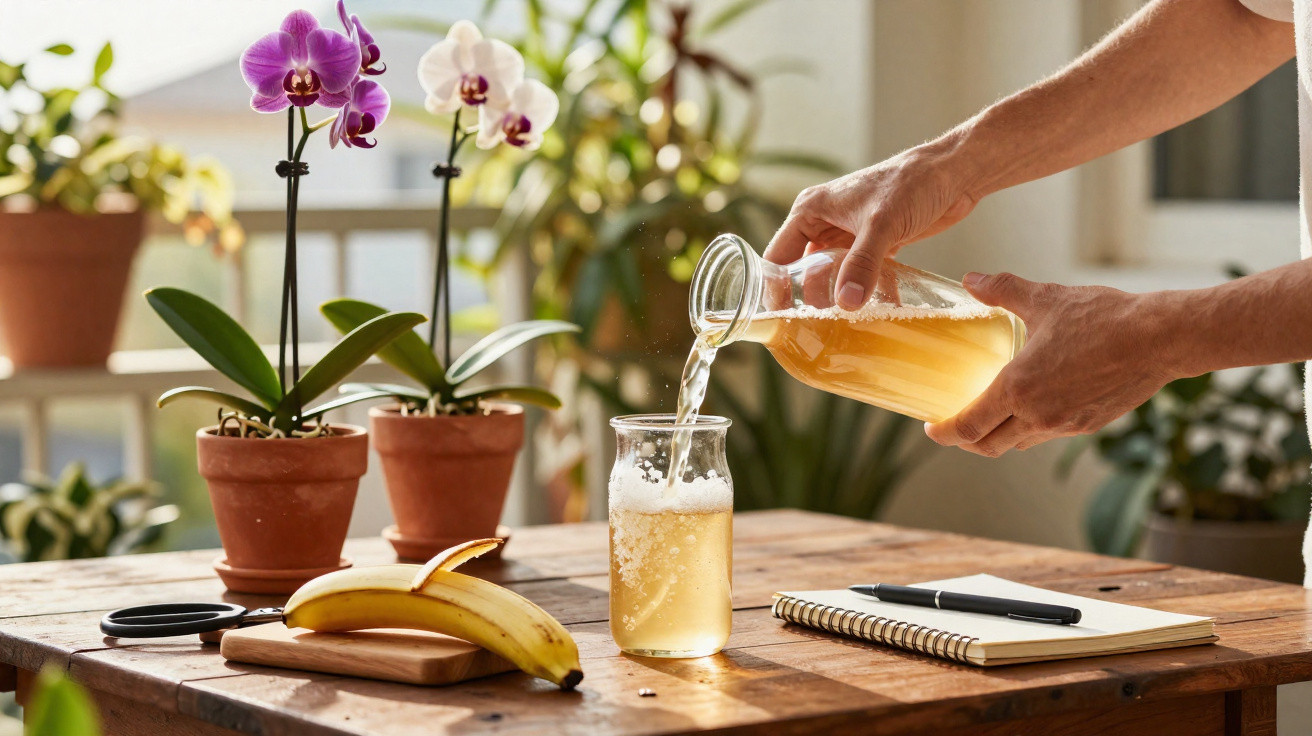
Orchids tend to draw the eye in any setting, whether in gardens, on balconies, or indoors. Still, this plant stands out not only for the beauty of its blooms, but also because it needs specific care-particularly when it comes to nutrition. Among homemade fertilising options, using banana peel fertiliser for orchids has become increasingly popular because it is straightforward, affordable, and makes use of a waste product that is often thrown away, helping to enrich the substrate (growing medium) with a natural, economical resource.
Why use banana peel fertiliser on orchids?
Banana peel contains valuable minerals such as potassium, phosphorus, and small amounts of calcium and magnesium. For an orchid, these nutrients support stronger roots, encourage the development of flower buds, and help maintain the colour and firmness of the flowers, acting as a complementary nutritional boost.
This type of feeding also appeals because it is low-cost and releases nutrients gradually, which reduces the risk of an immediate build-up of salts in the substrate. As well as cutting down on chemical fertilisers, reusing banana peel helps reduce everyday organic waste.
How to prepare and apply banana peel fertiliser for orchids
There are several ways to turn banana peel into fertiliser for orchids, and making it into a powder is one of the most practical options. The approach is simple, does not require sophisticated equipment, and lets you store the material for longer, keeping things organised over the weeks.
- Set aside the peels: keep peels from ripe bananas that are clean and show no signs of mould.
- Drying: lay the peels open (cut into strips) in a well-ventilated place, in indirect or direct sunlight, until they are completely dry and rigid.
- Grinding: once fully dry, grind the peels in a food processor, a powerful blender, or using a pestle and mortar until you get a fine powder.
- Storage: store the powder in a sealed container, protected from moisture and direct light.
- Application: sprinkle small amounts over the orchid’s substrate, avoiding build-up on leaves and exposed roots.
Another option is “banana peel water”, where you soak the peels in water for a few hours or a few days and then use that water to water around the pot. Even so, it is essential to avoid waterlogging-orchids are sensitive to excess moisture-so always ensure the container drains well.
What precautions matter when using banana peel on orchids?
Although it is an easy resource, banana peel fertiliser for orchids still requires attention to quantity and to the conditions in the growing area. Overuse can lead to a build-up of decomposing material and attract fungi and insects, especially in very humid places or where air circulation is limited.
To use it safely, it is worth watching how the plant responds and adapting the method to the type of substrate. The list below summarises practical precautions that help keep the balance between nutrition and root health:
- Apply the fertiliser only in small amounts and at regular intervals.
- Check leaves and roots after use, looking for signs of stress or spotting.
- Avoid using it on plants that are already unwell without specialist guidance.
- Alternate banana peel with other forms of balanced fertilisation.
When to use banana peel fertiliser in your orchid care routine
The best time to use banana peel fertiliser for orchids is during active growth and pre-flowering, when new shoots and roots are forming. In general, a light application every three to four weeks is enough, always taking into account the environment’s light, temperature, and watering.
During colder periods or times of reduced activity, you can lower the frequency, because the orchid’s metabolism slows down and nutrient uptake drops. Matching banana peel use to the plant’s development rhythm helps keep flowers more vigorous throughout the year, without overloading the substrate.
Comments
No comments yet. Be the first to comment!
Leave a Comment