
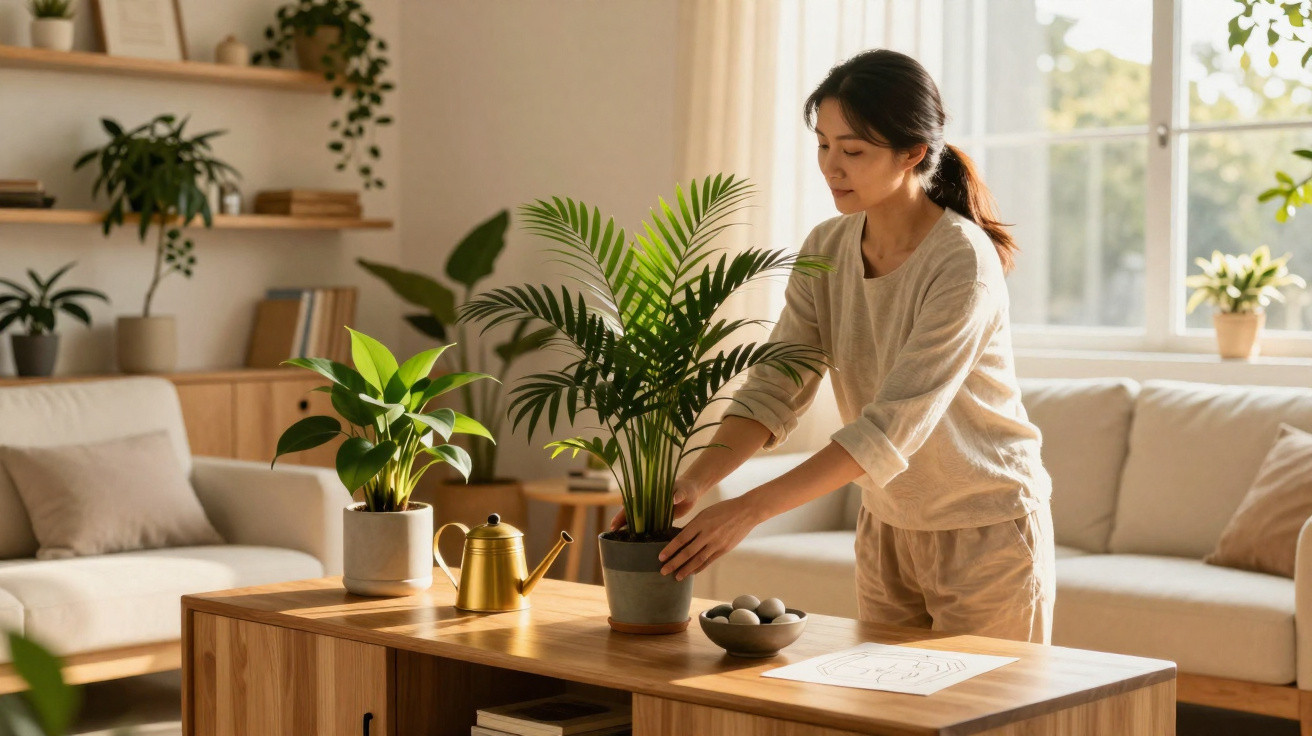
Feng shui is an Eastern practice focused on bringing balance to a space through the placement of objects, the use of colour, and the presence of natural elements. In this approach, plants play a central role because they are linked to vitality, wellbeing, and the movement of energy-certain species are traditionally chosen to encourage prosperity, protection, and a welcoming feel in the home.
How do plants influence a home’s energy in feng shui?
In feng shui, plants are understood as carriers of vital energy and are connected to the wood element, which symbolises growth, momentum, and renewal. The principle is that a living, well-tended environment supports a more orderly, harmonious flow of energy, which can be reflected in the day-to-day experience of those who live there.
So, it is not simply about decoration. Bringing plants indoors also means paying attention to light levels, ventilation, and the overall condition of each pot. Keeping them healthy-watering appropriately, removing dead leaves, and ensuring they do not look neglected-is seen as a practical way to keep chi circulating and to continually refresh the atmosphere of the household.
What are the main feng shui plants for renewing energy?
Some species have become favourites in homes because they combine positive symbolism with straightforward care. They are often selected to represent renewal, protection, and flow, particularly in areas where people gather or move through frequently.
Below are examples of plants commonly associated with energetic balance, alongside their best-known meanings and typical uses around the house:
- Lucky bamboo: associated with prosperity, resilience, and growth; it is often placed in areas linked to finances and new opportunities.
- Snake plant (Saint George’s sword): valued for its toughness and air-filtering reputation; it is connected with protection and purification, especially near entrances and social areas.
- Pothos or ivy: trailing plants that suggest fluidity and movement; used to soften stagnant corners or to bring life to high shelves.
Where should you place feng shui plants in different rooms?
Where you position plants indoors is considered key to directing energy more intentionally. Entryways, living rooms, and shared spaces are treated as strategic points for receiving and distributing the chi that enters the property.
In many feng shui maps, the east and south-east areas are linked to themes such as health and prosperity. For that reason, plants like lucky bamboo are often used in those sectors, while more understated plants are usually advised for bedrooms and other spaces intended for rest.
What daily care should you maintain for feng shui plants?
Alongside choosing species that suit the space, the condition of your plants is viewed as a direct mirror of how the home is being cared for. Thriving pots suggest ongoing renewal, whereas drooping foliage can point to stagnation and a lack of attention in one’s routine.
It is also common to avoid overly thorny plants indoors, particularly close to areas used for resting and conversation, as they are linked with a more defensive kind of energy. Trimming off dry leaves, keeping pots clean, and replacing containers when they crack helps strengthen a sense of order and comfort-turning plants into daily visual reminders to look after the space and, by extension, one’s quality of life.
Comments
No comments yet. Be the first to comment!
Leave a Comment