
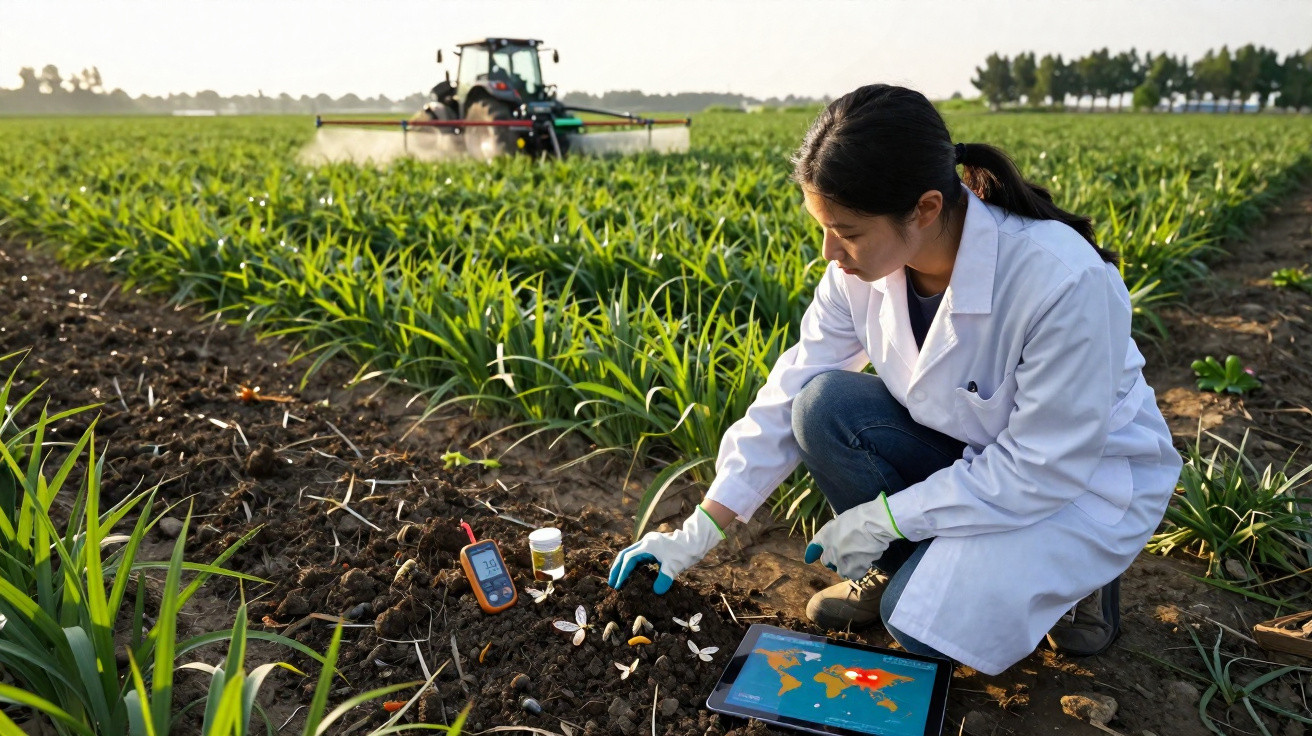
Modern farming depends extensively on pesticides to safeguard crops and sustain high food yields. Yet scientists have established over time that these substances do not merely eliminate pests: they may also damage insects, fish, soil-dwelling organisms and plants that underpin healthy ecosystems.
In response to these dangers, nations attending the 2022 United Nations Biodiversity Conference in Montreal committed to halving pesticide-related risks by 2030. The commitment aimed to curb biodiversity decline without jeopardising worldwide food supplies.
However, a new worldwide assessment finds that pesticide damage is increasing in numerous agricultural areas.
Scientists at RPTU University Kaiserslautern-Landau analysed pesticide-use trends in almost all of the world’s farming regions, producing one of the broadest assessments so far of the effects of chemical use on ecosystems.
Measuring pesticide harm
A large number of previous investigations assessed pesticide risk by calculating the tonnes sprayed by growers. However, this approach overlooks a crucial issue.
Certain pesticides are highly damaging at very low quantities, whereas others carry less risk even when used at larger doses. To address this, the researchers applied a measure known as total applied toxicity, or TAT.
This approach brings together two components: the amount of every pesticide used by farmers and the toxicity of each substance to living organisms.
Tracking ecosystem damage from pesticides
The team assessed 625 pesticides and quantified their effects on eight organism groups used in pesticide safety assessments. The groups covered fish, insects, pollinators, soil organisms, plants and vertebrates.
The toxicity figures were obtained from regulatory authorities in Australia, Canada, China, the European Union, Japan, New Zealand and the United States.
“This gives us a whole new perspective on the potential risks to the environment and biodiversity posed by pesticide use,” said study co-author Dr. Ralf Schulz, science director at RPTU University Kaiserslautern-Landau.
Pesticide-use data
Making comparisons of pesticide risks between countries is difficult. Data are gathered differently by many nations, while others do not publish detailed figures.
To deal with this limitation, the researchers used commercial data on pesticide applications from 2013 to 2019. This span corresponds with the baseline established under the United Nations biodiversity agreement.
“To ensure continuous and comprehensive monitoring, it is essential that all countries regularly report updated annual data on agricultural pesticide use, broken down by active ingredient,” said study lead author Jakob Wolfram, a researcher at RPTU University Kaiserslautern-Landau.
According to the authors, this reporting would make it possible to monitor progress towards the UN Biodiversity Conference targets in real time. In the absence of consistent reporting, measuring worldwide progress is still challenging and incomplete.
Increasing toxicity across ecosystems
The findings present a concerning picture. Total applied toxicity rose for the majority of organism groups from 2013 to 2019. The sharpest increase in harm affected terrestrial insects, followed by soil organisms and fish.
Risks also grew in many areas for pollinators and aquatic invertebrates. Overall, only aquatic plants and terrestrial vertebrates recorded modest reductions.
This upward trend has two main causes. The expansion of farmland raises pesticide use, while more potent and toxic substances, particularly insecticides, are replacing older products.
A limited number of pesticide classes account for most total toxicity. Pyrethroids and organophosphates produce substantial damage to insects and fish, while neonicotinoids have a strong effect on pollinators. Some herbicides are responsible for toxicity in plants, and fungicides have major effects on soil life.
“This rise is driven in part by higher pesticide amounts being applied and in part by the growing toxicity of the active ingredients themselves, particularly insecticides,” said Dr. Schulz.
One notable finding is that roughly 20 active ingredients account for more than 90 percent of pesticide toxicity in many countries. Substituting these chemicals could greatly lower environmental damage.
Ecological harm hotspots
Worldwide trends show pronounced regional variation. Brazil, China, the United States and India together represent over half of global pesticide toxicity.
Nigeria currently has lower levels, although fast agricultural expansion could alter future levels of risk.
The crops grown are also highly influential. Fruit, vegetables, maize, soybeans, rice and other cereals account for approximately 80 percent of worldwide pesticide toxicity. Extensive crop-growing areas combined with toxic pesticide selections produce ecological harm hotspots.
“The interaction between cultivated land area and the types of crops grown is a key driver of applied toxicity and is thus another factor that can be adjusted in agricultural planning to achieve the goal of protecting biodiversity,” said Wolfram.
Urgent pesticide action needed
Without decisive measures, Chile alone is expected to meet the United Nations target by 2030. China, Japan and Venezuela are making progress, but require more rapid change.
Numerous other nations would need to bring pesticide toxicity back to levels last seen over 15 years ago.
“This can likely only be achieved by shifting to less toxic active ingredients and expanding the transition from conventional to organic agriculture, which would also deliver broader benefits for global biodiversity,” said Wolfram.
The research delivers an unambiguous message: cutting pesticide harm is still achievable. It will require replacing the most toxic chemicals, strengthening data reporting and redesigning farming systems to safeguard food production and life on Earth.


Comments
No comments yet. Be the first to comment!
Leave a Comment