
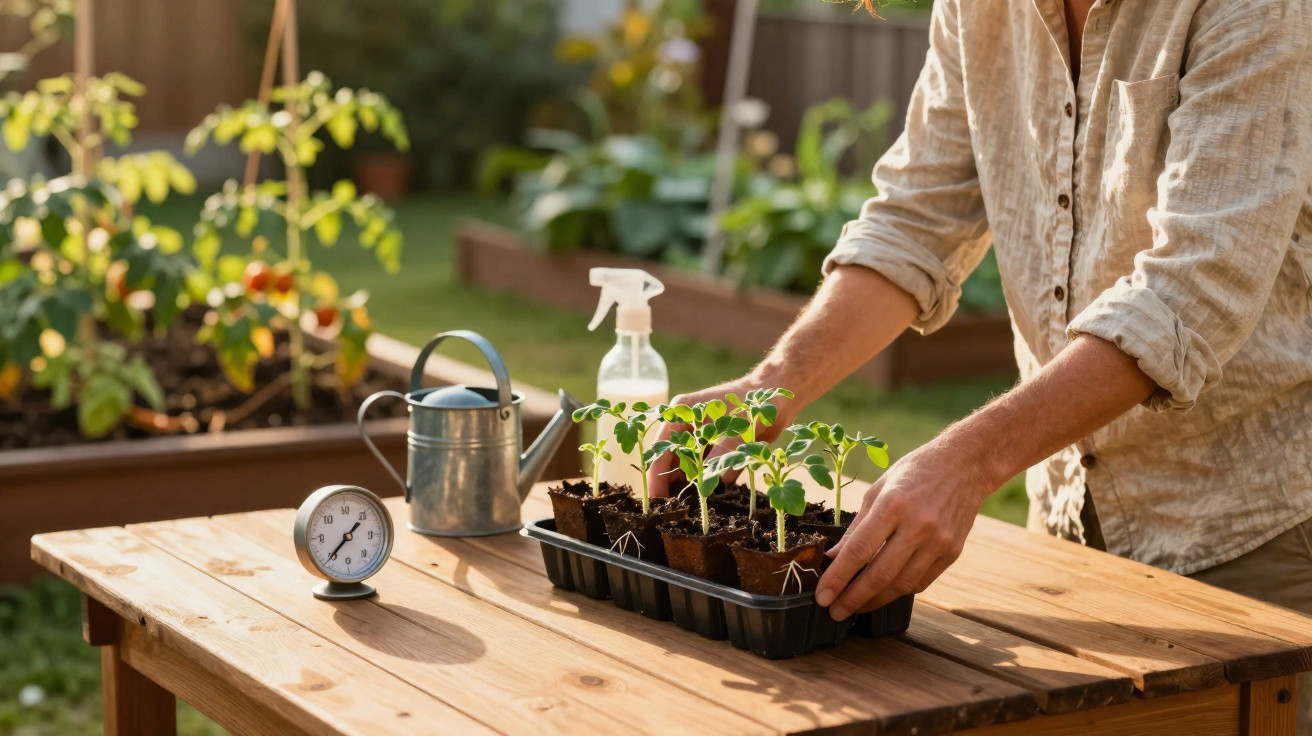
The calendar says it is planting time, the sun is shining and the temperature is rising: so it seems natural to move all the tomatoes, peppers and aubergines from the sitting room or greenhouse straight outdoors. Yet two days later, the once deep-green plants can suddenly look distressed. Their leaves turn pale, stems droop and growth stops. The problem is rarely the date alone, but rather a forgotten intermediate stage that can determine whether you get a bumper crop or a complete failure.
The classic tomato beginner’s mistake: moving from indoors straight into full sun
Tomatoes raised indoors or in a warm cold frame have had a rather easy life: filtered light, barely any air movement and steady temperatures of around 20°C. They have had very little to contend with. Their foliage is soft, the protective outer layer of the leaves is barely developed, and their roots are still concentrated mainly in the upper layer of compost. Put simply, these young plants are little “indoor children” with no experience of stress.
Outdoors, conditions are entirely different. Sunlight is much more intense, particularly the UV radiation. Wind dries out the leaves, while the difference between daytime and night-time temperatures can easily reach 10°C or more. Placing delicate plants directly into these conditions without preparation can cause severe shock.
Moving tomatoes directly from a warm, sheltered space into the full reality of the garden often results in scorched leaves and months of delayed growth.
Typical symptoms of this “climate shock” include:
- leaves becoming lighter, almost whitish, or developing brown patches
- plants wilting in the midday sun even though the compost is moist
- barely any new leaf growth for several days or weeks
- in severe cases, the loss of individual plants
All the traditional “southern vegetables” are especially sensitive: tomatoes, peppers, chillies, aubergines and basil. Direct-sown crops such as radishes or carrots do not experience this stress, as they germinate and grow outside from the outset.
Harden tomato plants rather than shocking them: getting them used to outdoor life
The overlooked middle stage has an unremarkable name: hardening off young plants. The principle is simple: give plants a little more of the “real garden” each day until they can cope with sunshine, wind and cooler nights.
Ideally, begin this preparation 7 to 10 days before planting tomatoes permanently into the bed. A suitable time is when daytime temperatures are consistently around 15°C and no more severe frost is forecast overnight.
Nine-day plan for hardened-off tomatoes
A straightforward routine could look like this:
- Days 1 to 3: Put them outside for 1–2 hours each day, in shade and sheltered from wind. Then bring them back indoors or to a protected spot.
- Days 4 to 6: Leave them outdoors for 4–5 hours, with gentle morning sun before moving them back into shade during the afternoon.
- Days 7 to 9: Place them for 6–8 hours in their final position in the bed or raised bed. Only return plants indoors overnight if nights are cold.
Several adaptation processes take place inside the plant during this period. Leaves develop a thicker layer to protect against UV radiation, stomata learn to manage water more efficiently, and the roots branch out more strongly. You can usually see the difference too: young plants appear more compact and robust, while their green colour often becomes slightly darker.
Gardeners who harden off their tomatoes carefully often gain weeks of growth later on and noticeably sturdier plants – without expensive specialist fertilisers.
Planting tomatoes properly: reducing stress and encouraging roots
Once tomatoes have been hardened off, it is time to plant them into a bed or large containers. This is where further common mistakes often occur: the root ball is too dry, the plant is set too shallowly or it is left unstable.
Gardeners can take a much safer approach as follows:
- Water the root ball first: Thoroughly moisten all the compost in the pot so that the plant does not dry out immediately after planting.
- Allow enough depth: A planting hole around 20 centimetres deep is usually sufficient. Plant the tomato deeply enough for roughly 10 centimetres of its stem to be beneath the soil. Extra roots will form along this buried section, making the plant more resilient.
- Support it immediately: Insert a cane or sturdy support straight after planting and tie the tomato in loosely. This protects it from wind and prevents root damage caused by repeated rocking.
- Mulch generously: A layer of straw, grass clippings left to dry slightly, leaves or similar material keeps the soil evenly moist and protects it from temperature swings.
Tomato plants that are well watered, securely supported and mulched recover far more quickly from transplanting stress and enter their growth phase sooner.
Wet foliage and fungal diseases: keeping tomatoes healthy
Tomatoes thrive in sunshine and warmth, but they cope poorly with prolonged moisture on their leaves. Plants positioned too closely together, frequent watering from above and sharp temperature changes all encourage fungal diseases such as late blight, powdery mildew and grey mould.
A few simple rules can significantly reduce the risk:
- Water only at soil level: Apply water directly around the roots rather than letting it run over leaves and stems.
- Water in the morning or evening: Too much moisture evaporates at midday, while dripping-wet leaves overnight are a magnet for fungi.
- Keep sufficient spacing: Do not position plants too close together, so that air can circulate around the foliage and leaves dry more quickly.
- Remove diseased leaves early: Cut off yellow or brown leaves promptly and do not dispose of them on the compost heap.
Why many gardeners use milk as a plant spray
One modest but interesting tip from many home gardens is a blend of water and ordinary cow’s milk. It is sprayed over the leaves at a low concentration.
A typical dilution uses 10 to 20 per cent milk in water. The mixture is applied to the foliage roughly every ten to fifteen days. Many gardeners report that their tomatoes then have fewer problems with fungal spores and certain nutrient-deficiency symptoms. The substances in milk apparently create a light protective film and provide the leaves with additional nutrients.
Milk and water is not a miracle cure, but it can help strengthen tomatoes – especially as an addition to good ventilation and appropriate watering.
Common beginner questions: temperature, timing and position
The start of the tomato season repeatedly brings up the same uncertainties. Three points matter particularly:
| Question | Practical answer |
|---|---|
| When can tomatoes remain outdoors permanently? | After the final late frosts, when night-time temperatures generally stay above 8–10°C – provided they have been hardened off beforehand. |
| How much sun do they need? | At least 6 hours of direct light daily, preferably more. Partial shade significantly reduces yields. |
| Can tomatoes be grown in pots? | Yes, provided containers are large enough (at least 20–30 litres), watering is regular and nutrient supply is good. |
Why the extra effort is genuinely worthwhile
Hardening off, planting carefully and watering thoughtfully may initially sound like more work. In practice, however, these steps avoid plenty of worry and plant losses. Gardeners who do not shock their plants need fewer replacement seedlings, have to replant less often and get sturdier stems with stronger root systems.
Over the longer term, a careful start pays off particularly during extended spells of heat or rain. Well-prepared tomatoes usually withstand erratic weather more successfully, crop more consistently and produce flavourful fruit well into late summer. Especially in years with unpredictable weather patterns, this one frequently overlooked intermediate step makes the difference between a few tired trusses and a truly abundant harvest.

Comments
No comments yet. Be the first to comment!
Leave a Comment