
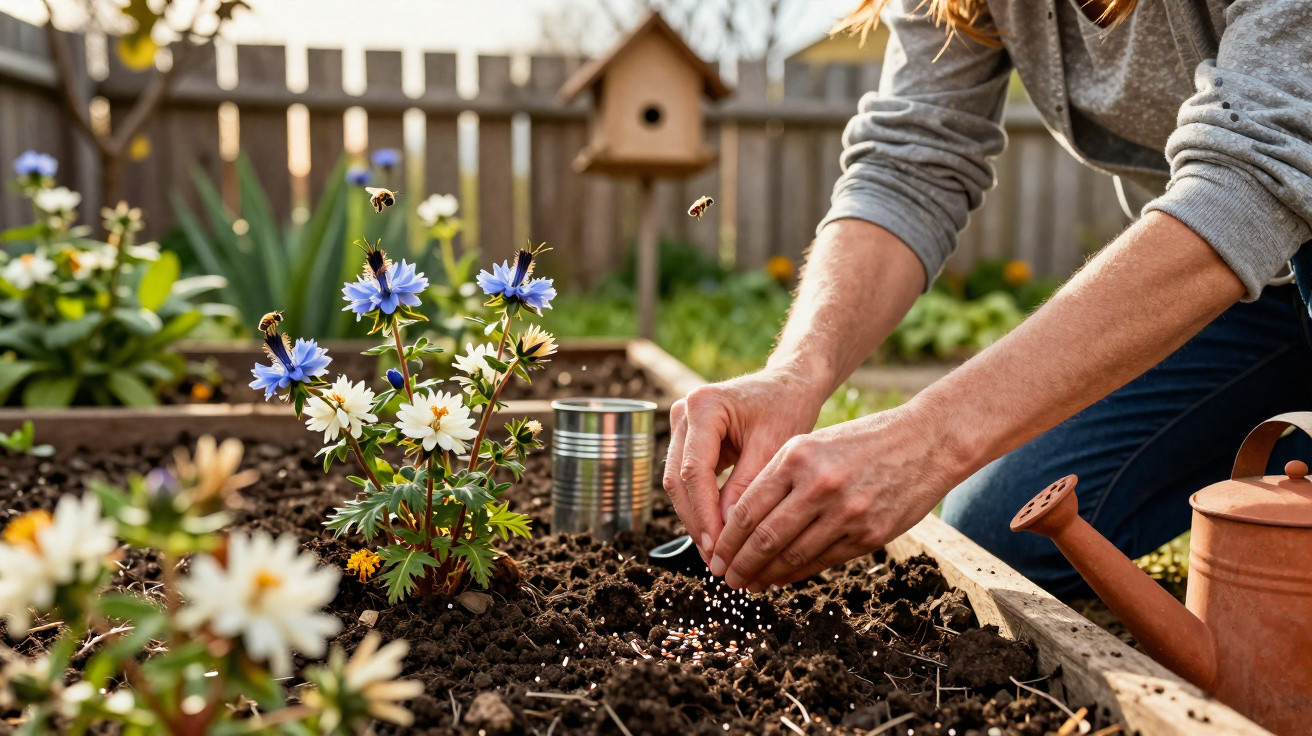
When winter slowly begins to loosen its grip, one often-overlooked flower is enough to turn a garden into a lively natural haven – with very little effort.
Anyone reaching for a packet of seeds in March can tackle two issues with a single plant: providing food for bees and other insects, while also offering birds reliable shelter and nourishment. The flower in question is a delicate bloom with an almost floating appearance, familiar to many only from nostalgic cottage gardens: love-in-a-mist, botanically known as Nigella damascena.
An almost forgotten garden flower with enormous benefits
Love-in-a-mist has long been regarded as a classic cottage-garden plant. It has disappeared from many modern front gardens, despite having nearly everything gardeners now look for: it is tough, undemanding, insect-friendly and a real visual highlight.
“Sow the seeds in March and you create a natural buffet for bees in summer – and a feeding spot for birds in autumn.”
Its fine foliage resembles delicate green threads, surrounding the flowers like a light cloud. This distinctive appearance adds texture to borders without making them feel crowded. It is especially effective in smaller gardens and on balconies, creating an airy, contemporary look rather than dense clumps of planting.
Delicate flowers with nostalgic charm
Depending on the variety, love-in-a-mist flowers in rich blue, soft pink or clear white. Many people associate them with old vicarage gardens or romantic cottage-style borders. Planted among perennials, ornamental grasses or even vegetables, they add small touches of colour without ever appearing overpowering.
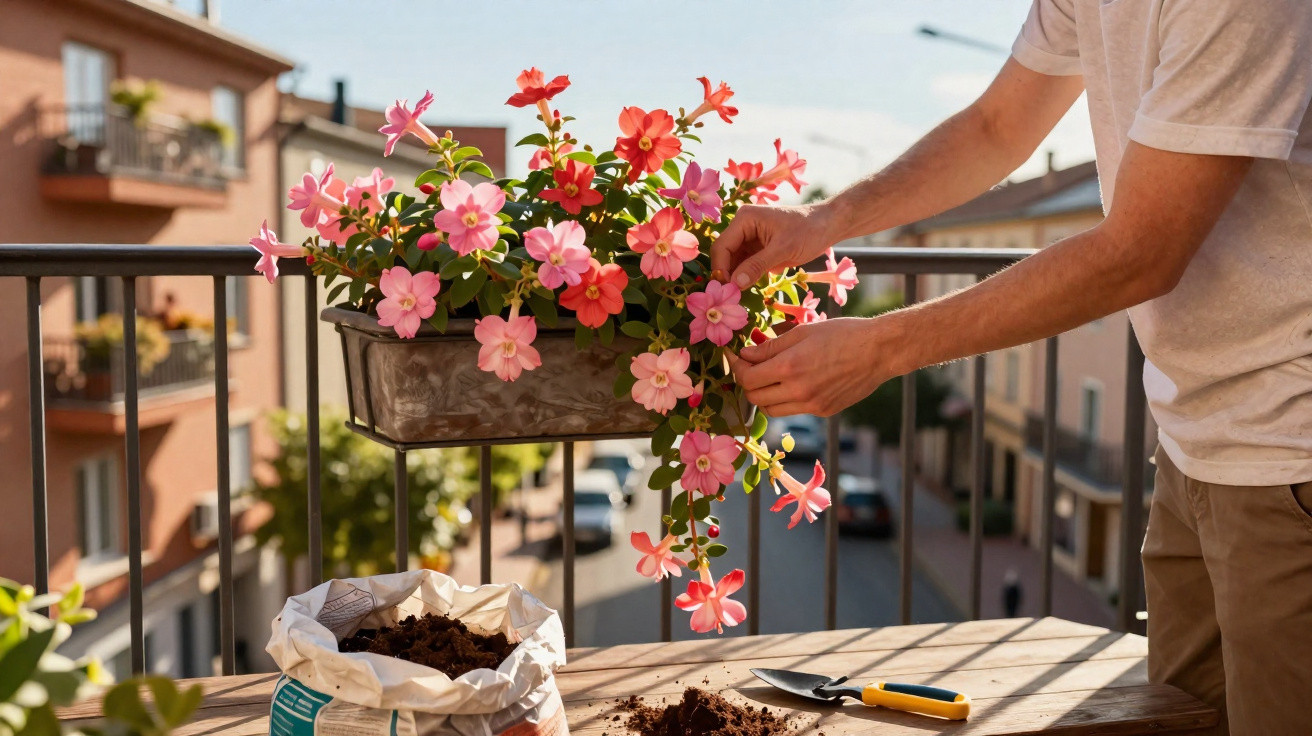
Interestingly, the plant also suits urban spaces remarkably well. Whether grown with herbs on a city balcony or in a narrow front garden beside a house wall, it brings the same charm as it does in a country garden – simply on a more compact scale.
Position and soil: where love-in-a-mist thrives
For March sowing to succeed, love-in-a-mist mainly needs two things: plenty of light and free-draining soil. It is one of the classic sun-loving annuals.
A sunny site encourages abundant flowering
It grows best where the bed receives several hours of unobstructed sunshine each day. The brighter the location, the sturdier the stems remain and the more freely it flowers. In permanent shade, plants tend to become leggy, produce fewer blooms and topple over easily.
Suitable places include:
- border edges beside paths or patios
- gaps in perennial beds that are still bare in spring
- window boxes and containers on south-facing balconies
- the edges of vegetable beds as a flowering strip
Avoid waterlogging – here is how
Love-in-a-mist is tolerant when it comes to soil. There is only one condition it handles poorly: heavy ground that remains permanently wet. Its roots can rot easily in these conditions.
If your soil is clay-heavy or very compacted, loosen it before sowing and work in coarse sand. For containers, a layer of expanded clay or gravel at the base will also help water drain away.
| Factor | Ideal for love-in-a-mist |
|---|---|
| Light | Full sun to bright partial shade |
| Soil | Loose, humus-rich and well-drained |
| Moisture | Evenly slightly moist, with no waterlogging |
| Nutrients | Moderately fertile; no heavy feeding required |
Why March is the ideal time to sow
As soon as the soil is no longer frozen and the days start becoming longer, the love-in-a-mist season begins for home gardeners. Seeds can be sown directly outdoors from March onwards.
Easy direct sowing – no need to start plants indoors
Sow the seeds straight into the ground. Very little preparation is needed: lightly rake the surface, remove any large clods, then scatter the seeds loosely by hand. A strict row spacing is unnecessary; a gently scattered, natural-looking display suits this flower perfectly.
Those who are impatient can also buy young plants in pots from garden centres and plant them in containers or borders. For larger areas, however, seed remains considerably cheaper.
Water gently to give seedlings their chance
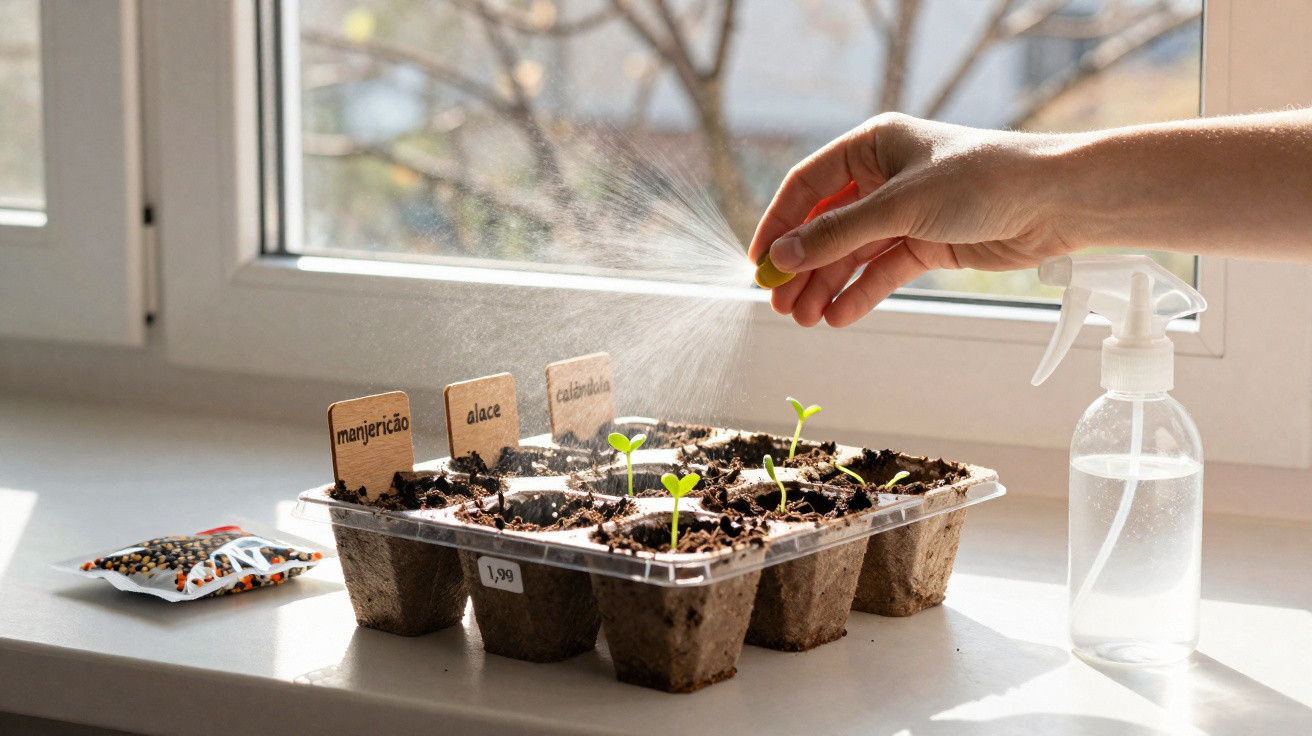
A careful watering after sowing is sufficient. A watering can fitted with a fine rose is ideal, as it prevents the seeds from being washed away. Over the following days, the soil should remain lightly moist, but never become muddy or saturated.
“Rule of thumb: water more often with small amounts rather than infrequently with a full watering can.”
Depending on the weather, the first seedlings usually emerge after around two weeks. Patience is then important: do not immediately sow again if only some seeds germinate at first. Many seeds wait for slightly warmer conditions and emerge at different times.
A miniature habitat: how bees, butterflies and birds benefit
The real value of this March-sown flower becomes apparent in summer and autumn. It is more than a decoration; it is an important contribution to greater biodiversity in the garden.
A plentiful food source for pollinators
Love-in-a-mist flowers provide generous amounts of nectar and pollen. Honeybees, solitary bees, bumblebees and butterflies all use them as a dependable food source between other flowering periods.
Gardeners growing vegetables such as tomatoes, squashes or berries benefit twice over. More pollinators in the garden generally mean better harvests as well. A colourful strip of love-in-a-mist along the edge of a vegetable bed acts as a natural magnet.
Bird food from your own border
Once flowering has finished, the plant develops distinctive balloon-like seed heads. These contain numerous small seeds that are enjoyed by many songbirds. Leaving the capsules standing in the border provides a natural food supply through late summer and into early autumn.
Tits, finches and sparrows can often be seen clinging acrobatically to the dried stems as they pick out the seeds. For garden birds, such planted areas are an important addition to conventional feeding stations.
Very little work, great impact: how little care love-in-a-mist needs
This plant is particularly well suited to people who want a vibrant garden but do not want to spend every weekend carrying watering cans and fertiliser around.
What you really need – and what you do not
Only a few simple items are needed for sowing and care:
- one packet of seeds, as a small quantity is enough for several square metres
- a small hand rake for loosening the soil
- optionally, some coarse sand for heavy soils
- a watering can with a fine rose
Fertiliser is usually unnecessary in ordinary garden soil. Only very poor, sandy ground benefits from a little compost before sowing. Pesticides and fungicides are not needed at all if the soil is loose and does not stay wet continuously.
Self-seeding brings flowers back in future years
If the seed heads are allowed to ripen fully, love-in-a-mist does most of the work itself. Some seeds fall to the ground and germinate naturally the following spring. Over time, this creates an informal colony that refills the borders year after year.
“Those who avoid constant digging and only loosen the surface give self-seeding the best chance.”
Should the plant spread too widely, it is easy to control by hand: simply pull up young plants where they are unwanted or move them into nearby gaps.
Practical tips: where this flower works especially well
Many home gardeners underestimate just how versatile love-in-a-mist can be. These tried-and-tested combinations work particularly well:
- among airy ornamental grasses for light summer borders
- with pot marigolds and cornflowers in a wildlife-friendly flowering strip
- as a filler between young roses until they grow larger
- alongside herbs such as thyme or oregano in a balcony planter
The dried seed heads are also suitable for simple dried bouquets. Anyone wishing to use them this way should cut a few stems in good time and hang them upside down in a dry, airy place.
Why sowing this March seed is truly worthwhile
A few minutes spent preparing the ground and sowing in March creates benefits that can be felt throughout summer and autumn: a lively, colourful garden constantly visited by insects and enlivened by birds. At the same time, the need for shop-bought bird food, artificial fertilisers and ongoing maintenance is reduced.
For newcomers to wildlife-friendly gardening, love-in-a-mist is therefore an ideal starting point: inexpensive, forgiving of mistakes, visually appealing and a genuine asset for numerous animal species. It is precisely the combination that many gardens across the United Kingdom now urgently need.

Comments
No comments yet. Be the first to comment!
Leave a Comment