
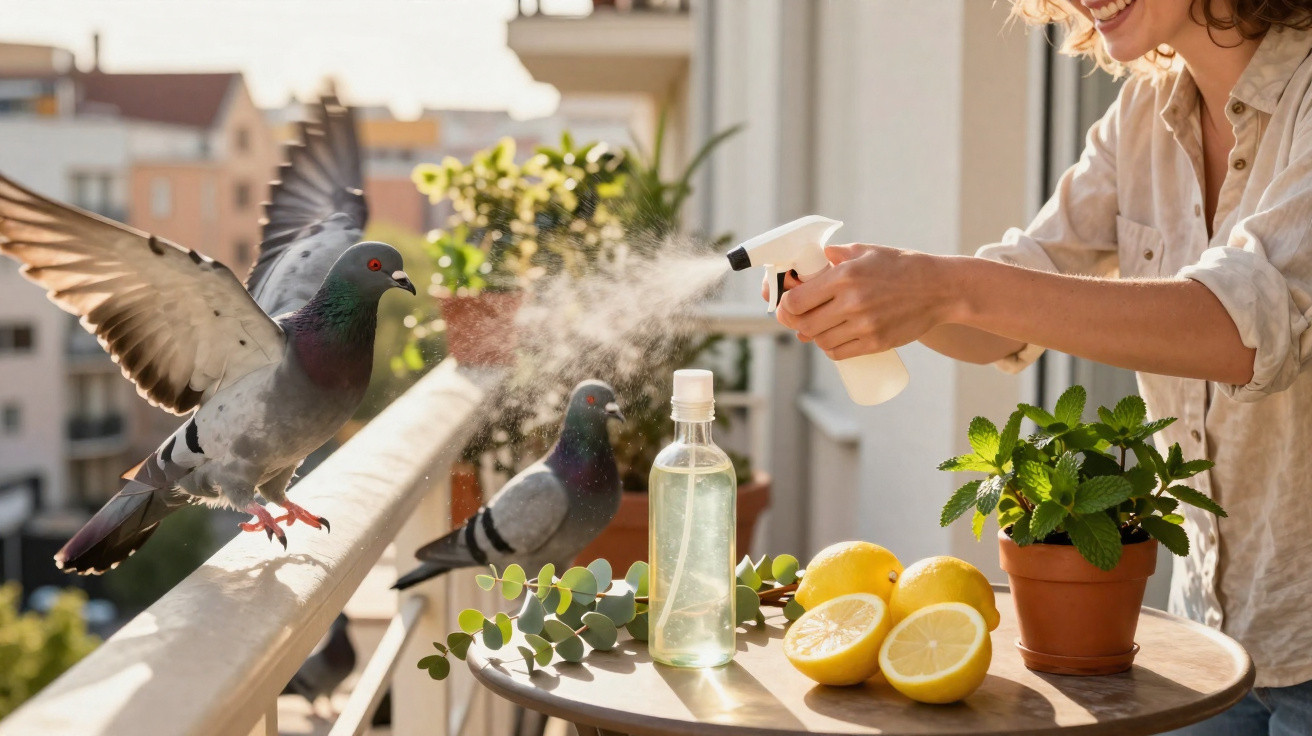
Living in a city comes with a familiar problem: as soon as the weather gets warmer, pigeons start perching on the balcony, rattling about with twigs and making themselves at home. What begins as a few seemingly harmless visits can quickly turn into a proper nest, bringing mess, noise and potential health risks. One easy scent-based method can keep the birds away without harming them.
Why pigeons love balconies
Pigeons are particularly comfortable living close to people. Cities offer plentiful food as well as countless sheltered spots. Balconies, window ledges and projecting walls make ideal nesting sites: they are partly covered, protected from the wind and generally undisturbed.
Breeding activity peaks between April and August. During this period, the birds search especially hard for secure places. Anyone who does not keep an eye on their balcony may soon get a surprise: twigs, feathers and the first signs of a nest can appear overnight.
This is not merely inconvenient; it can also pose a health concern. Pigeon droppings soil floors, furniture and washing, then dry out and become airborne dust. They may contain pathogens that can be particularly troublesome for children, older people and those with allergies.
Acting early and consistently making the balcony unattractive can save you months of trouble with persistent pigeons.
Spotting the first signs: how to tell pigeons want to nest
Before an actual nest is built, pigeons give clear indications. Look out in particular for:
- twigs, small branches or stalks that suddenly appear on the floor or in corners
- repeated visits from the same pigeons at certain times of day
- increasing pigeon droppings on the railing, floor or window ledge
- loud cooing early in the morning or at dusk
Once these signs become more frequent, it is time to act. The longer the birds are allowed to stay, the harder it becomes to discourage them. Pigeons return faithfully to places they consider safe and comfortable.
The smell trick: making your balcony unattractive to pigeons
Many people immediately think of spikes, nets or costly electronic devices. On an ordinary city balcony, however, a much simpler option is often enough: a strongly scented cleaning mixture containing essential oils.
Recipe for the anti-pigeon mixture
You only need a few ingredients, available from a pharmacy, health-food shop or chemist:
- 2–3 litres of warm water
- at least 30 drops of essential oil, such as lemon, eucalyptus or peppermint
- a splash of clear household vinegar
- a little pure soap or a traditional grey soap bar
Proceed as follows:
- Clear away twigs, feathers and loose dirt.
- Dissolve the soap in the warm water until it forms a mild soapy solution.
- Add the vinegar and mix thoroughly.
- Drip in the essential oils, using at least 30 drops and more if pigeon activity is heavy.
- Wipe down the entire balcony with a cloth or mop, including the floor, railings, window frames and gaps.
This mixture works in two ways: soap and vinegar loosen droppings and neutralise odours that attract pigeons. The essential oils release an intense fragrance that most people find pleasantly fresh, while pigeons find it highly irritating and avoid the area.
Combining thorough cleaning with a strong scent removes the appeal that draws pigeons back to the same balcony time after time.
How often should you treat the balcony?
Cleaning once is rarely sufficient, especially during the breeding season. Rain quickly washes away scented substances, while sunshine makes them evaporate. For a lasting result, follow a practical routine:
- during the main breeding season, from April to August: wipe down the balcony around once a week
- after every heavy shower: briefly retreat critical areas at the very least
- whenever fresh droppings are visible: clean them straight away rather than waiting
Many people report that pigeons look elsewhere after just two or three consistent cleaning sessions. Regularity is the key. If the scent is present only occasionally, the birds can become accustomed to it more easily.
What is allowed – and what is not
Anyone wanting to get rid of pigeons should bear in mind that the birds are protected in many cities. Nests containing eggs or young birds usually cannot simply be removed. It is best to take action before a complete nest has been built.
The following measures are generally permitted:
- cleaning the balcony regularly
- using strongly scented but non-toxic household remedies
- visual deterrents, such as reflective tape or old CDs
- physical barriers such as nets, provided they are professionally fitted and cannot injure the birds
Methods that could harm pigeons are off limits, including homemade sharp-edged spikes or poison. Going too far can lead to problems with neighbours, landlords and the authorities.
More ways to keep pigeons away
The smell trick is most effective when you also remove every other attraction for the birds. Useful measures include:
- do not leave food on the balcony, including breakfast crumbs
- always keep rubbish bags sealed instead of leaving them open on the balcony
- arrange window boxes and corners so that they do not provide comfortable perching or nesting spaces
- remove or move objects beneath which pigeons could hide where possible
In some situations, it is also worth combining the scented mixture with visual deterrents such as fluttering ribbons. The birds then perceive the balcony as unsettled and unpleasant, and seek out quieter corners instead.
Why lemon, eucalyptus and peppermint work
Essential oils contain highly concentrated fragrance compounds. A smell we find “fresh” or “invigorating” can be extremely intense and disruptive for animals. Citrus oils, eucalyptus and peppermint are among the strongest options.
Pigeons rely heavily on scent and habit for orientation. If a place suddenly smells unusually strong and unpleasant, it causes stress. The birds instinctively move to other locations with more neutral smells, where they feel safer.
Using enough of the mixture matters: ten or twenty drops will usually not be sufficient. Around 30 drops in 2–3 litres of water creates a clearly noticeable layer of scent. If a balcony receives frequent pigeon visits, the amount can be increased slightly.
When professional help is the better option
In most situations, the household mixture, consistent cleaning and a few small structural changes will be enough. However, these measures can reach their limits with especially persistent colonies or very large building areas.
If several nests are already present, or the birds keep returning despite intensive measures, it may be worthwhile contacting a pest-control company or the local council. They will know the legal requirements and the most effective animal-welfare-friendly solutions for the particular property.
For most city residents, though, the following applies: those who act promptly and make their balcony unappealing through scent, cleaning and a few simple measures will not have to deal with pigeons for long in the first place.

Comments
No comments yet. Be the first to comment!
Leave a Comment