
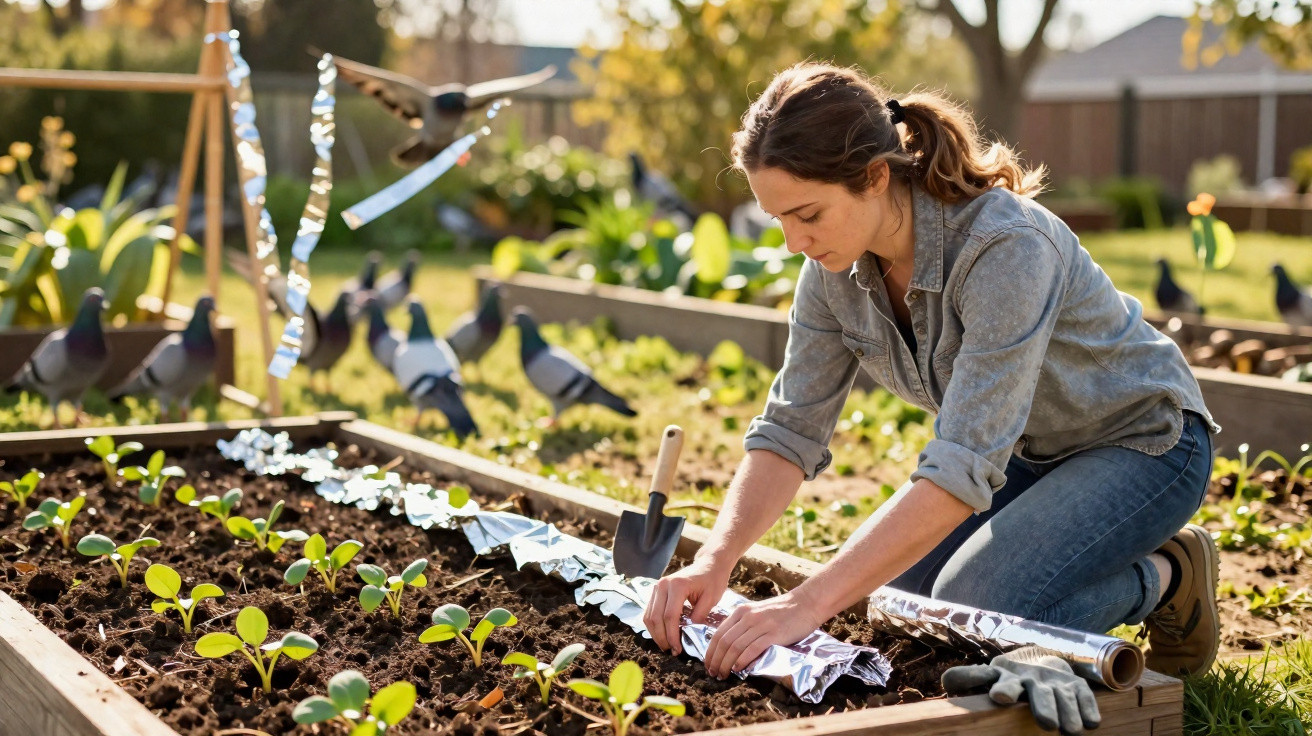
.. and pecked at: Anyone getting their garden into shape now may be in for an unpleasant surprise from pigeons.
As soon as temperatures rise, many people begin the gardening season with fresh soil, new plants and plenty of anticipation. That is precisely when uninvited visitors appear: pigeons. They trample flowerbeds, peck at young lettuces and leave considerable mess on patios and balconies. A simple roll of aluminium foil can offer surprisingly effective help – without poison or costly specialist systems.
Why pigeons suddenly appear everywhere in the garden in spring
Pigeons enter their breeding season at the start of spring. At this time, they need plenty of energy and constantly look for food and safe places to rest. Gardens, balconies and allotments resemble a laid table to them: fresh seed, soft soil and young leaves are ideal for pecking.
Typical pigeon hotspots in the garden include:
- balcony or patio parapets and railings
- window ledges and wall projections
- garden benches, pergolas and trellises
- beds containing fresh sowings or young plants
- areas around bird baths and feeding stations
Pigeons are creatures of habit. Once they have judged a spot to be safe and comfortable, they keep returning to it. This can lead to heavy soiling in a short time.
“The real damage is not just pecked lettuces, but above all the aggressive droppings, which affect materials and health.”
The droppings are highly acidic and can damage paintwork, wood stains and even metal. As well as looking unattractive on the patio, they may gradually destroy surfaces. There is another issue too: droppings attract other unwelcome visitors, such as rats, which feed on leftover food and waste.
How aluminium foil deters pigeons without harming them
When people think of keeping pigeons away, they often immediately picture spikes, wires or complicated systems. These are frequently expensive, visually unappealing and not always permitted in rented homes. A far simpler household trick uses ordinary kitchen aluminium foil.
It works through two effects:
- Light reflections: When sunlight hits the crumpled surface, it creates constantly changing, bright reflections. To pigeons, this can resemble a moving unfamiliar object or a potential threat.
- An unpleasant sensation: If they touch the foil with their beaks or feet, they dislike its smooth, rustling surface. Many birds consistently avoid such ground coverings.
Unlike traps or rigid deterrent spikes, aluminium foil does not injure the birds. It merely changes the surroundings so that pigeons no longer find them appealing and choose other areas instead.
How gardeners use aluminium foil on the ground
Anyone wanting to protect vegetable beds and young plants should focus mainly on the soil. Experts recommend placing the foil selectively where pigeons most like to peck.
Around vulnerable plants
Narrow strips of aluminium foil can be laid around lettuces, young cabbage plants or freshly sown areas. They can rest lightly on the soil or be gently pressed down. When pigeons feel the unfamiliar surface while pecking, they will often abandon the area quickly.
The method also works well in the following places:
- along the edges of raised beds
- between rows of carrots, radishes or spinach
- beneath strawberry plants to protect fruit and foliage
- around newly planted herbs that are still delicate
Lightly buried for a firmer hold
If you are concerned that the foil could blow away, slide it slightly beneath the top layer of soil. Keep it as flat as possible. When pecking, pigeons will feel the unfamiliar texture just below the surface and soon give up.
“The ground remains pigeon-unfriendly, while plants grow undisturbed – a small strip of aluminium is often enough.”
Aluminium foil in the air: sparkling deterrents for perching spots
A second trick helps to discourage pigeons from using balcony railings, window ledges or trellises: hanging aluminium balls or strips.
How to make simple deterrents
- Loosely scrunch several pieces of aluminium foil into uneven balls.
- Hang them at different heights using string or garden wire.
- Position the balls where pigeons normally land: on railings, pergolas or tree branches.
- If desired, cut long foil strips and attach them so that they flutter like ribbons.
Even a light breeze makes the balls move, producing ever-changing reflections. Pigeons dislike this disturbance and prefer to seek out quieter places.
Typical places to use them in the garden
To make the method genuinely effective, cover several areas of the garden:
- on the sides of balcony or patio railings
- in fruit trees, particularly cherry trees and berry bushes
- on trellises above vegetable beds
- above the entrance to a shed or carport if pigeons perch there
“The more unpredictably the shiny elements move, the less attractive the place appears to pigeons.”
Why the effort is worthwhile for hobby gardeners
The aluminium foil method is particularly appealing to people who want to avoid chemical products in the garden. There is no spray, no poison and no sharp edges – just visual and tactile disruption.
The main benefits at a glance:
- very low cost, as ordinary household foil is sufficient
- quick to put in place, with no tools or specialist knowledge needed
- suitable for rented homes, balconies and allotments
- no risk to children, dogs or cats, provided nothing is swallowed
- easy to remove and recycle after the season
Because pigeons are highly capable of learning, they respond particularly strongly to unfamiliar stimuli at first. If the effects lessen over time, a simple approach can help: regularly move the foil, rehang the balls and add new strips. This maintains the element of surprise.
What gardeners should consider when using aluminium foil
Despite its benefits, using foil requires a little care. Too much shiny material can quickly become distracting in a garden. Being considerate of neighbours is particularly sensible in densely built-up areas.
A few practical pointers:
- Do not attach aluminium foil directly to electrical cables or very close to satellite dishes.
- Ensure nothing can come loose in the wind and blow into a neighbour’s garden.
- Do not leave sharp-edged scraps exposed, so that children or animals cannot injure themselves.
- Attach foil strips in a way that prevents them rubbing against or damaging plants.
In areas with strong sunlight, reflections may in extreme cases cause glare. Anyone who is sensitive to this should place the foil at the side of the patio or use smaller pieces instead.
Other simple ways to keep pigeons out of the garden
Aluminium foil works best as part of a wider set of measures. A number of additional steps can significantly improve success:
- Reduce food sources: Do not leave food scraps out in the open, and cover compost.
- Make perching places unattractive: Avoid putting soft coverings on railings and avoid wide, level surfaces.
- Adapt bird feeders: Use smaller feeding stations that attract songbirds rather than pigeons.
- Clean regularly: Wipe away areas affected by droppings early to avoid attracting more animals.
If you are planning for the long term, choose narrower, less inviting resting surfaces when installing new pergolas or plant supports. This helps prevent new favourite pigeon spots from developing in the first place.
How aluminium foil fits with wildlife-friendly gardening
Many gardeners want to support plants, bees and songbirds without creating a sterile, “bird-free” zone. This is exactly where the aluminium method fits well. It is aimed mainly at larger birds that cause substantial damage. Smaller species are generally not permanently deterred by a few reflections.
Those who value a harmonious overall look can combine the foil with other features: colourful ribbons, old CDs or wind chimes. The important thing is that something moves and reflects light. Among perennials, shrubs and fruit trees, this creates a lively space that is uncomfortable for pigeons.
Anyone who wishes can use the opportunity to explain the principle behind the trick to children: light, movement and animal habits. A simple household product then becomes a small learning project – and the carefully prepared vegetable garden can finally remain pigeon-free.
Comments
No comments yet. Be the first to comment!
Leave a Comment