
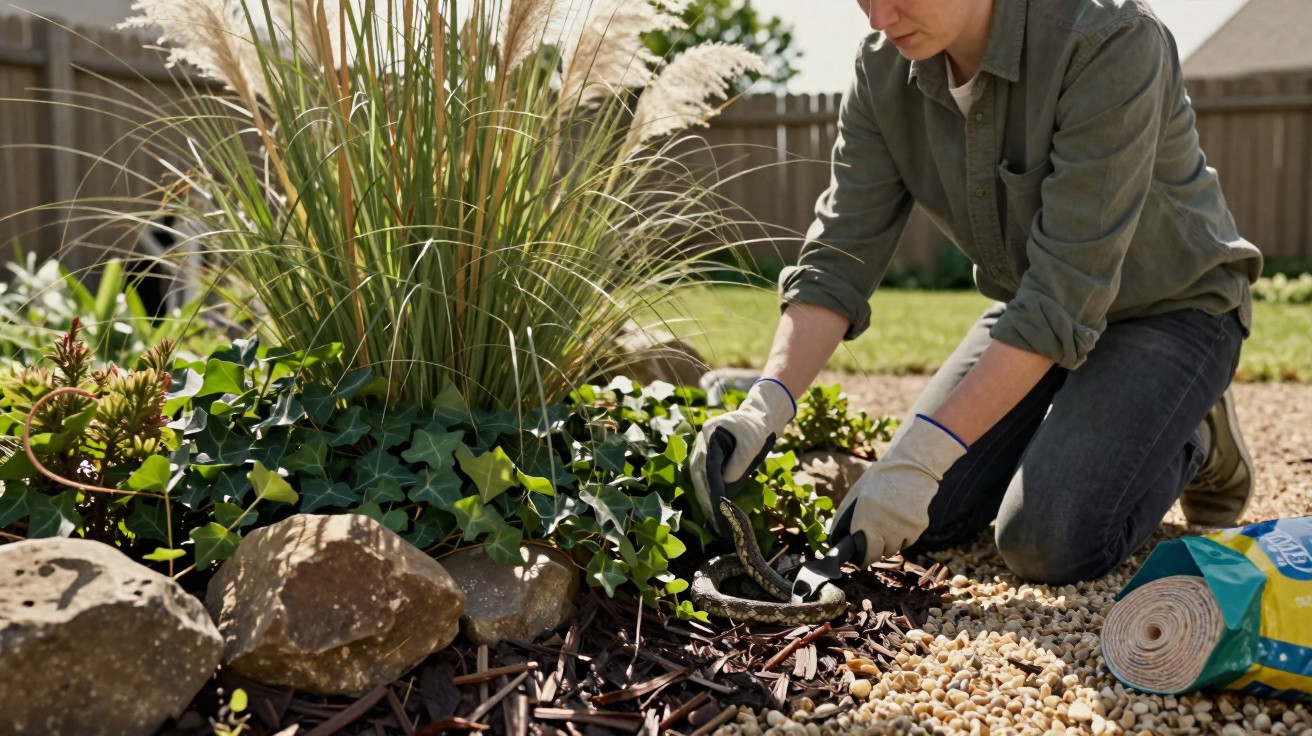
As the sun starts to feel stronger again, snakes begin to rouse from winter dormancy. Adders (the European viper) and other native venomous snakes then look for sheltered, warm spots close to buildings. Some very common garden plants can turn a garden into an ideal refuge for them - often right beside the patio, driveway or front door.
Why snakes suddenly show up in the garden from March
Venomous snakes such as the adder are cold-blooded. They cannot regulate their body temperature on their own and must rely on external warmth. Once daytime ground temperatures rise to around 12–15°C, they leave their winter hideaway.
In many areas this already happens by mid-March - and in sunny locations or built-up towns and cities sometimes even earlier. At that point the animals tend to seek two things at the same time:
- a warm spot where heat is stored
- cover that hides them from predators and people
That pairing is surprisingly common in typical home gardens: dense ground-hugging planting, with stones, walls or paving in front of it or underneath it that warm up in the sun.
"The problem isn’t specific ‘snake plants’, but plants that combine dense cover with stored heat at ground level."
The three plant types that adders particularly like
1. Pampas grass - attractive, but a perfect snake hide
For years, pampas grass has been fashionable in gardens: striking plumes, very little maintenance, and it more or less looks after itself. Those same qualities also make it appealing to snakes.
It forms thick, tall clumps, with leaves that often reach right down to the ground. Inside, a partly enclosed space develops where warmth builds up and which is barely visible from outside. For an adder, that is an ideal resting place - warm, concealed, and close to the garden’s supply of prey.
People who take on an older garden often find pampas grass planted in a prominent position, for example right next to the patio or by the front entrance. In many countries it is now considered an invasive species and planting it is sometimes restricted or prohibited. From a safety perspective alone, it is worth taking a hard look: does this plant really need to be right by the house?
2. Very dense ground-cover shrubs such as creeping juniper and cotoneaster
Low, spreading shrubs are popular because they suppress weeds, need little upkeep and quickly cover bare areas. Typical examples include:
- creeping juniper
- cotoneaster
- similar ground-covering shrubs with very dense foliage
They can seem harmless at first glance, yet they often create an unbroken canopy of leaves, leaving dry, warm cavities underneath. Stones, wall bases or slope supports beneath them can store additional heat. In these “tunnels”, snakes can lie undisturbed during the day, stay protected from birds of prey, and then roam for food at night.
3. Mat-forming perennials and rampant ivy at ground level
Low perennials that spread across large areas can also create appealing shelter - for instance ground-cover ivy or strongly vigorous, carpet-forming plants. They drape over the soil like a curtain. Beneath that cover, leaves, twigs and small stones gather, producing a loose, warm hiding place.
It becomes particularly problematic when these ground covers spread directly alongside:
- house walls
- steps
- patio edges
- garden gates or bin storage areas
These are places people pass regularly, often in sandals or barefoot - a classic set-up for an unwelcome encounter.
Risky combination: stones plus dense planting
Snakes thrive on microclimates. The most enticing set-up is usually a combination of:
- a sunny, south-facing position
- stones, walls, paving or dry-stone features that hold heat
- dense growth that lies over the top or sits in front of it
A typical example seen in many new-build areas: a south-facing patio, a short stone wall in front of it, and perennials or grasses spilling over above. The stones heat up strongly during the day, while the planting provides shade from above and cover from the sides. For reptiles it is a luxury spa; for people, it is generally unwanted.
"Where warmth, stones and dense growth come together, a perfect reptile spot almost forms by itself."
What garden owners should do before mid-March
If you want to reduce the chance of snakes settling right around the house, it is best to plan changes before the first sustained warm spell - in other words, before the ground consistently reaches the 12–15°C range.
Create clearance beneath shrubs and ground cover
One reliable approach is to thin out growth at the base of plants. The aim is a clear strip between the soil and the first foliage.
- under shrubs and ground cover, create 15–20 cm of air space
- shorten trailing branches so the ground remains visible
- remove old, matted plant material from the centre of the plant
Without closed “roofs”, many areas become far less attractive as hiding places. Snakes tend to avoid open, clearly visible patches because they feel exposed.
Tidy stone areas and seal gaps
Around rock gardens, dry-stone walls and natural stone paving, a thorough clean-up is worthwhile:
- remove leaves and old plant debris from between stones
- plug larger cavities and cracks in walls
- stabilise loose stones so deep crevices do not develop
The fewer deep gaps and hollows there are, the fewer winter quarters and daytime shelters remain available.
Rethink mulch: light mineral cover instead of thick bark
Bark mulch and other deep organic layers provide not only moisture but also countless small cavities. Under patio steps, beside paths or right along house walls, this can quickly form a soft, protected corridor.
Safer options in these areas include:
- light-coloured layers of gravel or chippings
- tightly laid, continuous paving slabs
- thin, clearly visible surfacing without heavy leaf build-up
Light mineral materials heat up less and offer far fewer hiding places than loose bark mulch.
Legal position and what to do if you meet a snake
Many native snake species are strictly protected. Killing, catching or deliberately disturbing them is usually illegal. The recommended approach is therefore to design the habitat so snakes do not settle right next to the house, rather than trying to actively eliminate the animals.
If you do come across a snake despite taking precautions, one simple principle applies: keep your distance and leave it alone. Adders generally bite only when they feel cornered or are accidentally stepped on.
- stop, identify where the animal is, then slowly back away
- avoid sudden movements and do not strike at the animal
- explain calmly but clearly to children that they must keep back
If a snake remains right by the front door, garage or a frequently used play area, the fire service or local reptile and nature-conservation groups can advise whether and how relocation is permitted, or whether adjustments to the garden will be enough.
Practical protective measures for gardens with families and pets
If you have children or pets, you may want to reduce the risk even further. A few straightforward routines can help day to day:
- wear sturdy shoes and gloves when gardening
- avoid placing play areas directly next to densely planted stone slopes
- keep wood piles and compost well away from the patio and front entrance
- from March onwards, carry out regular visual checks in known problem spots
A sensible compromise is to leave a “wild” area at the back of the garden or along the boundary. Lizards, slow worms and also snakes can then settle there without constant conflict with people. A deliberately placed pile of branches, stones and leaves - kept well away from the patio and main access route to the house - draws many animals to that spot.
Why snakes are still useful
Despite the concern, adders and other snakes help keep rodent numbers down and therefore support the health of gardens and surrounding farmland. They eat mice that might otherwise damage stored items, roots or even cable insulation.
If you structure the garden so snakes are more likely to live in out-of-the-way areas, you can have both: a functioning ecosystem and significantly lower risk around the house, patio and play spaces. What matters most is placement and maintenance - not every lush perennial is automatically a warning sign, but the mix of density, warmth and proximity to where people walk deserves close attention.

Comments
No comments yet. Be the first to comment!
Leave a Comment