
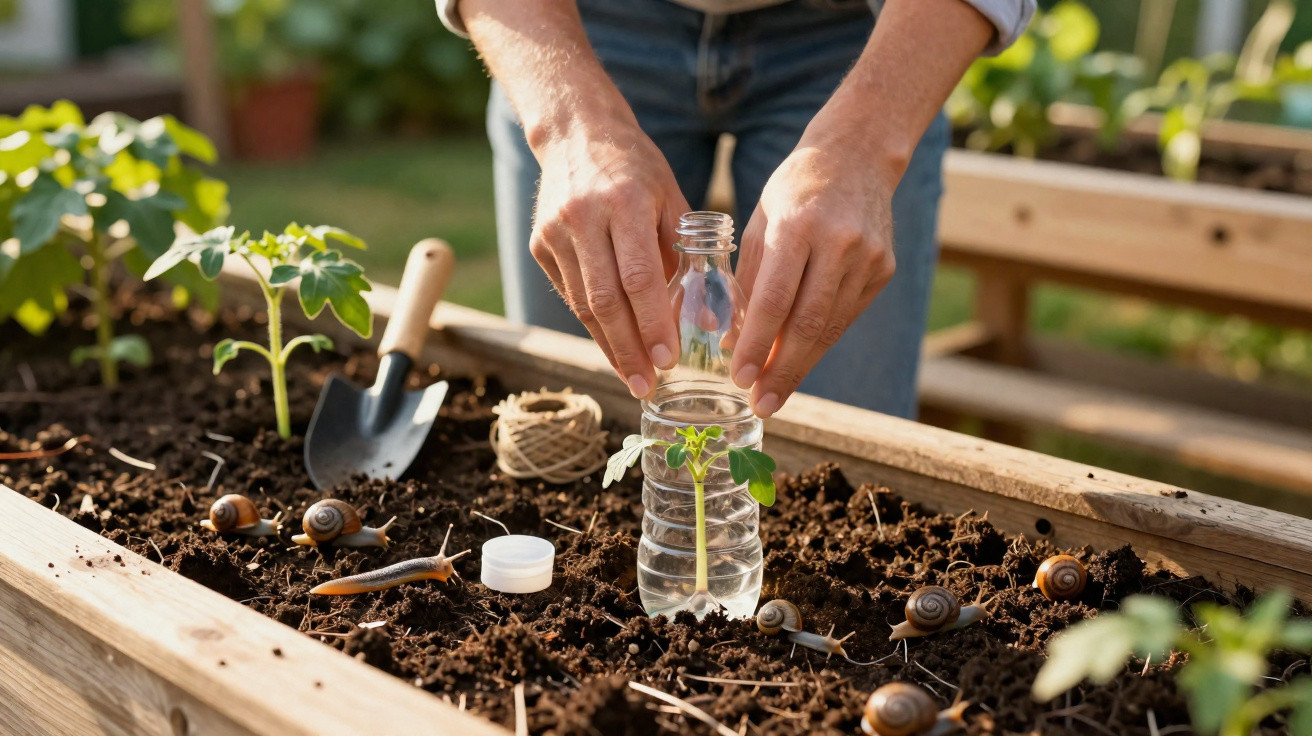
Cut PET bottles can work as small, individual covers for newly planted seedlings. Set around the plant, they soften the effect of wind, make it harder for certain crawling pests to reach it, and create a more sheltered micro-environment while the roots and stem are still establishing in the bed.
Why put a PET bottle over a seedling?
In the first few days after transplanting, a seedling still has a limited root system and can lose water faster than it can take it up again. A clear bottle with the base removed acts as a shield against gusts and reduces direct contact between young leaves and stems and slugs, snails, and some caterpillars that move in from ground level.
The container is made from polyethylene terephthalate (PET), a lightweight, transparent plastic. That clarity lets light through, but it also means you must be careful: in strong sunshine the temperature inside can rise very quickly.
- Shields seedlings from strong wind
- Makes it harder for some crawling pests to reach the plant
- Lessens damage caused by heavy rain
- Helps retain moisture around the plant
- Provides short-term protection while roots are getting established
How to turn the bottle into a mini greenhouse?
Use a clean bottle, cut off the bottom, and place it over the seedling. Push the cut edge slightly into the soil so it stays stable. Leave the neck pointing upwards, so you can manage airflow through the opening where the cap used to be.
Why should the cap be left off?
Ventilation is one of the most important parts of this method. Clear plastic holds on to heat and moisture, and a fully sealed bottle can reach dangerously high temperatures on sunny days-leading to wilting, leaf scorch, and even killing the seedling.
Keeping the neck open allows hot air to escape and reduces excess condensation. During very warm spells, you may need to remove the cover during the hottest hours, or use it only overnight and on windy days.
- Leave the cap off to allow air to circulate
- Do not keep the bottle sealed in strong sun
- Check for too much condensation on the sides
- Keep leaves from pressing against very hot plastic
- Remove the protection temporarily during periods of extreme heat
Which pests can this barrier help against?
The plastic rim forms an obstacle for creatures that reach the plant via the soil-especially slugs, snails, and some caterpillars. Protecting seedlings with cut bottles will not stop flying insects and does not replace checking the leaves, but it can reduce damage at the stage when a single bite can affect a large part of the plant.
When is it time to remove the protection?
A PET bottle mini greenhouse should be treated as a temporary safeguard. Once the stem thickens, new leaves appear, and the plant begins to touch the bottle walls, the space inside is no longer adequate and the cover can start to restrict airflow and growth.
You can take it off gradually-leaving the seedling uncovered for a few hours before removing it for good. With a stronger root system and foliage that has adapted to outdoor conditions, the plant copes better with wind, temperature swings, and minor damage, and the bottle has finished its job in the bed.
Comments
No comments yet. Be the first to comment!
Leave a Comment