
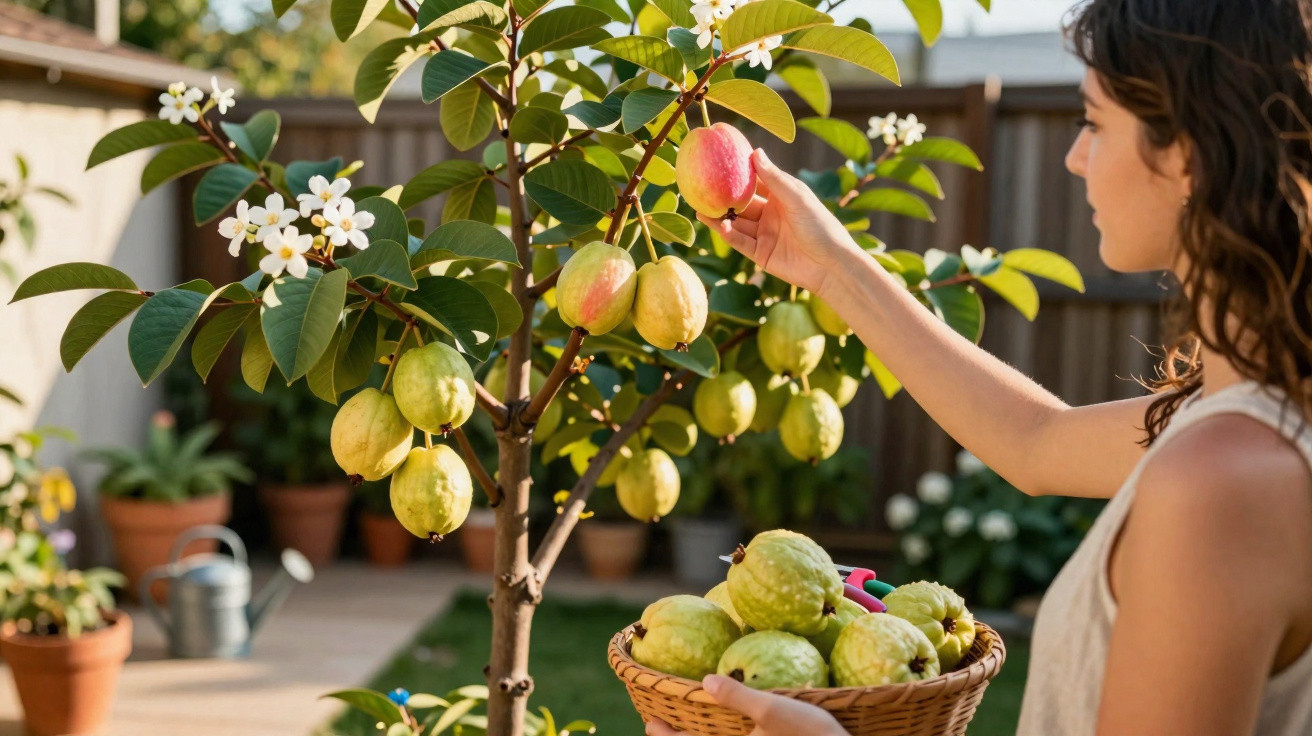
The guava tree brings together several features that stand out in a garden: it bears fragrant fruit, casts welcome shade, and produces delicate white blossoms. When it has the right mix of warmth, light and good care, the plant can flower at different times, making more than one harvest in a single year possible.
Which tree produces sweet fruit several times a year?
The tree in question is the tropical guava tree, scientifically known as Psidium guajava. Native to tropical parts of the Americas, it grows fairly quickly and is often planted both for its fruit and for the ornamental appeal of its canopy and flowers.
- It produces guavas with white, pink or deep reddish flesh;
- It has white flowers that draw in pollinators;
- It can be kept compact with pruning;
- It suits gardens, backyards and home orchards;
- With proper care, it can start fruiting while still young;
- Its fruit can be eaten fresh or used in cooking and processing.
Why can the guava tree flower more than once?
Guava flowers form mainly on fresh, new growth. In warm areas, where there is enough water and nutrients, new shoots can appear at different points in the year, which can lead to extra flowering and more than one crop.
That said, this fruit tree for sunny gardens will not automatically flower several times in every climate. Repeat flowering depends on the variety, temperature, rainfall patterns, irrigation, and whether pruning is done correctly.
What care helps the guava tree produce more?
Plant it in a spot that gets many hours of direct sun and does not hold water after rain. In the first few years, the young tree needs regular watering, but the soil must not stay waterlogged, as too much moisture harms the roots.
- Pick a site with direct sun and good air circulation;
- Enrich the soil with well-rotted organic compost;
- Leave enough space between the tree and buildings;
- Water when the top layer of soil has dried out;
- Do light pruning to encourage fresh, productive shoots;
- Remove dead branches, crossing growth, or any limbs showing signs of disease;
- Keep an eye on the fruit to manage fruit flies and other pests.
Is it possible to grow the guava tree in small gardens?
Although it can develop into a medium-sized tree, the guava tree responds well to pruning and can have its height kept under control. This makes harvesting easier and allows it to fit into smaller backyards, provided there is still room for the canopy and roots to develop.
Growing in a pot is also an option, particularly with grafted plants or more compact varieties. The container needs to be large and deep, with drainage holes. Because the amount of compost is limited, a potted plant requires closer attention to watering and to replenishing nutrients.
How do you know when guavas are ripe?
A shift in the skin from a strong green to a paler or yellowish shade is one sign of ripening, although the exact colour varies by variety. The fruit also becomes more noticeably aromatic and yields slightly when pressed gently. Guavas meant to be eaten straight away can be picked softer, while those intended for storage should be harvested while still firm.
The flavour typically combines sweetness, a mild tang and a strong fragrance. With sunshine, balanced watering and timely pruning, the tree that flowers more than once can provide fruit at different times of year while also adding shade, blossoms and shelter for pollinators in the garden.
Comments
No comments yet. Be the first to comment!
Leave a Comment