
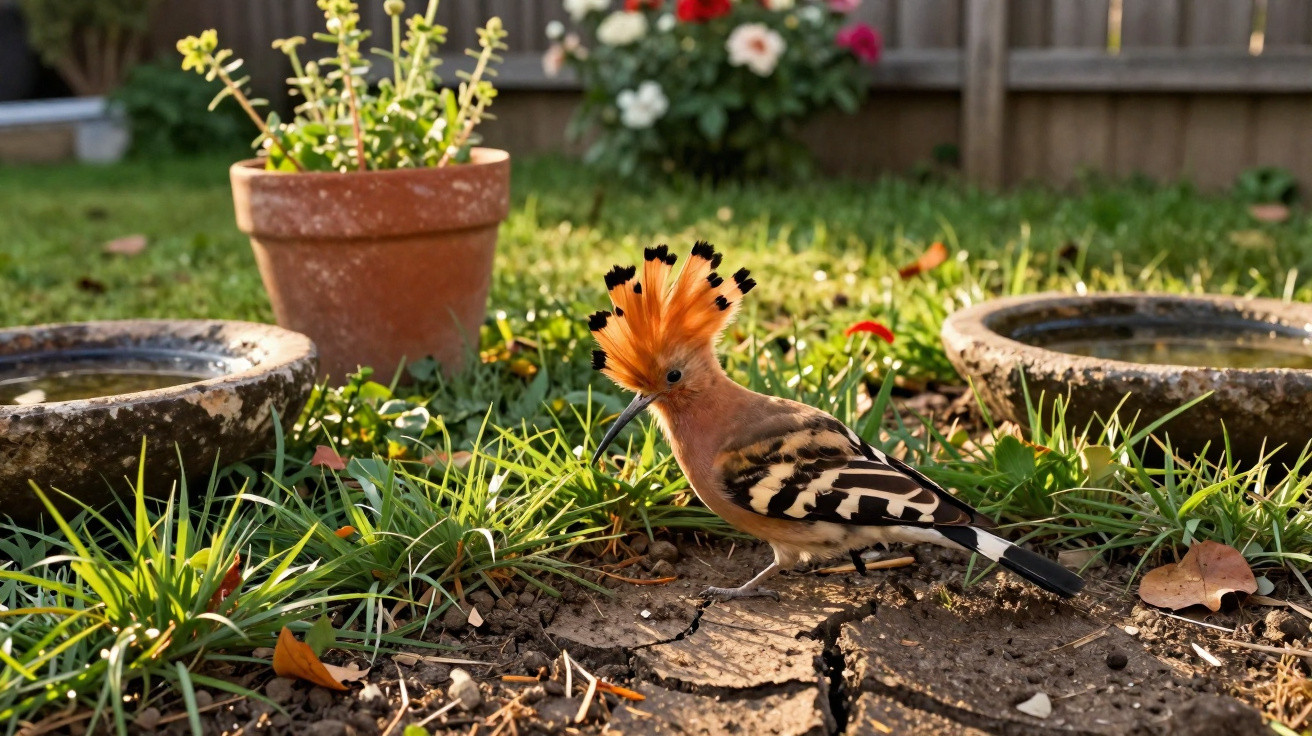
Its appearance, however, is far more than mere chance.
Anyone spotting a hoopoe in their own garden for the first time will often rub their eyes in disbelief. With its striking crest, black-and-white barred wings and gently curved bill, it looks more like a visitor from a safari park than a bird from the neighbourhood. Yet its brief stopover reveals a great deal about soil quality, the state of the garden and, for many people, even their own future.
A feathered soil inspector in russet-orange plumage
From a biological perspective, the hoopoe acts like a free soil assessor. It feeds almost entirely on insects living in or on the ground. Using its long, curved bill, it probes loose soil and extracts, among other things:
- Cockchafer grubs and larvae
- Crickets and other orthopterans
- Worms and beetle larvae
- Larvae of pests such as garden chafer, field cricket and mole cricket
- Caterpillars, including processionary moth caterpillars
This specialised diet requires soil that is genuinely teeming with life. Dry, compacted lawns devoid of insects hold no appeal for it. If it hunts on the same patch for several days in succession, this indicates that the ground is loose, rich in small creatures and probably has not been treated with harsh chemicals for a long time.
“A hoopoe in the garden is one of the clearest signs of living, chemical-free soil.”
Its surroundings matter as well. The bird favours open, sunny places with closely cropped grass broken up by patches of bare ground. Particularly suitable habitats include:
- Orchards and traditional meadow orchards
- Vineyards and open pasture
- Gardens containing mown areas and strips of exposed soil
- Quiet parks without constant disturbance
Those who pave over their entire garden or allow dense, tall grass to grow everywhere are unlikely to encounter this visitor.
Why a hoopoe does not simply arrive in your garden by chance
This distinctive bird covers an impressive distance every year. It spends winter south of the Sahara before returning to Europe in spring. In Central Europe, it is usually seen between April and September, although in the mild south-west it may occasionally appear from late February onwards.
Across much of Europe, the species is primarily found in warmer, drier areas. In Germany, its natural range is concentrated mainly in the southern and central parts of the country. If a hoopoe settles in your northern garden in particular - or appears there regularly - this points to several things:
- The area contains an above-average number of ground-dwelling insects.
- Compared with other plots, the property is attractive and peaceful.
- Climatic conditions have changed in ways that allow the bird to move further north.
Ornithologists regard the hoopoe as a sensitive indicator of intensive farming and heavy pesticide use. During the 1990s, populations across Europe declined sharply as insects were eradicated and features such as hedgerows, orchards and pasture were removed. The situation has eased somewhat in certain regions with the gradual return of less intensive land management and the growing preference for wildlife-friendly gardens.
In Germany, the hoopoe is a protected breeding bird. Some federal states have only a few dozen breeding pairs. When it turns up in a private garden, that place therefore becomes part of a small group of especially valuable habitats.
What a hoopoe tells you about your garden
Biologically, the bird delivers a clear message: the balance is right here. Anyone who sees one can generally be pleased about three things:
- The insect population is thriving. Your soil provides plentiful food rather than being sprayed lifeless and sterile.
- The garden is peaceful. Noise, continual activity and constant digging deter these birds - evidently, your garden has offered sufficient calm.
- The plot has structure. Short lawn sections, small open fallow patches, old trees or cracks in walls tell the hoopoe that stopping here is worthwhile.
At the same time, it contributes to a natural balance. By eating larvae and insects that feed on roots and leaves, it reduces pest pressure in vegetable beds and beneath fruit trees. This exotic-looking visitor quietly becomes a helper in your beds.
“Those who welcome the hoopoe need reach for the bottle of poison less often.”
Ancient myths: from the “bird with the crown” to a bearer of good fortune
Long before biologists described the bird as a bioindicator, people considered it a sign from another realm. Its raisable feather crest reminded many cultures of a crown. In Oriental tales, it appears as the “king of birds”, leading other species and showing them the way.
Early writings from the Persian world associate it with an inner quest and guidance. According to old interpretations, anyone who sees it should prepare for a fresh start, clarity and a period of finding their bearings. In ancient Egypt, its outline appeared in written symbols representing gratitude and loving connection.
European folk stories, too, have grown around its deep call, which sounds like a “hoop-hoop-hoop” through quiet mornings. Many older people say that this sound once announced spring - and is now returning in some places.
Whether or not one believes in omens, the symbolism fits reality remarkably well. A garden that attracts a hoopoe is often beginning a new phase - moving away from chemicals and towards more nature. In that sense, the bird really does herald a kind of change.
How to turn your garden into a safe haven
Those fortunate enough to have seen this colourful bird often hope to welcome it back. Several measures can significantly improve the chances:
- Stop using insecticides. Chemical products kill precisely the soil-dwelling creatures on which hoopoes feed.
- Keep parts of the lawn short. A completely overgrown garden is difficult for the bird to hunt in, whereas short areas are helpful.
- Allow small patches of open ground. Not every spot needs planting or covering with bark mulch.
- Retain old features. Hollows in trees, cracks in walls or nest boxes can provide a breeding site.
- Maintain peace and quiet. Loud music beside the garden, frequent mowing or continual human presence can deter sensitive visitors.
Anyone wishing to put up a nest box should choose one with a slightly larger entrance hole and hang it in a quiet, sunny position. There is no guarantee, as the species remains selective, but at least it creates an opportunity.
Smell, sounds and behaviour: what to expect
For all its elegance, the hoopoe is not entirely without drawbacks. To defend its brood, it releases a strongly smelling fluid reminiscent of rancid cheese. The odour can linger around the nesting cavity. In some regions, it has earned nicknames that refer to its smell.
Anyone who genuinely has a nesting site in the garden therefore needs a little tolerance. The reward is unique observation at the nest entrance, as the adults arrive with full bills to feed their young.
Its call, meanwhile, is distinctive but rarely persistently loud. It is used mainly to attract mates and mark territory. In densely populated places, it is generally less noticeable than traffic noise or a neighbour's lawnmower anyway.
What the bird reveals about soil, climate and your relationship with nature
Anyone wanting to view their plot differently can learn a great deal from its visit. The hoopoe shows very clearly which path a garden has taken. Where it hunts, earthworms and insects have already found good conditions. Where it breeds, people still leave some corners untidy, avoid poisons and tolerate a little wilderness.
At the same time, the bird makes changing climate patterns visible. Its gradual spread into more northerly regions indicates that warmer, drier periods are becoming more common. As a result, an animal that many people once knew only from picture books is appearing outside their own windows.
Those who use this moment can redesign their garden for the long term: fewer sealed surfaces, more strips of flowering meadow, hedges instead of bare fences, and natural corners instead of sterile gravel. This benefits not only hoopoes and insects, but also other birds, hedgehogs and bats - and ultimately the harvest from the vegetable patch.
The russet-orange visitor is therefore like an inspection report with a feathered crest: it confirms that your soil contains life, your surroundings offer tranquillity and your approach to nature shows a certain degree of consideration. Those who take this rare feedback seriously can make a few changes to ensure that a brief stopover may eventually become a regular address in the bird's yearly cycle.
Comments
No comments yet. Be the first to comment!
Leave a Comment