
Many gardens look wonderful in spring – while also acting as hidden magnets for ticks.
The reason often only becomes apparent once it is too late.
Many people associate ticks with woodland paths, tall grass in meadows or holidays in southern France. However, these blood-feeding parasites have long been established in domestic gardens too, from terraced homes to city villas. It is not so much particular plant species that “attract” ticks, but the conditions we inadvertently create through our planting.
Ticks do not love lavender – they love the microclimate
The key point first: ticks are not interested in roses, lavender or hydrangeas themselves. Instead, they respond to a garden’s microclimate. Shade, moisture and dense vegetation are what matter.
Ticks thrive where conditions are cool, damp, shaded and well concealed – not where sunlight dries out the ground.
Researchers, including those at US universities such as Cornell and Texas A&M, stress that vegetation structure matters more than plant species. Common tick hotspots in gardens include:
- thick shrubs and hedges that allow very little light through
- long, uncut grass around borders and fence lines
- ground cover such as ivy or dense, low-growing perennials
- piles of leaves, compost heaps and decaying stacks of wood
- transition areas between lawns and hedges or woodland edges
In these spots, the ground stays moist for longer, morning dew takes more time to dry and small mammals such as mice and hedgehogs regularly move through. This is exactly where ticks wait – often at knee height – to be brushed on to people or animals passing by.
Planting areas that create a tick paradise
The bad news is that ticks can be drawn to any garden. The good news is that these risk areas are easy to identify and can be altered deliberately. The main problem areas are as follows.
Dense hedges and groups of shrubs
Thuja hedges, privet, cherry laurel and other evergreen hedges quickly form solid walls. Their shade creates cool, damp pockets. When combined with ground cover or a layer of fallen leaves beneath, they become an ideal refuge for ticks.
Even loosely spaced but heavily branched ornamental shrubs, including spiraea, deutzia and lilac, can become tick islands if they are not thinned regularly and the ground beneath is not kept clear.
Ground cover and matted areas
Ivy, periwinkle, sweet woodruff and thick cushion-forming perennials can look attractive when they form an unbroken carpet. Beneath this green cover, however, conditions often remain permanently damp; leaves decompose and small animals shelter there – all perfect circumstances for ticks.
Shade-tolerant lawn that is cut only occasionally can also develop a dense thatch layer over time, creating a similar microclimate.
Leaves, wood and neglected corners
Many amateur gardeners intentionally leave fallen leaves in place to support insects. In moderation, that can be worthwhile. Large, permanent leaf piles, old boards, untidy wood stacks or cracks in walls where leaves collect can significantly increase tick numbers.
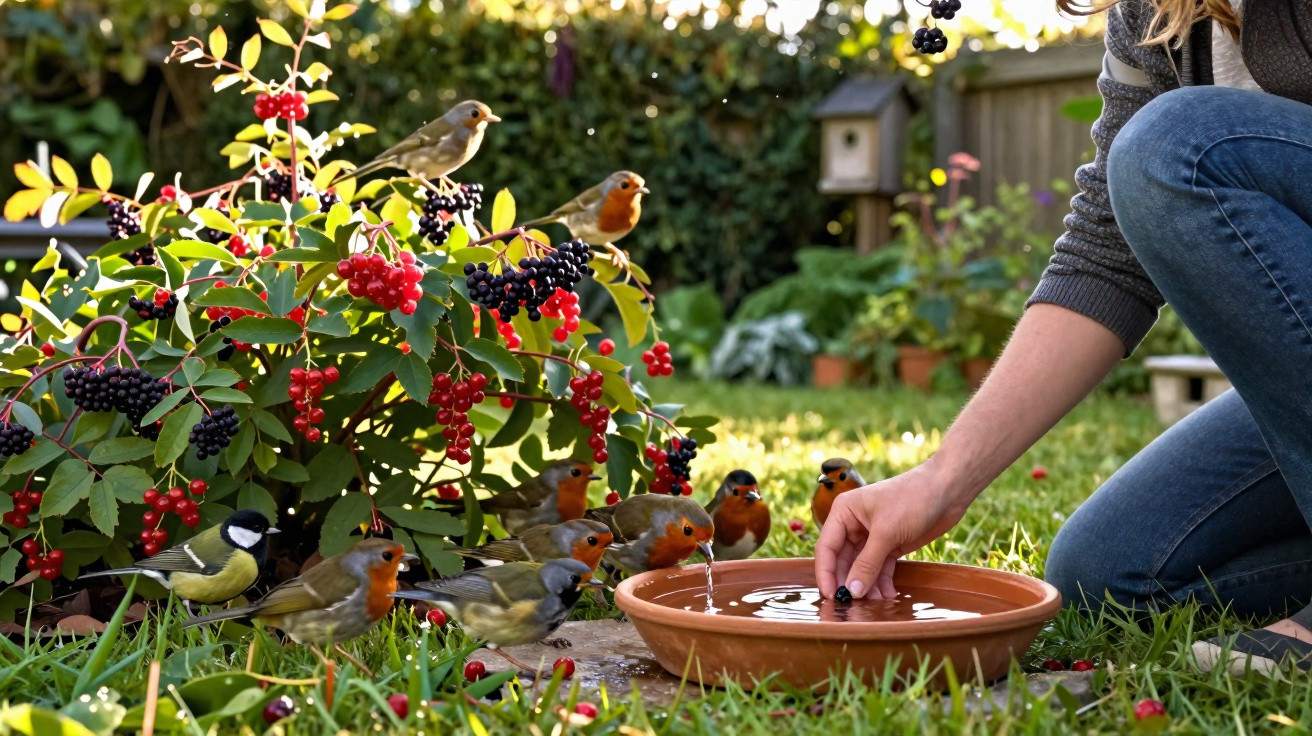
Mice, hedgehogs and occasionally birds use such spots for cover. Ticks take advantage of these animals’ movements and wait there for their next host – often the family dog or cat.
Reducing tick risks in your garden with simple steps
No one needs to turn their garden into a barren expanse of stone. A few straightforward adjustments can greatly reduce the risk of ticks without sacrificing a lush green space.
Fewer ticks in the garden does not mean fewer plants – it means smarter maintenance and better structure.
Garden maintenance that makes a real difference
A number of simple routines are particularly effective:
- Mow the lawn regularly: Ticks avoid short, dry areas. An evenly cut lawn acts as a kind of “safety zone” around the house.
- Clear away fallen leaves: Remove leaves, particularly beneath hedges, from paths and from corners, or collect them in a clearly defined composting area.
- Thin out bushes and hedges: Let light and air reach beneath shrubs, and remove dead branches so the soil dries more quickly.
- Keep ground cover contained: Do not allow ivy and similar plants to spread everywhere; restrict them to designated areas.
- Create “clean” zones: Establish a transition strip between patios, play areas and dense vegetation.
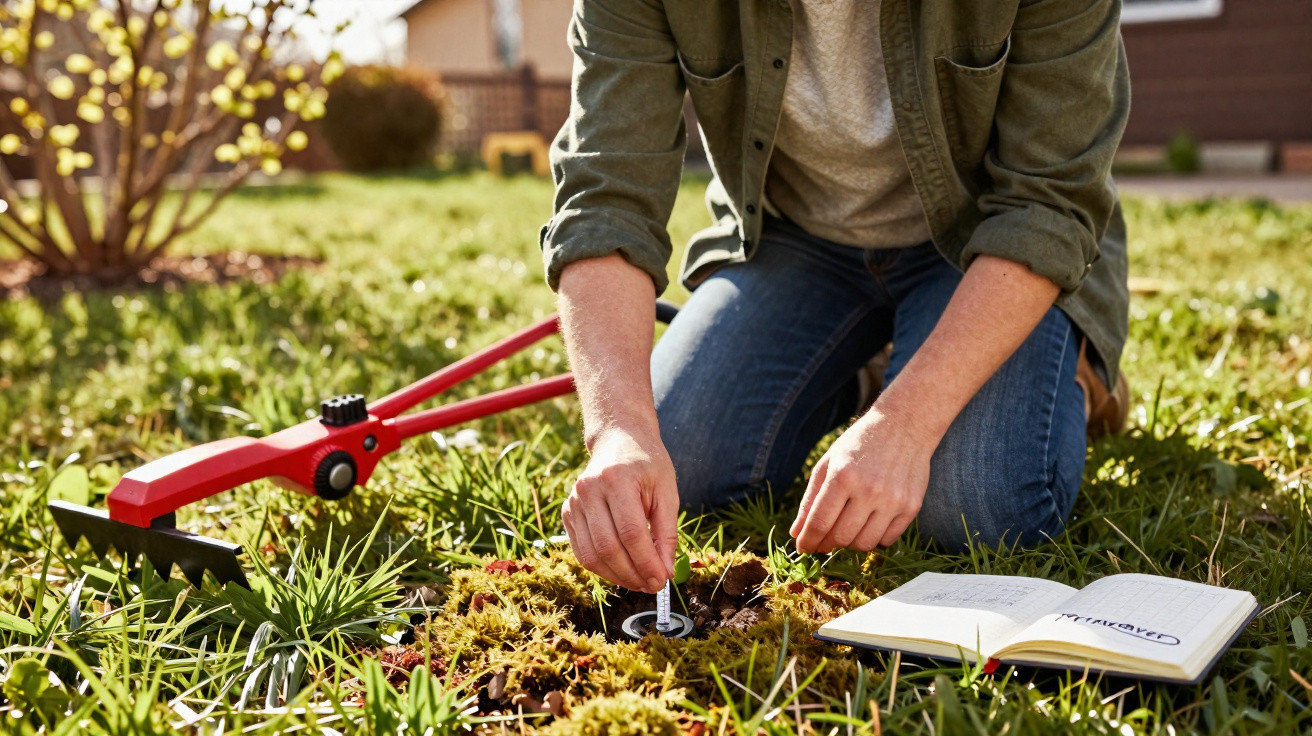
So-called dry barriers are especially useful. These may be strips of gravel, grit or coarse wood chips that interrupt the direct route from hedge to lawn. Ticks have little liking for these dry, exposed surfaces and are more likely to remain within the vegetation.
Areas where thorough care matters most
It is worth taking a closer look at parts of the garden where you spend a great deal of time:
- around patios and seating areas
- at the edges of sandpits and trampolines
- alongside frequently used garden paths
- at garden gates and entrances bordering meadows or woodland
Tall grass, overhanging branches and dense ground cover should not extend across paths in these areas. Leaving half a metre between a path and thick planting can already make a considerable difference.
Protecting pets and family reliably
Ticks rarely arrive in a garden “alone”; they travel on wildlife, as well as on dogs and cats. Protecting people and animals should therefore always form part of garden care.
Checking dogs and cats
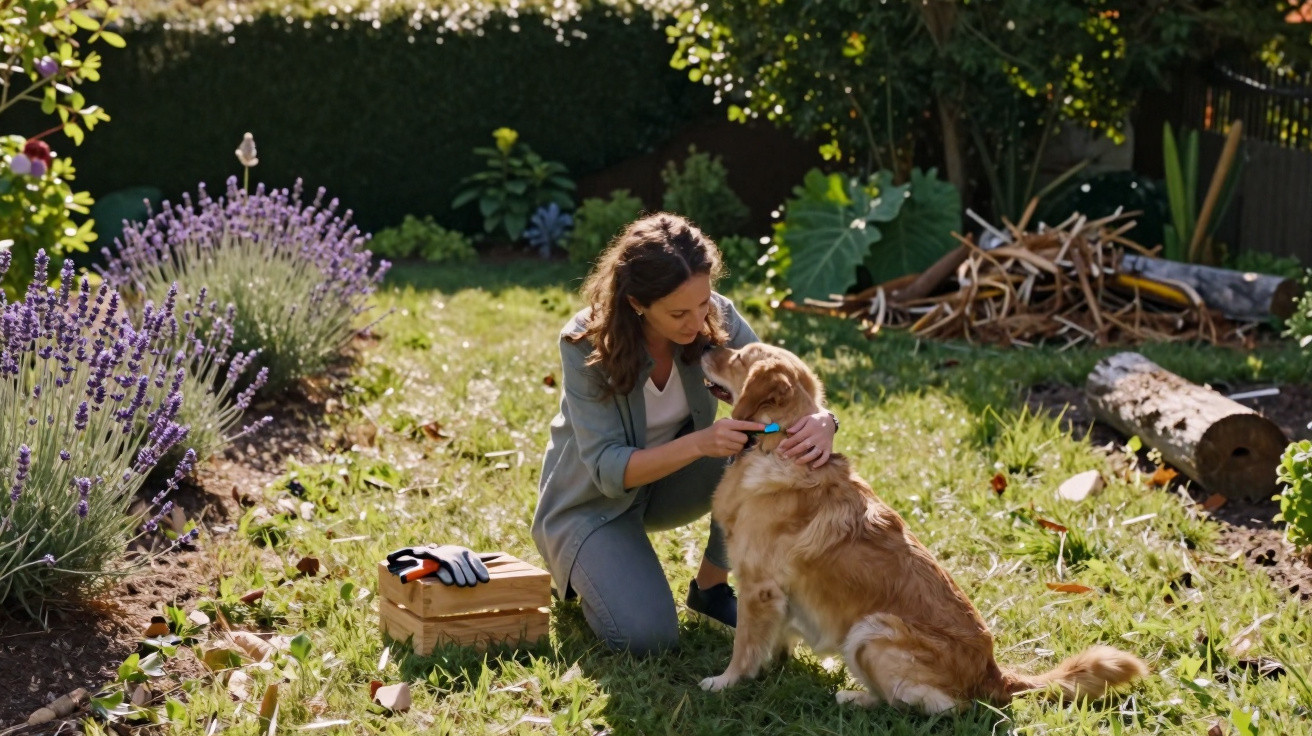
After every period spent in the garden, especially after playing in long grass or beneath shrubs, give your pet a quick check by running your hands over its body. Pay particular attention to:
- the ears and the area behind them
- the neck, chest and armpits
- the groin and inner legs
- the area around the eyes and muzzle
Veterinary professionals also recommend preventative products such as spot-on treatments, collars or tablets, depending on the animal and its state of health. Ask your veterinary practice which product is suitable.
Checking your own body and taking sensible precautions
Anyone gardening or playing with children in bushes should carry out a brief check in the evening. Typical places to inspect include the backs of the knees, armpits, hairline and the area behind the ears.
A few straightforward habits are useful:
- wear long trousers and, where possible, closed shoes while gardening
- choose light-coloured clothing, as ticks are easier to spot on it
- use a suitable insect repellent in areas with a high tick population
Anyone living in an area at risk from tick-borne encephalitis (TBE) should also seek information about vaccination. Many public health authorities identify regions with an increased risk on maps.
Which garden plants can be helpful
The claim that certain plants generally “repel” ticks continues to circulate. Evidence for this is limited. Some scents, including lavender, rosemary and lemon balm, may disrupt insects to some extent. At garden scale, however, they can hardly be considered genuine protection.
Plants can nevertheless be used effectively to influence the microclimate:
| Measure | Effect on tick risk |
|---|---|
| more sun-loving perennials and grasses | drier soil, fewer damp pockets |
| airy rather than extremely dense hedges | improved ventilation, shorter periods of moisture |
| defined strips of ground cover instead of continuous carpets | refuges are limited and easier to monitor |
| gravel or mulch strips beside paths | a protective buffer between people and dense vegetation |
Those who prefer wildlife-friendly gardening do not need to give it up: valuable insect habitats can be deliberately moved to less-used corners of the garden, while spaces close to the home and play areas can be designed to be less favourable to ticks.
Assessing tick risk realistically – and staying relaxed
Ticks are unpleasant and can transmit illnesses such as Lyme disease or tick-borne encephalitis (TBE). A healthy degree of caution makes sense, but panic does not. A well-structured, well-maintained garden can significantly reduce the risk without giving up abundant flowers or a natural feel.
Once you understand that the issue is not individual plants but shade, dampness and dense growth, you can take targeted action. Half an hour of gardening each week, together with a practised check of your dog, cat and your own skin, helps ensure that your favourite outdoor spot remains what it should be: somewhere to switch off, not somewhere to worry.



Comments
No comments yet. Be the first to comment!
Leave a Comment