
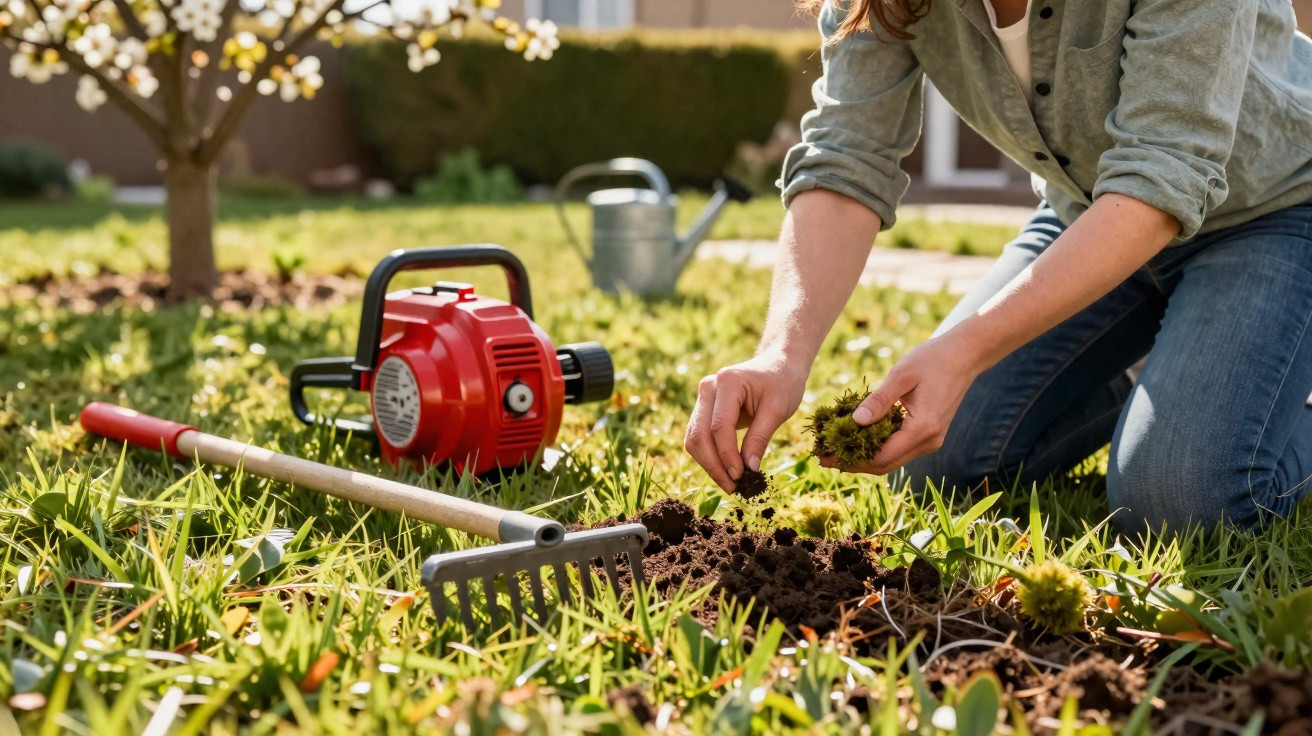
After a wet winter, a lawn can often resemble a greenish sponge: soft underfoot, patchy and covered in moss. This is precisely when many keen gardeners take the lawn scarifier out of the shed. Yet, despite the best intentions, using it at the wrong time or in the wrong way can ruin the turf within days.
The overlooked risk: scarifying too early and too aggressively
Scarifying involves lightly cutting into the soil surface with blades to remove moss and lawn thatch. Done correctly, it can improve the lawn; done badly, it leaves a surface that appears “scalped”, with more bare soil visible than grass.
“The biggest spring mistake: scarifying out of impatience before the lawn is properly growing again.”
Following a damp winter, soil is frequently heavily compacted. Moss and dead plant material can form a dense layer of thatch. It is tempting to tackle it immediately and with maximum force. However, cutting deeply into turf that is still cold or soaking wet pulls out young shoots and roots. The already weakened lawn may barely recover, while moss spreads even more vigorously.
Spring does not automatically mean scarifying season. Before it can cope with this “intervention”, the lawn needs to be actively growing again.
When it is time to scarify the lawn
In central European conditions, the best period is generally between March and May. More important than the date on the calendar, however, is the condition of both the soil and the grass.
Look for these signs before starting the lawn scarifier:
- Soil temperature is consistently at least 8–10 degrees.
- The lawn has been mown two or three times already.
- The lawn looks thatchy, but the grass is clearly growing.
- The ground is neither frozen nor waterlogged, and it is not bone dry.
New lawns are especially vulnerable to stress. During the first twelve months, avoid vigorous scarifying. A more intensive treatment is worthwhile only once the turf is dense and has established a stable root system - normally from the second year, or preferably the third.
Before scarifying: check whether it is actually needed
Not every lawn needs treating annually. In some cases, a thorough raking is all that is required.
How to test whether scarifying is worthwhile
Take a sturdy metal rake and pull it firmly through the grass. If large amounts of moss and brown plant debris collect in the tines, there is a substantial thatch layer. The following signs also indicate that treatment may be needed:
- The lawn feels springy when walked on, almost like a carpet.
- After rain, water remains on the surface for several minutes or longer.
- Moss covers large areas and the grasses are becoming less prominent.
- There are many bare patches that scarcely fill in despite fertilising.
If the soil is only lightly thatchy, a careful raking may be enough. Any unnecessary scarifying puts the grass under strain - particularly in spring, when it is only just beginning to grow again.
The worst spring trap: deep cuts in wet soil
The greatest damage results from combining poor timing with the wrong machine setting. Two mistakes occur repeatedly:
- Scarifying immediately after rain or when the ground is saturated
- Cutting considerably deeper than 3 millimetres
When the soil is wet, the machine can tear out entire clumps of grass, roots included. Deep grooves leave the soil exposed. Weeds and fresh moss quickly establish themselves in these open areas. Setting the blades very deeply also severely damages the root zone - and the lawn may take weeks or months to recover, if it recovers at all.
“The blade depth should be sufficient only to break up the thatch - not to cut the roots.”
Step by step: how to scarify correctly in spring
1. Prepare the lawn
Applying a light starter fertiliser at the beginning of the season helps the grass recover. Wait several days until the lawn is visibly growing. Then mow it fairly short, to around 3–4 centimetres, and collect all clippings carefully. This gives the lawn a more even finish and allows the scarifier to work more effectively.
2. Choose the right soil moisture
The soil should be slightly damp rather than soaking wet. The ideal condition is when shoes do not sink in as you walk and there are no puddles. If the lawn is completely dry and hard, the blades will not work effectively; if it is too wet, the turf will be torn up.
3. Set the machine correctly
Adjust the working depth so that the blades penetrate only 2–3 millimetres into the soil. First try it in an inconspicuous corner. After one pass, you should mainly find moss and brown debris in the collection box or on the lawn, not complete tufts of grass with roots attached.
4. Work in straight passes
Move across the lawn steadily and evenly, without lingering in one spot. On areas with particularly heavy thatch, make a second pass at right angles to the first. Afterwards, remove all debris thoroughly using a rake or collection box, allowing the turf to breathe again.
After scarifying: moss soon returns without aftercare
Once treatment is complete, patches where the soil is clearly visible often appear. Although this can look alarming initially, it is normal - what matters is what you do next.
“Scarifying alone does not solve a moss problem - the subsequent soil care determines success.”
Dolomite instead of iron fertiliser
Many people routinely use iron fertilisers to “burn off” moss. The dark residue can look impressive at first, but there is a drawback: it makes the soil even more acidic. Moss thrives in acidic conditions, so this supposed solution worsens the issue in the long term.
A sensible alternative is dolomitic lime. This ground rock acts as a gentle buffer, raising the pH slightly. Lawn grasses are then more comfortable, while moss has fewer opportunities to spread. Spread the lime thinly over the surface after scarifying and lightly water it in.
Overseeding and nutrients
Bare patches provide an ideal foothold for unwanted plants. Apply a high-quality overseeding mixture to the open areas. A light spring fertiliser supplies nutrients to the seedlings. Then water moderately but regularly, ensuring the seeds do not dry out while also avoiding waterlogging.
How to keep moss and thatch under control long term
Anyone facing the same problems every year should address their underlying causes. Permanently compacted soil, mowing continuously too short and waterlogging all strongly encourage moss growth.
These measures bring lasting improvements to lawn care:
- Keep the mowing height above around 4 centimetres, especially in summer.
- Aerate heavily used areas regularly with a garden fork or aeration machine.
- Lightly top-dress very heavy soils with sand to improve drainage.
- Do not plan permanently shaded areas as ornamental lawn - moss will always thrive there.
Watering correctly also matters: water less often but deeply, rather than applying small amounts continuously. This encourages deeper root growth and reduces thatch build-up.
Why spring is such a sensitive time
In spring, everything depends on a narrow window of opportunity. The lawn is emerging from winter dormancy and its reserves are limited. Scarifying too early or too severely takes away the energy it needs to push out moss. By contrast, waiting until the grass is visibly active gives it a genuine advantage from a moderate scarifying pass.
If you are unsure, observe the lawn for a few more weeks and begin by testing it with a metal rake. This helps keep the “spring reflex” in check - and rewards you with a dense, rich green lawn rather than bare brown scars.





Comments
No comments yet. Be the first to comment!
Leave a Comment