
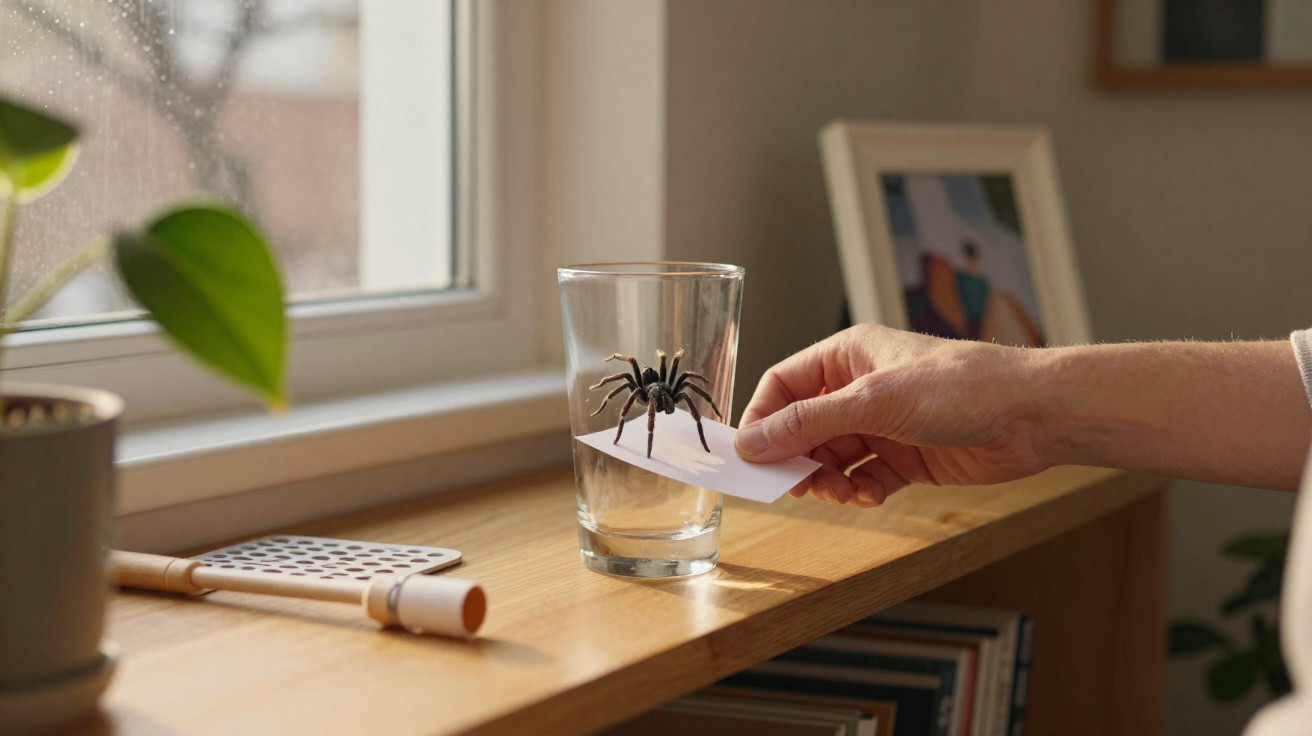
Many people want to act in a “kind-to-animals” way and carry spiders outside.
Yet this well-intentioned instinct can be fatal for the animals.
Every spring, the same scene plays out in countless homes: a spider appears in the bath, on the ceiling or behind a cupboard, and someone immediately reaches for a glass to release it “into the wild”. It sounds like the kindest option. In reality, this behaviour often causes more harm than good - while also depriving us of a quiet ally against irritating insects.
House spiders are not garden spiders
When people spot a spider, they usually assume it belongs outdoors. That idea may seem logical, but it does not apply to animals that have long since adapted to life indoors. Typical house spiders benefit from a highly specific environment:
- relatively stable temperatures
- plenty of cracks, corners and hiding places
- dry areas free from draughts
- a regular supply of prey, such as mosquitoes and small flies
Behind skirting boards, in cellars, cable ducts or dark cupboard corners, they find dependable conditions. These are the places where they spin their webs, wait and hunt. They know the area, their escape routes and their safe spots.
House spiders are adapted to homes - not flowerbeds, lawns or patios.
Garden spiders live very differently. These species are equipped to cope with dampness, changing temperatures and wind. Their bodies and behaviour are better suited to dealing with rain, cold, direct sunshine and open spaces. Treating a house spider as though it were a garden spider imposes a human idea of “nature” on an animal that has already moved into domestic life.
Why putting spiders outside so often goes wrong
The romantic idea is simple: you carefully place the spider on the balcony or in the garden, it crawls away, and then enjoys a happy spider life. In many cases, the reality is quite different.
Suddenly in hostile territory
Outdoors, the spider knows neither the terrain nor the available hiding places. Within seconds, its familiar home becomes an unfamiliar environment full of new dangers:
- rain-soaked surfaces that make moving difficult
- major temperature differences between day and night
- no nearby crevices for immediate shelter
- birds, lizards or larger insects as predators
Especially in early spring, nights can still be cold and rain showers are common. A house spider accustomed to the relatively steady temperature indoors is far less able to cope with these conditions. Even a sun-heated balcony can become a trap: paving slabs get intensely hot, the animal can quickly dehydrate and may be unable to find shade.
Stress, injury and exhaustion
The move itself also creates risks. Anyone frightened of spiders rarely handles a glass entirely calmly. Sudden movements, forcefully sliding a sheet of paper underneath or - more drastically - using brushes and cloths increase the chance of injuring the spider, causing it to lose legs or making it fall from a height.
The supposedly “gentle” route outdoors means stress, disorientation and a much greater risk of death for many spiders.
Inside the home, the animal could have remained in its web, caught insects and kept out of people’s way. Once outside, it must find a new territory in a very short time - without preparation or any knowledge of the new location.
What spiders do for us indoors
Spiders may trigger disgust, but the service they provide in the background is remarkable. They are efficient hunters that take on a task most people would rather not think about: reducing the number of small insects without chemicals, traps or electricity.
Typical prey indoors includes:
- mosquitoes and biting mosquitoes
- fruit flies and other small flies
- gnats from plant pots
- occasional fleas and other small pests
During the warmer months in particular, when windows are opened more often and people sleep with them open at night, a spider in the corner of a room acts like a quiet security service. The less prey there is around, the less likely genuine insect infestations are to develop in the kitchen, bathroom or bedroom.
Anyone who removes spiders as a matter of course gives up free, silent and highly targeted pest control.
There is another point to consider: most spiders avoid people. They stay in dark, quiet places and disappear as soon as they sense vibrations. Those who believe they “constantly see spiders” have usually only looked at the moment when the animal happened to be moving about - for the spider, being noticed is more likely an accident.
How to deal with spiders if you do not like them
Not everyone wants to sleep peacefully next to a spider, and that is completely understandable. Even so, there are ways to handle these animals without killing them or losing their benefits.
Relocate house spiders to quieter indoor areas
The most sensible option is not to take spiders outside, but to move them to less frequently used indoor spaces. Suitable locations include:
- cellar
- garage
- storage cupboard
- hallway or stairwell, provided it is dry
- boiler room or food storage cellar
These spaces offer conditions similar to living areas, but with less contact with people. The animal therefore remains in a familiar type of environment, where it can continue hunting and hiding.
The gentle “glass-and-paper” method
A straightforward method is enough for a low-stress relocation:
- Slowly place a clear glass over the spider.
- Carefully slide a sturdy sheet of paper or thin card beneath the glass.
- Carry the glass steadily to the new location and release the spider in a corner.
Anyone who feels particularly uneasy can wear thin gloves or use a slightly longer container. The important thing is to breathe calmly and take a few extra seconds, rather than waving about in a panic.
Reduce their presence without killing them
If you simply cannot tolerate spiders in the bedroom, several adjustments can make them less likely to appear there:
- improve seals around windows and doors
- close loose skirting boards and larger gaps
- choose evening light sources that attract fewer insects
- reduce damp areas, for example by not drying wet washing in the bedroom
Another approach is to use the vacuum cleaner deliberately as a “means of transport”. Vacuum the spider briefly, then empty the bag or container straight away in a protected indoor area such as the garage. This lowers the risk of injury and avoids killing the animals.
Fewer insects, fewer spiders - how the chain works
Spiders go where the prey is. If there are fewer small insects indoors, you will automatically notice fewer spiders too. A few simple everyday habits can help:
- empty rubbish bins regularly, especially food-waste bins
- do not leave washing-up water standing overnight
- do not leave plant saucers permanently filled with water
- air the room thoroughly after showering or bathing
- keep uncovered food consistently covered
This reduces the number of mosquitoes, flies and other small animals that make a home attractive to spiders. As a result, there is also less need for spider territories in living areas.
Why changing your view is worthwhile
Many people do not want to harm spiders, so they choose to take them outside. That is exactly where the misunderstanding lies: what feels humane often leaves the animal fighting to survive. Relocating it elsewhere indoors is a far more consistent approach to animal welfare.
Another aspect that is often overlooked is that spider bites are extremely rare in Central Europe and harmless in the vast majority of cases. These animals flee rather than attack. Knowing this can make it easier to view spiders as irritating housemates with a purpose, rather than as a threat.
In the end, one simple question can help when the next spider appears in the bathroom: would you prefer a quiet hunter in a secluded corner of the cellar - or far more mosquitoes, fruit flies and other pests in the living room and bedroom? For many people, the answer becomes much easier once they have consciously considered what really happens to the animal when it is “taken outside”.



Comments
No comments yet. Be the first to comment!
Leave a Comment