
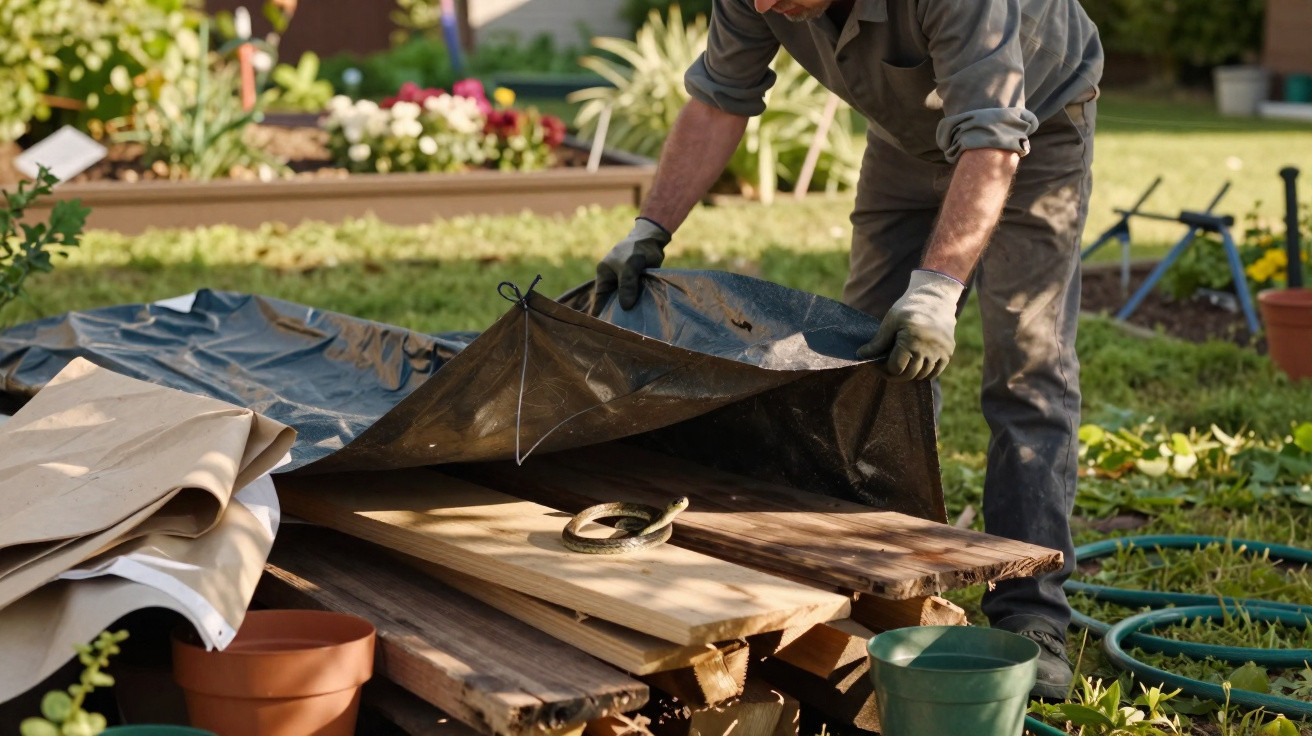
Many amateur gardeners throw themselves into spring tidying, bringing out the furniture and planning the first barbecue. Yet one ordinary item from the last project is often left lying around: it can quietly become the ideal shelter for snakes – in the middle of the lawn, right beside the family’s favourite spot.
The overlooked risk in the garden
When temperatures rise, it is not only the grass that comes back to life. Reptiles also emerge from their winter refuges and actively look for warm, sheltered places. This is where an object found in almost every garden becomes relevant: a dark plastic tarpaulin or sheet, often simply spread over the ground as a cover.
Tarpaulins of this kind, along with old metal sheets, corrugated iron, leftover slate or fibre-cement boards, may seem harmless. They are left over after building work, used to cover firewood, compost or tools, and are soon forgotten. To snakes, however, they are highly appealing.
“Plastic tarpaulins, sheets and old metal panels lying on the ground act like underfloor heating for snakes – warm, sheltered and difficult to see into.”
Why tarpaulins attract snakes so strongly
The reason is straightforward: beneath a dark tarpaulin or metal panel, a miniature greenhouse effect develops. Sunlight heats the surface, while the warmth is retained in the soil underneath. This is precisely what snakes seek, as they are cold-blooded and depend on their surroundings to regulate body temperature.
Experts refer to this as the “greenhouse effect at ground level”: even in April, one sunny day can raise the temperature beneath a tarpaulin to 25 to 30 degrees – the ideal operating temperature for snakes. At the same time, the ground stays slightly damp, and insects and small animals also thrive there. For a snake, it is an all-in-one refuge: warm, dark and protected from predators and people.
Common snake magnets in the garden
- Black or dark plastic tarpaulins placed directly on the ground
- Covers over compost heaps or grass cuttings
- Old corrugated iron or metal sheets laid flat
- Wood piles with no gap beneath them
- Fibre-cement panels or roofing offcuts in a rear corner of the garden
Combining several of these features almost automatically creates a small snake haven, often only a few metres from a patio, swing or vegetable patch.
How to stop your garden becoming a snake hotel
The reassuring news is that a few simple habits can reduce the risk considerably, without turning the entire garden upside down. The main aim is to avoid warm, flat shelters lying directly on the soil.
Tidy up systematically
A useful rule of thumb is this: anything flat, dark and left on the ground for long periods should be removed or stored above ground. It is especially worth taking a critical look around after building work or major gardening jobs.
- Always remove tarpaulins after use rather than leaving them there “until tomorrow”.
- Roll up covers and store them in a shed, garage or on a shelf.
- Do not stack metal sheets and fibre-cement offcuts in the grass; stand them upright against a wall instead.
- Raise wood piles on a frame or pallets so that air can circulate underneath.
Applying these measures consistently removes several attractive hiding places for snakes at once. They will usually move to quieter locations instead, such as banks, hedge margins or woodland edges – well away from the barbecue area and sandpit.
What to do if a snake appears
Even with every precaution, lifting an old tarpaulin or panel may suddenly reveal a reptile darting out from beneath it. The key response is to remain calm and keep your distance.
“Never lift tarpaulins or panels in the garden carelessly with bare hands – first tip them up with a boot or a tool.”
The most important rules of behaviour
- Do not strike at the snake or attempt to hold it.
- Keep at least two to three metres away.
- Call children and pets back, and keep them indoors.
- Step backwards slowly rather than running away in panic.
Most native species are shy and will disappear as soon as they notice movement. Attacks on people are extremely uncommon and generally happen only when the animal is cornered or handled.
Legal position: snakes are protected
Many people instinctively react defensively or violently when they see a snake. This can be both dangerous and costly. In Germany and across large parts of Europe, native snake species are protected. Anyone who injures or kills one breaches nature conservation law and may face fines.
Anyone who repeatedly sees snakes in the garden and feels unsure should contact local organisations such as:
- the lower nature conservation authority or environmental office
- municipal advice services
- reptile or wildlife conservation groups
These bodies can usually provide practical guidance on designing a garden that remains inviting for people without being especially attractive to snakes.
How dangerous are snakes in the garden really?
Ideas about snakes are heavily shaped by films and alarming reports. In everyday encounters on Central European properties, contact is harmless in the vast majority of cases. Many species are non-venomous, and bites are extremely rare. Even where venomous species are involved, a bite is seldom life-threatening if medical help is obtained quickly.
Nevertheless, the matter should not be dismissed lightly. Anyone living in an area where venomous species are known to occur can ask local doctors or pharmacists about the correct emergency procedure and the symptoms that should be taken seriously.
Garden care that benefits snakes and people
A varied garden with deadwood, stone piles and dense planting provides an important refuge for many animal species. At the same time, most people do not want snakes immediately beside the patio. Both aims can be balanced by creating hiding places a little further away.
For example, allowing a small natural area at the edge of the property or in a rarely used corner will naturally draw many animals there. The crucial step is to remove or relocate the “premium spots” – warm, flat covers close to where people spend time.
Practical additions for greater safety
- Mow the lawn regularly, at least in areas with frequent foot traffic.
- Cut back tall grass in places where children play.
- Do not create compost heaps directly beside the patio or house entrance.
- Wear sturdy shoes when working in untamed corners of the garden.
Keeping these points in mind greatly reduces the chance of unwanted encounters, without turning the garden into a sterile expanse of stone.
Why dark tarpaulins are particularly problematic
Dark sheets retain especially large amounts of heat because they absorb sunlight strongly. Light-coloured covers reflect more radiation, warm up less and are therefore often less interesting to snakes. Even so, light tarpaulins also offer protection from predators and may be used.
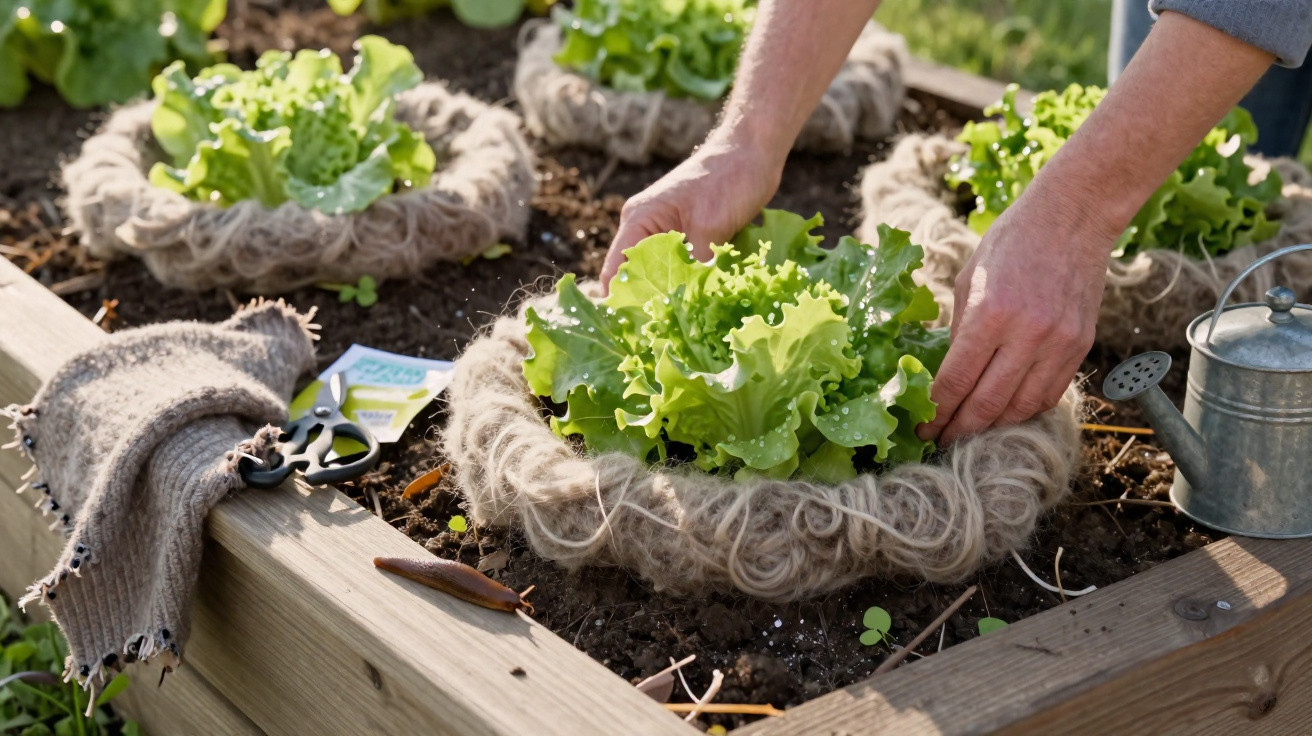
Anyone who cannot do without covers, for instance for weed control in a vegetable bed, can choose securely fixed systems that sit tightly against the ground and do not create extensive hollow spaces. It is still sensible to check carefully before bringing hands or face close to their edges.
Ultimately, personal routine makes the biggest difference: anyone who places and checks tarpaulins, panels and wood piles deliberately will reduce the risk of snakes over the long term and can enjoy summer in the garden far more relaxedly.
Comments
No comments yet. Be the first to comment!
Leave a Comment