
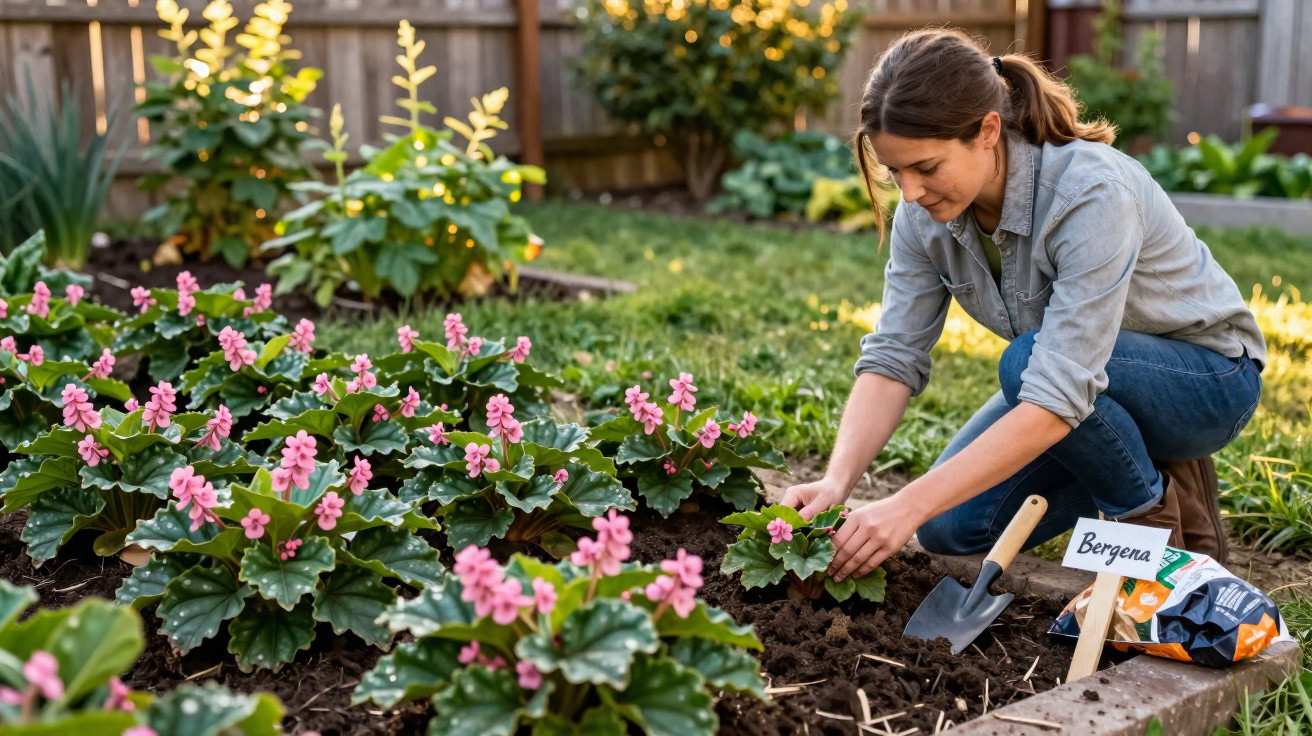
Many amateur gardeners know the problem: no sooner has a flower bed been cleared than fresh weeds appear. With synthetic weedkillers now largely out of the question for domestic gardens, people are looking for straightforward, plant-friendly alternatives. A hardy perennial ground cover can fulfil this purpose – and one particular species stands out.
Why a living carpet in the border saves so much work
Bare, uncovered soil is an open invitation to weeds. Light, air and a little moisture are all seedlings need to exploit every available gap. To break this cycle, the ground needs lasting shade. This is precisely where ground-cover plants come into their own.
Well-established ground covers can reduce weed growth by around 70 to 90 per cent – entirely without chemicals.
Rather than using bark mulch or sheeting, they create a “living mulch”. The plants cover the soil, block the light and compete with seedlings for water and nutrients. One particular perennial, the Bergenia type, is especially effective at combining toughness, dense growth and ornamental appeal.
Bergenia: a hardy perennial with an anti-weed effect
Bergenia (botanically, for example, Bergenia purpurascens and closely related cultivars) is among the long-lived, frost-hardy perennials. Originating from mountainous areas, it copes easily with substantial sub-zero temperatures – in some cases down to just below minus 20 degrees and even lower.
Over the years, each plant develops into a broad clump. Its usual dimensions are:
- Height: around 30 to 50 centimetres
- Spread: approximately 40 to 70 centimetres per plant
- Growth habit: spreading, with densely overlapping leaves
Its leaves are large, thick and glossy green, often taking on a red to purple flush in autumn and winter. In spring, sturdy stems carrying clusters of pink flowers rise above them – an obvious visual benefit in any front garden or perennial border.
Bergenia’s leathery leaves overlap like roof tiles, simply leaving weed seedlings with no room to grow.
Because of this mass of foliage, very little light reaches the soil. Seeds from unwanted plants germinate less successfully, while young plants can barely push through the dense cover. In day-to-day gardening, the perennial therefore acts as a natural weed barrier.
Position: where this weed-suppressing plant works best
Bergenias are remarkably adaptable. They tolerate a range of light levels and soil conditions, provided the soil does not remain waterlogged.
Suitable places in the garden
- Border edges beside paths or patios
- Beneath deciduous trees and shrubs
- On slopes and banks that are difficult to mow
- Along the edge of lightly wooded strips
- In rock gardens and larger gaps between stones
The plant particularly enjoys partial shade, but will also tolerate sun provided it is not relentlessly blazing onto dry, stony soil at the height of summer. It grows less vigorously in deep shade or very wet corners. In those situations, it is better combined with other ground covers, such as Geranium species or periwinkle.
The best time to plant
Anyone hoping to significantly reduce weed pressure in the coming gardening year should choose the planting date carefully. In central European conditions, two periods are especially suitable:
| Period | Benefit |
|---|---|
| Spring (March–April) | The soil is moist and no longer cools down sharply, allowing plants to establish roots quickly. |
| Autumn (September–October) | Lower temperatures, plenty of rain and a calm growing period for root development. |
The key point is that the soil should be neither frozen nor dust-dry. When planted in spring, Bergenia often fills the gaps sufficiently during its first summer that hoeing is needed far less often.
How to create a dense Bergenia carpet
Preparing the soil
For these perennials to develop their weed-blocking effect, they need a good start. Before planting, this thorough preparation is worthwhile:
- Carefully remove all existing weeds, including their roots
- Loosen the soil to a depth of around 20 centimetres
- Work in a little well-rotted compost if the soil is particularly poor
- Remove larger stones and remnants of roots
Prepared, loose soil makes it easier for the new roots to spread. As a result, the plant cover closes over more quickly.
Spacing and planting
Leave roughly 40 centimetres between individual Bergenias. This gives them room to meet and overlap over time without competing too heavily at the outset.
When planting, follow these points:
- Make the planting hole slightly wider than the rootball
- Position the plant’s crown at soil level, never deeper
- Firm the soil well so that no air pockets remain
- Water thoroughly afterwards
A light mulch of leaves or pieces of bark during the first few months will cover the remaining gaps until the foliage truly blankets every patch of soil.
Care during the first year: the crucial start
During their first year in position, the perennials need a little more attention, particularly with watering. The soil should stay consistently moist but must not become waterlogged. During prolonged dry spells, give them one deep watering each week.
Any occasional weed seedlings should still be removed by hand at this stage. After one or two seasons, this maintenance requirement drops considerably, and the area will then look almost like a continuous carpet.
Keeping long-term care to a minimum
Once established, the plants require only small tasks:
- Remove the occasional yellowing or chewed leaf
- Cut back spent flower stems if they become unsightly
- Divide and thin older clumps every three to five years
Dividing rejuvenates the planting and also provides new plants for covering further bare spots around the garden. Gradually, this creates a network of planted areas in which weeds play only a minor role.
Less chemical use, more life in the soil
Choosing ground covers instead of sprays protects not only your own health, but also soil organisms and insects. Beneath a living plant carpet, the ground stays moist for longer, micro-organisms can work more steadily and earthworms thrive.
Ground covers such as Bergenia bring together ornamental value, practical function and ecological benefits in one well-balanced package.
Compared with sheeting or gravel surfaces, planted cover allows rainwater to soak away, prevents heat build-up and creates shelter for small animals. Particularly during increasingly hot summers, a planted border feels noticeably more pleasant than a completely gravelled front garden.
Combining it with other plants: keeping the border interesting
A bed planted solely with Bergenias can eventually appear monotonous. It becomes more interesting when taller perennials, bulbs or small shrubs rise through or between them. The ground covers then form the “green foundation”.
Suitable companions include, for example:
- Early-flowering bulbs such as daffodils or crocuses, which grow up through the leaves
- Delicate grasses that provide vertical accents
- Small shrubs, such as dwarf forms of spirea or amelanchier
This combination keeps the border attractive through different seasons, while the Bergenias continue in the background with their protective role against unwanted weeds.
What to look for when choosing plants at the garden centre
When buying, inspect both the label and the condition of the plant. Compact, well-rooted pots with firm, healthy foliage tend to perform best. Cultivars with reddish winter colouring can add colour to the garden even during the coldest season.
If several plants are needed, it is usually better to choose smaller pots in greater numbers. The area will then fill in more quickly, giving weeds fewer opportunities to take hold in the gaps.
Comments
No comments yet. Be the first to comment!
Leave a Comment