
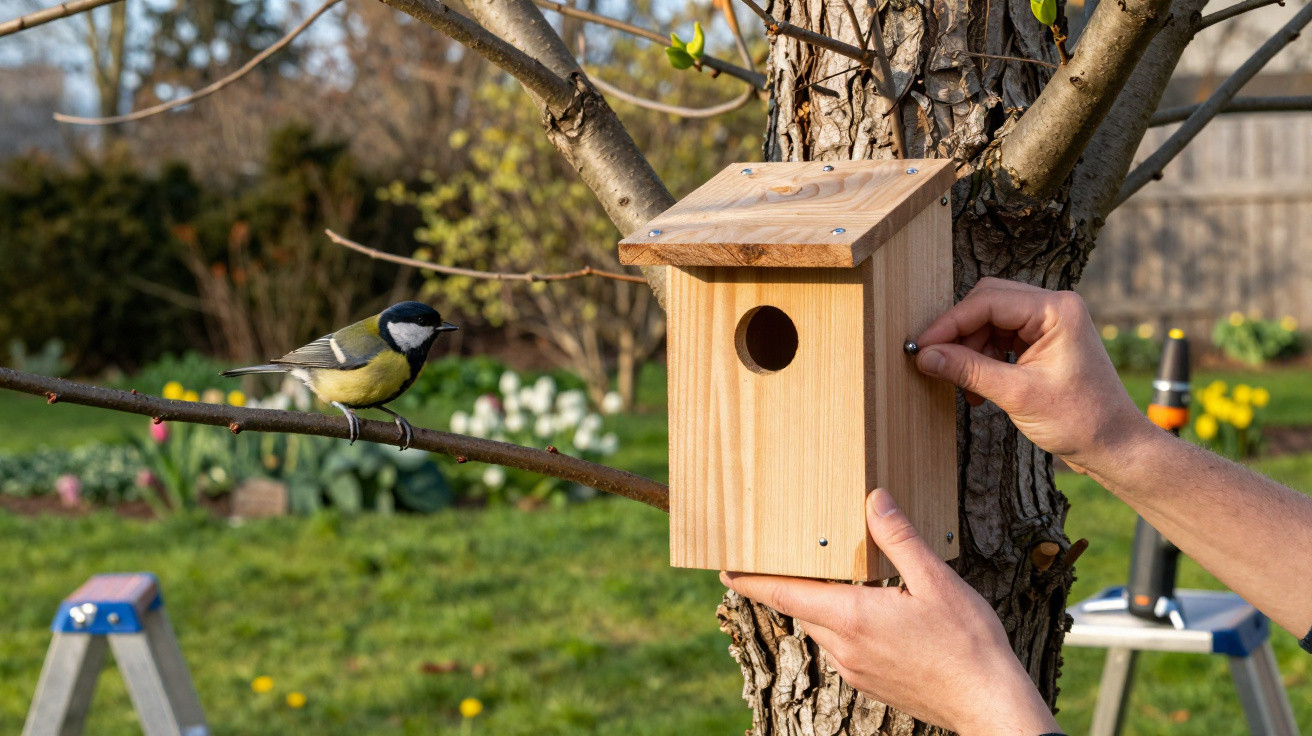
Often, an apparently minor detail is what causes it to fail.
Spring is becoming warmer, the breeding season is beginning earlier, and tits are urgently looking for secure cavities in which to raise their young. Yet countless nest boxes remain completely unused year after year. Anyone who genuinely wants to help these birds needs to consider more than simply buying a wooden box, hammering a nail into a tree and calling it done.
Tits in trouble: why nest boxes matter so much today
In the past, tits could find sufficient natural nesting cavities in mature trees, gaps in masonry or beneath roof tiles. Today, precisely this habitat is disappearing. Homes are being given smooth façades, lofts are tightly insulated, and old trees are being felled with chainsaws.
Studies from France show that building-dwelling species there have declined by more than a quarter since the start of the 2000s. The pattern is similar across Central Europe. Nest boxes are therefore no longer merely an attractive garden project; they have become a form of replacement housing for birds.
A nest box for tits is not a garden accessory, but a vital breeding site – provided it is built and positioned correctly.
Having tits in the garden brings a double benefit. These birds consume huge quantities of caterpillars, aphids and other insects that can damage plants. Great tits and blue tits in particular are considered highly effective natural pest control.
The most common mistake: the nest box does not suit the tit
The key reason a tit nest box stays empty can literally come down to a single component: the entrance hole.
The right hole size determines success or vacancy
Different tit species require different dimensions. Even a variation of a few millimetres may mean the birds ignore the box – or that predators have an easy opportunity.
- 25–28 mm: ideal for blue tits, coal tits and marsh tits
- 32 mm: suitable for great tits and slightly larger species
An entrance that is too large effectively invites house sparrows, starlings or even nuthatches to move in and displace tits. Worse still, martens or cats may be able to reach inside with a paw if they can find somewhere to grip.
If a tit nest box is not occupied, in many cases the cause is one small detail: the wrong entrance hole.
Perch? Best avoided: why rods below the hole are a problem
Many shop-bought nest boxes feature a small rod at the front as a “perch”. While it may look appealing, tits do not need it – and it gives enemies a perfect point of attack.
Better options are:
- no landing rod below the entrance hole
- a smooth front so cats and martens cannot get a grip
- secure mounting that does not sway
Tits can land without difficulty directly at the entrance or on a nearby branch. They have no use for a rod, whereas predators benefit from one.
The right material: why the box itself is often the issue
The box itself is just as important as its opening. Many products sold by DIY shops or online retailers look attractive, but are poorly suited to safe breeding.
Wood yes, decorative rubbish no
A good nest box for tits should have:
- solid, untreated timber at least 18 mm thick
- a rough internal surface so fledglings can climb out
- a slightly sloping roof that channels rain forwards
- an opening section for cleaning, either on the side or at the base
Painted decorative boxes, thin plywood boxes and metal boxes can become very hot or cool down too rapidly at night. During hot springs, this can be fatal for the young.
Nest box location in the garden: shade, peace and the right height
Even an excellent box will remain unoccupied if it is hung in the wrong place. With heatwaves arriving ever earlier, its position is particularly important.
Direction and sunlight
The best orientation for nest boxes for tits is:
- East or south-east: morning sunshine provides warmth, while midday heat does not strike the entrance directly.
- A slight forward tilt: rain drains away more effectively and the interior stays dry.
- Partial shade: nearby trees or shrubs prevent overheating.
Boxes facing south can become extremely hot in summer. West-facing boxes often receive rain directly through the entrance, especially during thunderstorm fronts.
Height, spacing and protection from cats
Most experts recommend mounting a box at roughly 2 to 5 metres above ground. More important than the precise height, however, is that it has:
- a quiet setting away from patios, heavily used paths and frequently opened windows
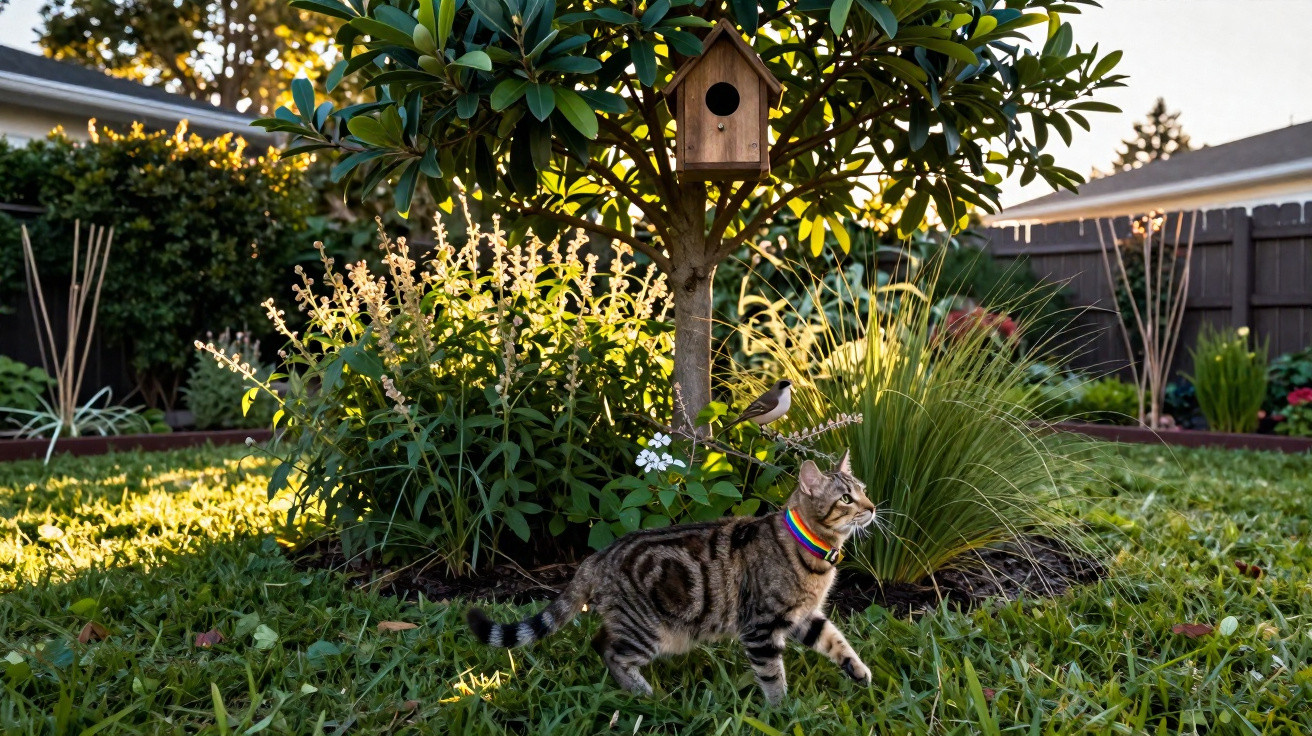
- no direct climbing aids for cats, such as closely adjoining branches or trellises
- secure fixing to a wall, post or tree trunk
The area in front of the entrance should function like a small safety zone: calm, clear and free from constant disturbance.
The garden around the box: no insects, no tit family
Another reason nest boxes stand empty is not the box itself, but its surroundings. Tits will only move in where they can find enough food and cover.
Structure rather than a bowling-green lawn
A garden that resembles a perfectly tidy carpet offers little for tits. They need:
- dense hedges and shrubs to hide from birds of prey
- old or partly dead trees with insect-filled bark
- wild corners containing nettles, leaf piles and dead wood
- insect-rich beds with as many flowering plants as possible
Anyone who mows extremely short every week, treats every beetle as a pest and clears away fallen leaves immediately is taking away the birds’ food store.
No chemicals, less disturbance
In gardens treated with chemical sprays, young tits often cannot find enough food. Poison kills not only pests but beneficial species too – precisely the insects on which tits depend.
Better approaches include:
- avoiding pesticides entirely
- creating wildflower meadows or at least leaving some areas uncut
- providing a shallow water source that is cleaned regularly
Common mistakes – and how to avoid them
Through lack of awareness, many people make a few standard mistakes that are easy to put right.
| Problem | Effect | Solution |
|---|---|---|
| incorrect hole size | Tits avoid the box or are displaced | Match the entrance diameter to the target species |
| full sun | Overheating and breeding losses on hot days | Move it into partial shade, facing east or south-east |
| constant disturbance | Abandoned nests and stress for parent birds | Choose a quiet spot, away from seating areas and windows |
| decorative box | Dampness, cold and instability | Use a solid, functional nest box |
| never cleaned | Parasites, mould and reduced willingness to breed | Clean in autumn using hot water and a brush |
The right timing: when should you hang it up and clean it?
Many people put up a nest box only shortly before spring. That is better than nothing, but it is not ideal. Tits also use nest boxes as overnight shelter in autumn and winter, and they remember suitable locations.
The ideal approach is:
- hang the box in late autumn or winter
- ensure it remains in a quiet place during the colder months, allowing birds to become familiar with it
- clean it in autumn, once the breeding season has definitely ended
Clean only outside the breeding season – opening the box out of curiosity in spring may cause the parents to abandon the entire breeding attempt.
More than just tits: which other species benefit from nest boxes
Anyone who creates a structurally varied garden and provides several boxes with different entrance sizes helps more than just tits. Depending on the region, sparrows, redstarts and sometimes even bats may use suitable accommodation.
Many of these species suffer from the same issues: sealed façades, hard-surfaced land and a shortage of old trees. A single garden that deliberately leaves room for wildlife can become a refuge for a remarkable range of animals.
Practical everyday tips for a “tit garden”
A few straightforward rules help people and tits coexist successfully in day-to-day garden life.
- Do not touch or move the nest box during the breeding season.
- Let children watch from a safe distance, ideally using binoculars.
- Position winter food some distance from the nest box so large numbers of birds do not gather right beside the breeding site.
- During the period when young birds are being fed, keep cats indoors where possible, or at least supervise them at dusk.
Following these points greatly improves the chances that your own tit nest box will not stay vacant. A suitable entrance hole, the correct position and a lively, chemical-free garden are often all that is needed to turn a piece of timber into a genuine nursery hotspot for songbirds.



Comments
No comments yet. Be the first to comment!
Leave a Comment