
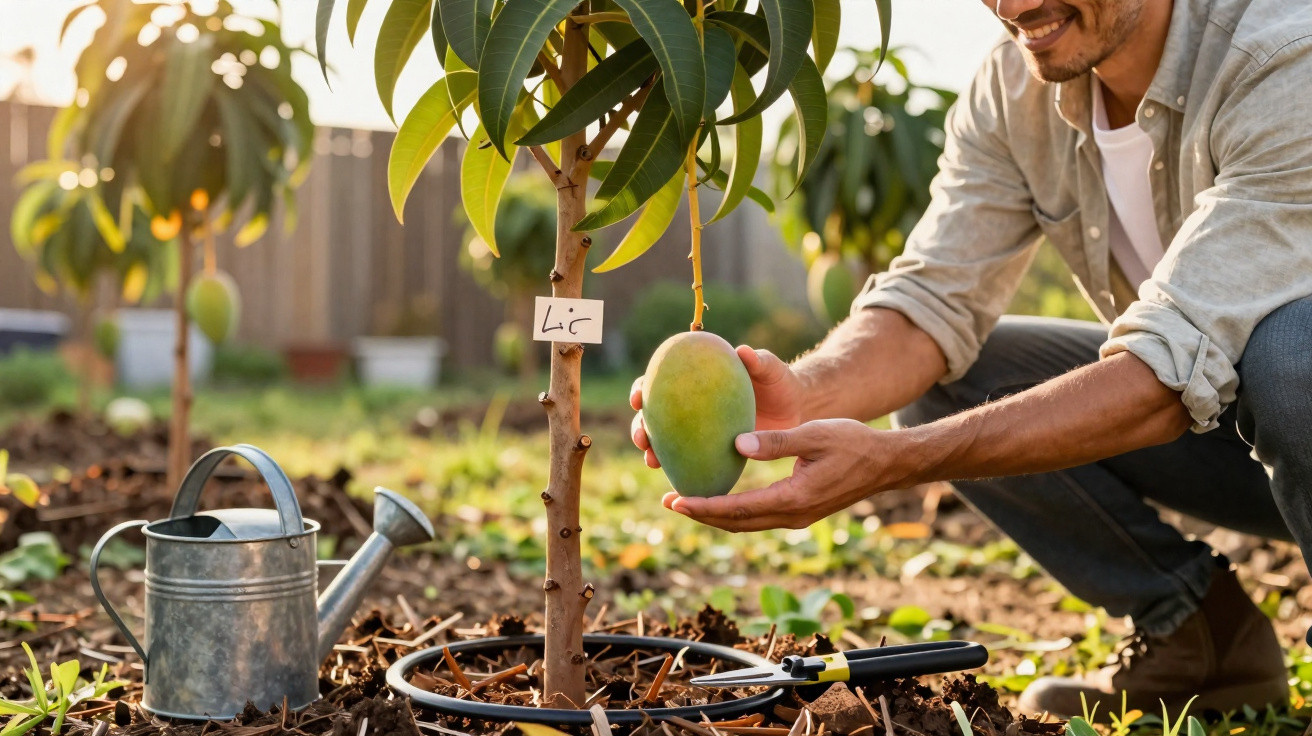
Mango trees are among the most popular fruit trees in back gardens and on smallholdings, yet many people are taken aback by how long they can take to start bearing fruit. In some situations, the wait can stretch beyond a decade. That timing is not only about the variety: it is driven mainly by the type of young plant you put in the ground, the way it is managed at the start, and a few planting details that directly affect how the mango tree develops.
Difference between a grafted mango seedling and a seed-grown mango tree for mango production?
A grafted mango seedling is produced by joining a vigorous rootstock to a productive branch taken from a selected mother plant. By doing this, growers can reproduce desirable traits-such as high yields, good-quality fruit and less alternation between heavy and light seasons-while also shortening the time until the first harvest.
A seed-grown plant (often called a seedling or “own-root” tree) comes straight from planting the stone and can vary widely from one plant to the next. Research cited by Embrapa indicates that mango trees grown from seed may take 7 to 10 years or more to fruit. By contrast, grafted seedlings, when managed well, typically begin producing between the 3rd and 5th year, with fruit that is more uniform and easier to predict.
Why do some mango trees take so many years to start producing?
When someone says their mango tree has been taking years to produce, technicians usually begin by asking whether it was planted as a grafted seedling or grown from seed. That single detail helps clarify whether the wait is expected-or whether planting and management issues may be further delaying fruiting.
Beyond the plant’s origin, several factors can extend the juvenile phase, including variety choice, how well the tree suits the local climate, too much shade, or water stress. In home gardens, it is common for a tree to become very large yet yield little, simply because the canopy has never been trained; the tree ends up spending more energy on leaves and branches than on flowers and fruit.
How do planting depth and early management affect development?
Planting depth may seem minor, but it can significantly influence mango tree growth. The usual recommendation is to set the young tree at the same level it was in its original pot, keeping the graft union clearly visible and above the soil line. This helps avoid rooting problems and prevents excessive vigour from the rootstock.
To keep planting and early care organised, it helps to follow a few practical steps commonly recommended by agricultural research bodies:
- Dig a hole larger than the root ball, loosening the soil well at the bottom.
- Mix in soil amendments and fertilisers according to a soil test.
- Set the plant’s collar level with the ground, without burying the graft.
- Firm the soil lightly around the plant and create a shallow basin to help with irrigation.
What care helps a mango tree fruit earlier in a healthy way?
Once planting has been done properly, management in the first few years makes it more likely that the mango tree will come into production on a predictable timeline. The goal is not to “force” the tree, but to prevent delays caused by stress, nutrient shortages, or poor canopy training-something that matters even more where space is limited.
Useful practices include steady, well-balanced watering, fertilising based on a soil analysis, keeping weeds down close to the trunk, and formative pruning so that light can reach the canopy. In many cases, simply correcting these points on an already-established mango tree is enough for the next season to be the one in which it finally repays the wait with blossom and a more generous set of fruit.

Comments
No comments yet. Be the first to comment!
Leave a Comment