
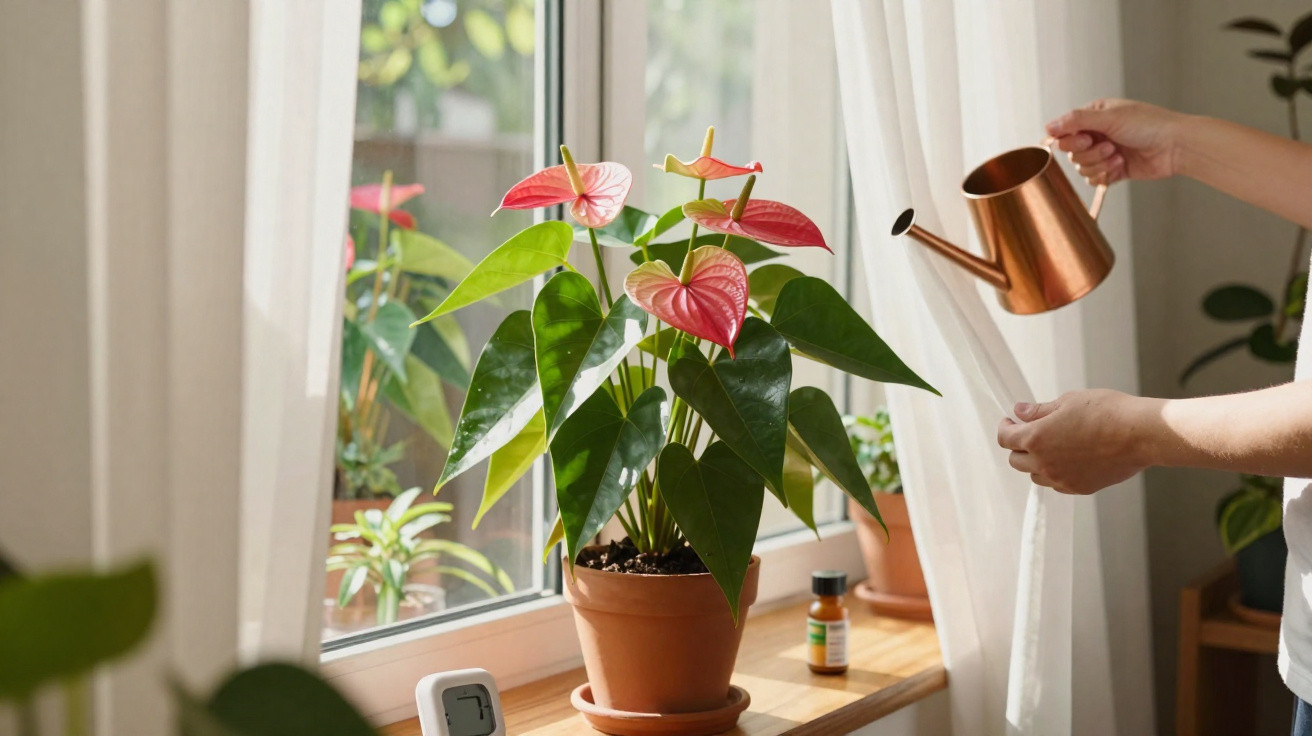
When anthurium spends months producing leaves only and no blooms, the cause is usually linked to the conditions where the plant is kept. Among the issues most often noted by specialists, lighting repeatedly stands out as one of the main reasons for poor flowering, because the plant responds directly to both the amount and the quality of light it receives throughout the day.
Why does anthurium produce only leaves and not flowers?
When someone says their “anthurium only produces leaves”, it typically points to an imbalance between light and shade. As a tropical forest plant, it does best in partial shade with filtered brightness, well away from strong sun during the hottest part of the day. In spaces that are too dim, the plant tends to enlarge its leaves to capture more light, but it diverts less energy into forming flowering stems.
On the other hand, direct sun-especially from north- or west-facing windows-can scorch the foliage and shorten how long the flowers last. Very elongated gaps between leaves, yellowing foliage, and dry, crisp edges suggest light stress and possible etiolation, indicating the pot should be moved to a more suitable spot.
How can you adjust lighting so anthurium flowers more?
To encourage regular blooms, keep anthurium somewhere bright with strong, indirect light and, if possible, only gentle sun early in the morning. In homes and flats with limited natural light, dedicated grow lights can be used to top up brightness, provided they are run for a few hours each day.
A few straightforward checks make it easier to judge whether the position is genuinely appropriate and to avoid common placement mistakes:
- Check whether you can read comfortably in the room using natural light alone.
- Watch for a few days to see whether the sun actually touches the leaves directly, and at what time.
- Avoid placing the pot behind tall furniture, heavy curtains, or in very gloomy corridors.
Which factors beyond light affect anthurium flowering?
A lack of flowers is not always down to brightness alone: poor substrate, irregular feeding, watering too much or too little, and temperature swings can all play a part. A well-draining mix with organic matter, plus healthy roots, provides the reserves the plant needs to support both foliage and inflorescences with strength.
The most comfortable temperature range is between 18 °C and 28 °C, while avoiding cold draughts and direct air-conditioning. Too much water increases the risk of root rot, whereas leaving the compost dry for long spells leads to wilting, bud drop, and general weakening-even in plants receiving good light.
Practical care to encourage flowers on anthurium
If your anthurium looks healthy but is producing leaves only, a few routine tweaks can make a noticeable difference. Moving the pot, reassessing the type of substrate, and adjusting watering frequency help balance leafy growth with the production of flowering stems, particularly when paired with a fertiliser formulated for flowering plants.
A small set of simple actions often shows results over weeks or months: keep the substrate lightly moist, use airy mixes with pine bark or coconut fibre, feed moderately, and shield the plant from intense cold. With patience, it is common to see new colourful stems emerging and a more reliable flowering cycle through the year.

Comments
No comments yet. Be the first to comment!
Leave a Comment