
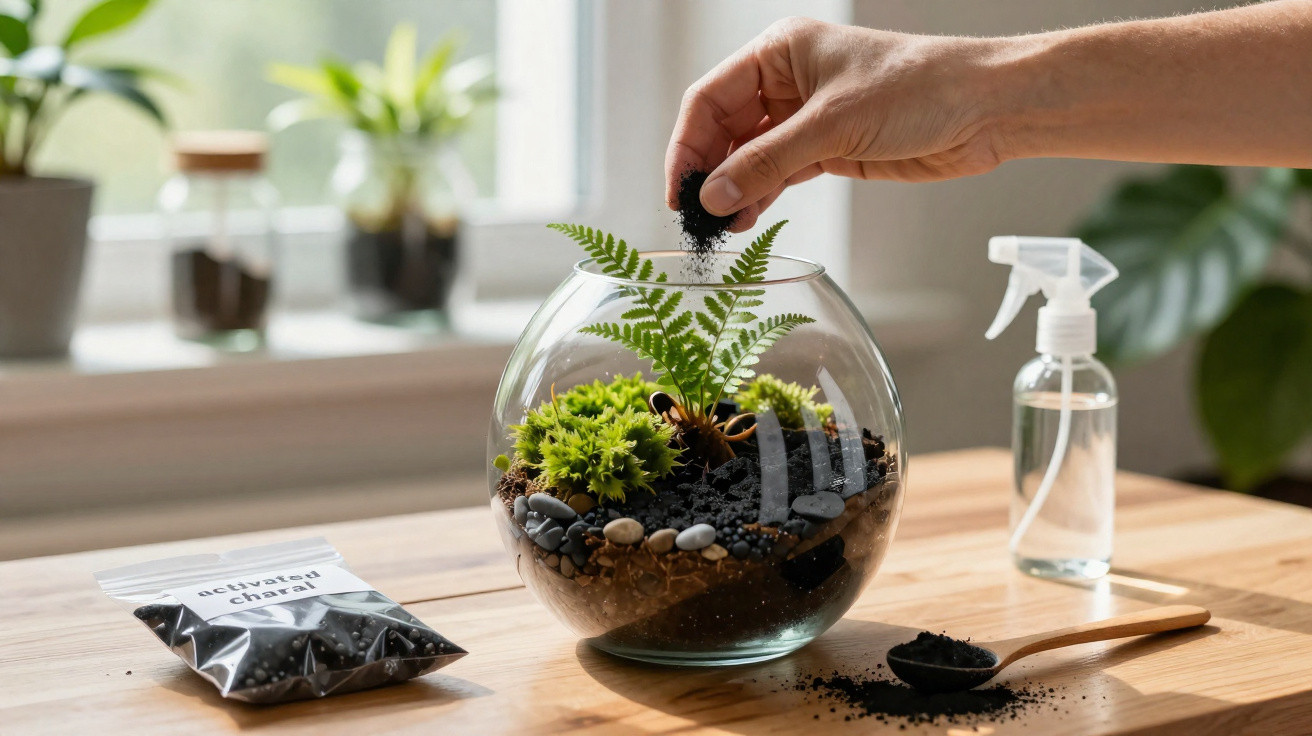
Keeping a miniature ecosystem inside glass containers calls for careful planning. Using additive-free charcoal provides ongoing purification of the micro-environment, filtering out unwanted impurities and helping your plants stay attractive and healthy with very little effort.
Why is charcoal essential for a closed terrarium?
In glass containers, air circulation is extremely limited, which encourages constant moisture build-up. Because it is porous, this material helps stop unwanted residues from developing, acting as an excellent natural filter that protects the quality of the space.
On top of that, its adsorption capacity allows it to trap harmful organic compounds before they create issues. As a result, odour control becomes far more effective, preventing unpleasant smells caused by too much internal decomposition in the container.
How to keep pothos in water without it rotting?
Growing this species in a water-filled container requires changing the liquid at the right time and keeping the vessel clean to avoid… Read more
What is the difference between charcoal and activated charcoal?
Both options offer similar purifying benefits, but they differ in how practical they are to prepare. Activated charcoal is usually already crushed and ready for handling, whereas standard charcoal typically needs to be manually broken down before you use it.
If you decide to use the traditional product sold for barbecues, you must make sure it is completely clean and free from greasy residue or chemical additives. This careful step is essential to keep the protected environment safe from unwanted contamination within the setup.
Below is a video from the Meu Terrário YouTube channel that explores the points discussed in this topic in more depth:
How should the charcoal layer be applied during assembly?
Correctly building the layers ensures the system works properly inside the container. The crushed charcoal should be placed strategically between the lower drainage layer and the upper substrate, forming a highly effective protective barrier.
A thin sheet is enough to treat the flow of water that collects at the bottom. With the right thickness, the soil is kept from direct contact with stagnant moisture, promoting continuous filtration without taking up too much space in the arrangement.
Essential Assembly Kit
Elements for success
Check the three key items needed to build a healthy base:
- A bottom layer made of gravel or expanded clay for initial drainage;
- A fine fraction of clean, well-crushed additive-free charcoal;
- A light, fertile substrate suited to the selected species.
What benefits does charcoal bring to plant health?
By keeping the environment clean, charcoal helps prevent the spread of fungi and bacteria that develop in water. This ongoing protection reduces early root rot, ensuring the planting stays stable and vigorous for a long time.
Selective retention of impurities also helps stabilise the nutrients present in the substrate, supporting more balanced growth. Ornamental foliage can take up fully purified water, which leads to a look that is noticeably more vibrant, attractive, and long-lasting inside a closed container.
Follow the main positive effects commonly seen in day-to-day care:
- Continuous filtering of excess moisture accumulated at the base;
- A significant reduction in mould and strong smells in the piece;
- Protection of roots from the action of harmful agents.
What care is needed when choosing the right charcoal?
Selecting the correct input is crucial to prevent the soil from being contaminated by harmful agents. Using suitably sized, properly sanitised pieces helps the small micro-ecosystem thrive without interference from unwanted chemicals in the water.
Finally, measure the quantity you add carefully to keep the right proportions in the arrangement. When the build is done well, you get an attractive, durable ornament that can impress for a long time with minimal need for outside intervention.
Comments
No comments yet. Be the first to comment!
Leave a Comment