
Alarm systems, cameras and smart door locks: many homeowners rely on technology first when it comes to protecting their property. One area is still surprisingly often overlooked - the garden. Planned properly, it can make access so awkward for burglars that they choose an easier target instead.
Why thorny plants genuinely put burglars off
Burglars typically look for routes into a house that are quick and straightforward. The lower the risk of noise, injury or being spotted by neighbours, the better. That is exactly where a “defence hedge” comes in: dense, difficult to force through, and armed with plenty of thorns.
"The less appealing the route to a window or patio door becomes, the greater the chance the offender gives up and moves on."
If you pair these plants with crunching gravel, every footstep becomes far more noticeable. Anyone trying to creep through a gravel bed at night gives themselves away quickly - neighbours or even people inside the house will hear it.
Findings from crime-prevention research suggest that well-designed planting that is dense and thorn-bearing can significantly reduce the risk of a break-in. It will not stop a highly professional attack, but it filters out many opportunistic thieves long before they try.
Even so, plants are not a substitute for basic security measures. Neglected shrubs and hedges can, in the worst case, achieve the opposite by creating perfect hiding places and screening intruders from neighbours’ view. If you choose “green defence”, you need to keep it maintained.
The four most effective plants for a natural defence zone
For defensive planting, four options stand out in particular because they grow thickly and either carry persistent thorns or form an almost impenetrable mass of foliage:
- Pyracantha (firethorn)
- Berberis (barberry)
- Rosa rugosa (rugosa rose / Japanese rose)
- Cherry laurel
Pyracantha: the extremely tough classic for fences and walls
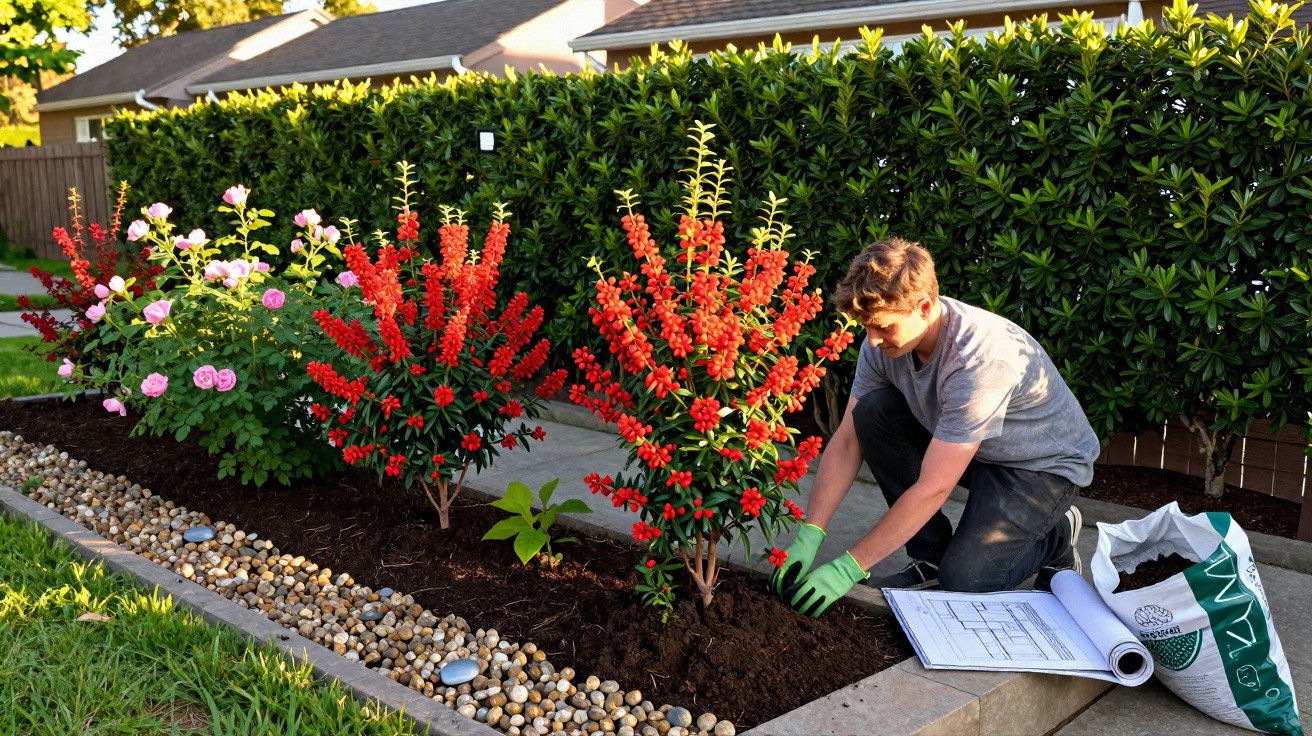
Pyracantha, commonly known as firethorn, is one of the more serious choices for a security-minded garden. It grows densely, branches heavily and produces long, sharp thorns. One careless grab can quickly end in blood - not a pleasant prospect for an intruder.
Typical uses include:
- along fences and walls
- beneath low windows
- as a dense hedge on poorly overlooked sides of the plot
If you plant firethorn at roughly 50–70 cm spacing, it will, over time, form a thick barrier around 1.5–2 m high. Its bright berries in autumn look attractive, while the thorns still keep people at a dependable distance.
Berberis: a compact thorny shrub for side passages and sneaky routes
Berberis, often referred to as barberry, stays more compact but is just as defensive. Its branches are covered in many small spines that make squeezing through extremely unpleasant.
Berberis is particularly useful in places burglars like to exploit:
- narrow passages down the side of the house
- hidden entrances to the garden
- areas behind garages or sheds
By mixing Pyracantha and Berberis, you effectively create a natural wall of thorns. One important point: neither species should be planted too close to footpaths where children or pets pass.
Rosa rugosa: a harmless-sounding name, nasty thorns
Rosa rugosa appears innocuous at first glance. It flowers nicely, has a light fragrance and suits many garden styles. But among the romantic blooms sit very unpleasant thorns. Beneath ground-floor windows, the rugosa rose shows its full security potential.
"Under easily reached windows, a dense row of Rosa rugosa almost completely blocks the climbing route."
The shrubs can be planted in bands - for example in front of floor-to-ceiling windows or patio doors that are not directly on the street. Because it spreads relatively wide, it quickly creates a hard-to-penetrate zone without making the garden look like a fortress.
Cherry laurel: the privacy screen that denies burglars a clear view
Unlike the other options listed, cherry laurel has no thorns. Its strength is its dense, evergreen foliage. A suitably tall hedge blocks views of the patio, large glazed areas or the garden itself - and removes the chance for a would-be offender to observe calmly.
Cherry laurel works especially well:
- in front of large glazed areas such as patio doors
- as a screen towards the street
- along boundaries with lots of visibility from outside
Do make sure you check local rules in good time: in many areas there are requirements for hedge height on property boundaries. If you build too high too close to the line, you may end up in a dispute with a neighbour.
How to plan your “defence hedge” without ruining the garden
No one wants to sit in their living room feeling as if they live behind barbed wire. The trick is to combine security with good design. A simple base layout can help you plan:
- Facing the street: cherry laurel as an evergreen privacy screen, with a strip of coarse gravel underneath.
- Down the sides: alternate Pyracantha and Berberis for maximum deterrent effect.
- Beneath vulnerable windows: a band of Rosa rugosa.
- Paths and side routes: gravel surfacing that crunches audibly with every step.
Despite all measures, the front of the house should remain visible. If you let planting completely swallow the front door, you may unintentionally give burglars cover they will gladly use.
Common mistakes with security hedges - and how to avoid them
Many homeowners start planting enthusiastically, but after a few years they lose track. Then the security hedge can quickly become an overgrown thicket where strangers can hide very effectively.
What matters:
- Cut back at least once a year: firm pruning keeps the hedge dense but still manageable.
- Keep emergency routes clear: paths needed by the fire service or ambulance in an emergency must not be blocked by thorny planting.
- Make play areas safe: near climbing frames, sandpits or pools, avoid extremely thorny species.
- Don’t create a “display area”: expensive outdoor furniture, barbecues or decorations are best not positioned directly behind the hedge.
"The best defensive plant is of little use if it is placed so that children or guests are constantly injured by it."
Why gravel, lighting and plants make a strong trio
Thorny hedges alone are only one part of the solution. The approach becomes far more effective when you combine three elements:
- Plants: dense, thorny or evergreen species as a physical barrier
- Gravel: loud crunching makes every step audible
- Motion sensors: lights switch on as soon as someone approaches
That creates a kind of security chain: anyone trying to force their way through shrubs meets thorns, steps onto gravel, ideally triggers a light, and suddenly stands in full view. Most thieves avoid that scenario.
What garden owners should consider before planting
Before you start any major planting, it is worth taking a quick look at the local planning rules or council guidance. Some areas set limits on hedge height or specify what can be planted along roads and paths. A brief chat with neighbours can also prevent disputes - for example if you are planning a thorny hedge right next to their fence.
If you have children at home, you should also check whether any chosen plants are toxic. Some species - especially certain barberries - can cause stomach problems if the berries are eaten. Young children can quickly put something in their mouth that was never meant to be a snack.
Fire safety is another consideration: in very dry regions, densely planted evergreen hedges can pose a fire risk in midsummer. Regular watering and removing dry material reduces the danger.
Used properly, these four plants can become a quiet security presence around the home. They also improve the look of the plot, provide habitat for birds and insects, and give owners a noticeably better feeling when the house is empty during the holidays.
Comments
No comments yet. Be the first to comment!
Leave a Comment