
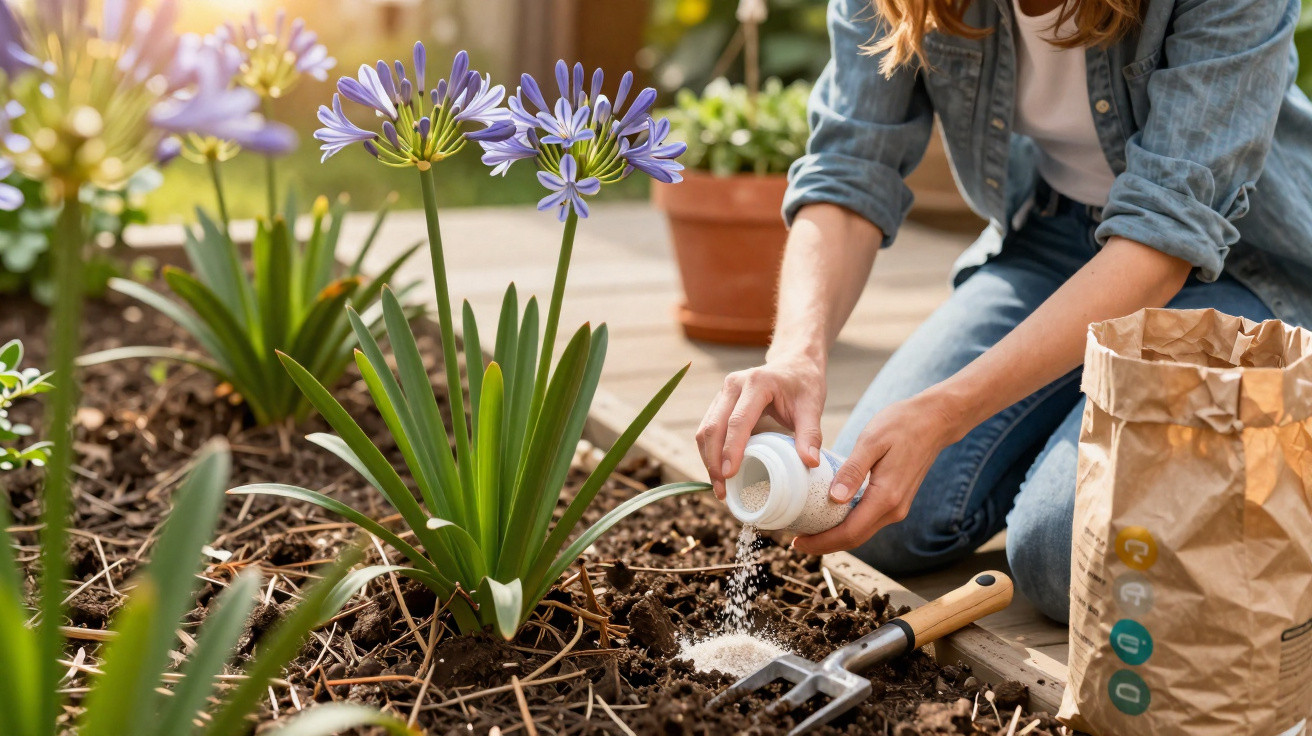
Anyone who loves Agapanthus (African lily) wants those tall, majestic spheres of bloom held well above the foliage - not just a few tired-looking stems. Whether you get that show depends on a short window before the end of March. During this period the plant effectively decides how robust its flower stalks will be. With a few well-timed, targeted steps, you can genuinely encourage extra height.
Why March determines Agapanthus flowering power
In late winter, Agapanthus is still in a kind of sleep. As the days lengthen and the soil starts to warm, buds and roots come back to life. Gardeners often call this the “post-dormancy phase”. Over just a handful of weeks, the plant allocates its energy - either into lots of leaves, or into strong, tall flower stalks.
Blue or white flower balls on stems anywhere from 30 to well over 100 centimetres do not happen by chance. Their height is shaped by nutrient availability and how the soil is handled right at the start of growth. If you respond correctly now, you can steer that energy towards flowering.
“Agapanthus puts its entire summer display on the table in a brief moment in March - use that timing and you gain height and fullness.”
The P–K protocol: how to give flower stalks extra power
The key to the trick is simple: in March, don’t just fertilise “somehow”. Feed the plant specifically with phosphorus (P) and potassium (K), and largely avoid nitrogen. The routine is easy to do at home.
Step 1: Spring clean around the plant
- Remove any frost-damaged or brown leaves cleanly, close to the base.
- Cut out old, dried flower stalks completely.
- Clear away leaf litter, weeds and last year’s debris from the root zone.
This creates light, air and space - and clears the way for what comes next.
Step 2: Light loosening instead of rough digging
Using a hand fork or small cultivator, lightly scratch the soil around the plant to just 3 to 5 centimetres deep. Important: do not damage the thick, fleshy roots.
That delivers several benefits at once:
- It breaks up the hard winter crust.
- Rainwater and nutrients reach the active roots more quickly.
- Soil life such as earthworms and micro-organisms get more oxygen again.
Step 3: The right nutrient mix - focus on phosphorus and potassium
Now comes the “special ration” for sturdy flower stalks:
- Spread 1 to 2 handfuls of mature compost or worm compost per plant.
- Sprinkle a thin layer of sieved wood ash on top - it supplies potassium for stable stalks and strong blooms.
- Avoid nitrogen-rich fertilisers (for example, lawn feeds that are heavily nitrogen-based, or fresh manure), as they mainly drive leafy growth.
Finish by adding a fine layer of compost over everything and gently firm the area. Then apply a thin mulch layer of organic material (for example, flax or hemp shives). Finally, water slowly and deeply so nutrients wash into the upper root zone.
Banana peel tip: chopped into small pieces and worked in shallowly, they release potassium gradually - ideal for Agapanthus fans with a fruit bowl.
Agapanthus in a pot: how to prevent puny stalks
In containers, Agapanthus can start to “starve” after a few years. The roots occupy the entire pot, water runs down the sides, and the plant produces only short, soft-stemmed flowers.
When repotting becomes necessary
A close look makes the decision easier:
- Roots are pushing out of the drainage holes.
- The compost has sunk significantly and has become very hard.
- After watering, the pot dries out again quickly.
If that’s the case, lift the plant from its pot in March and move it into a only slightly larger container - with good drainage and a loose, nutrient-rich compost. Then apply the P–K protocol exactly as described above.
If there is still enough space in the pot and the plant looks vigorous, simply loosening the surface plus feeding from above is entirely sufficient. What still matters is regular (but not excessive) watering during the season, and cutting off spent stalks.
Agapanthus in the ground: divide, feed, mulch
In garden soil, many Agapanthus varieties feel particularly at home. After a few years, however, the clumps can become so dense that flowering declines. The right time to rejuvenate is also in March.
How to divide large clumps successfully
- Carefully lift the clump from the ground with a spade or garden fork.
- Split the plant into several sections - each piece should have its own roots and one or two growth buds.
- Replant the divisions into fresh, loosened soil, enrich with compost, and water well.
Finish with a thin mulch layer. This keeps the soil moist for longer and slows competing weeds, without smothering young shoots.
What if March has already passed?
If you miss the ideal moment, there is no need to give up on the plant. You can catch up as soon as the soil is no longer icy cold and you can see clear signs of growth. The first fresh leaf tips are the signal: it’s starting.
Even then, the same rules apply: light loosening, compost, a phosphorus and potassium feed, a thin mulch layer, and a thorough watering. The stalks may not end up quite as long as with perfect timing, but the effect is still clearly noticeable.
Summer care: keeping the giant blooms steady
Once the spring groundwork is done, Agapanthus mainly needs three things during the season: water, air at the roots, and consistent removal of faded stalks.
| Location | Water requirement | Care note |
|---|---|---|
| Pot on terrace/balcony | high, water regularly | Empty saucers after rain; apply a liquid fertiliser for flowering plants every 2–3 weeks |
| Bed in the garden | medium, water during extended dry spells | Maintain a thin mulch layer; remove faded stalks close to the ground |
If your African lily produces lots of leaves but few flowers, the cause is almost always the fertiliser: too much nitrogen and too little potassium. In that case, commit to the P–K programme next spring and drop nitrogen-heavy feeds.
Background knowledge: why phosphorus and potassium work so well
Phosphorus supports flower and root formation, while potassium strengthens cell structure and makes stalks sturdier. Together, these two nutrients encourage exactly what Agapanthus fans want: strong, long shoots topped with abundant flower spheres that do not collapse in the first gust of wind.
Nitrogen is not “forbidden” - it is part of any plant feed. With Agapanthus, the nitrogen share simply should not dominate in spring. Otherwise the plant channels its energy into green leaves, at the expense of flowers.
Practical ideas for hobby gardeners
If you grow several Agapanthus in the garden or on a balcony, it’s easy to compare: give one plant the P–K protocol in March, and treat a second one traditionally with an all-purpose fertiliser. The difference in stalk length is usually noticeable from early summer.
Another interesting approach is pairing it with other container plants: a sunny corner with Agapanthus, lavender and ornamental pots of grasses creates a Mediterranean feel. The African lily becomes the architectural highlight - especially when, thanks to the spring method, its flower stalks hover clearly above everything else.



Comments
No comments yet. Be the first to comment!
Leave a Comment