
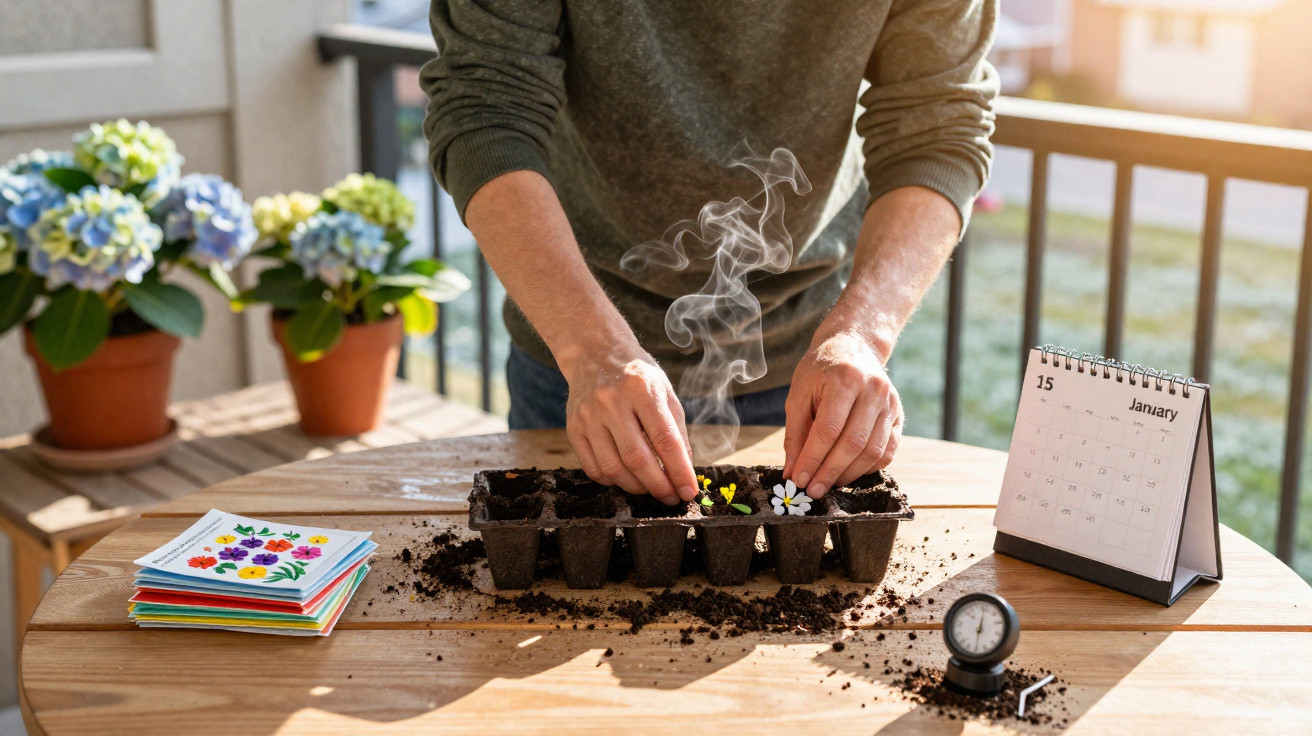
Most gardeners pay little attention to the garden until March, but professionals take a different approach. They make the most of January’s cold, calm days by starting selected flowers indoors and protecting important shrubs outside, gaining an extra month of colour when spring arrives.
Why January is really the beginning of spring
Garden centres can seem quiet once Christmas has passed, but the gardening calendar tells a different story. Across much of the UK and the northern US, January comes approximately six to ten weeks before the final frosts. For gardeners, this is a valuable opportunity.
Starting flower seeds six to ten weeks before the last frost lets them hit the ground running the moment temperatures rise.
Although beds and borders may appear empty, seeds placed on a bright windowsill are already developing roots and strong stems. By April, these early plants perform like established specimens rather than hesitant young seedlings. They put on growth more quickly, cope better with unpredictable conditions, and bloom sooner and for longer.
January also has an important role outdoors, particularly for summer-flowering shrubs. Mophead hydrangeas, for example, formed their flower buds towards the end of the previous summer. Those buds remain exposed on the stems through winter, where severe frost and repeated freezing and thawing can damage them. Applying a simple winter mulch around the plant’s base helps keep soil temperatures steadier while protecting the shallow roots that support next season’s flowers.
Using light, warmth and timing well
Winter sowing indoors is not simply a matter of providing warmth: light is even more important. With short daylight hours and weak winter sunshine, seedlings may become pale, thin and floppy unless conditions are managed carefully.
Winter seedlings need bright, extended light and just enough warmth to stay active, not a cosy radiator that bakes them.
Set trays beside a south-facing window in the northern hemisphere, or use straightforward LED grow lights in a dim home. Provide lengthy periods of bright light - around 14–16 hours daily - to keep young plants compact and sturdy rather than encouraging them to stretch upwards.
Keep the compost lightly damp, never waterlogged. A fine mist sprayer stops seeds from being displaced and gathering in clumps. Gardeners often use a transparent lid or plastic film over trays to retain humidity while seeds germinate, removing it as soon as the first green shoots emerge.
The 11 January flowers worth growing or protecting
Of the many possible choices, eleven flowers particularly reward the effort of being started or protected in January. Some should be sown indoors, while others need only a protective layer around their roots outside.
- Pansies – hardy, cold-tolerant bedding plants that add early brightness to containers and borders.
- Calendulas – vibrant orange and yellow, daisy-like flowers that tolerate cool, changeable conditions.
- Snapdragons – upright colour-filled spikes that withstand light frost and bring height to planting around spring bulbs.
- Wallflowers – fragrant, cottage-garden blooms that provide a foundation at the front of borders.
- Sweet peas – strongly scented climbing annuals, suited to fences, wigwams and obelisks.
- Sweet alyssum – low-growing, honey-fragranced ground cover that attracts bees and works well beside paths.
- Lobelia – soft mounds of blue or white flowers for hanging baskets, window boxes and spaces between paving stones.
- Petunias – free-flowering trailing or bushy plants that bring colour to balcony boxes and patio pots.
- Pelargoniums (bedding geraniums) – dependable container plants that benefit from an early indoor start to flower well in summer.
- Impatiens – shade-loving plants that cover darker areas and north-facing patios after all danger of frost has passed.
- Hydrangeas – not grown from seed at this point, but mulched to help existing buds survive winter and flower strongly.
What should be sown in January?
| Flower | January action | Where |
|---|---|---|
| Pansies, calendulas, snapdragons, wallflowers | Sow seeds | Indoors in trays or modules |
| Sweet peas | Sow in deep pots or root trainers | Cool, bright porch or unheated greenhouse |
| Sweet alyssum, lobelia, petunias | Surface-sow small seeds | Indoors with good light |
| Pelargoniums, impatiens | Sow early for a long season | Indoors, warm and bright |
| Hydrangeas | Mulch and protect crown | Directly in the garden |
Winter sowing techniques that genuinely work
Choosing the correct seed depth
Different seeds have different requirements for darkness. Small seeds, including petunia, lobelia and sweet alyssum, often germinate most successfully when scattered on the compost surface. Press them lightly to ensure contact while allowing them to receive light. Calendulas, pansies and snapdragons, however, prefer a light covering of sieved compost, approximately the same thickness as the seed itself.
Mark every tray with both the variety and sowing date. Winter sowing can involve a longer wait, and after a fortnight it is easy to lose track of what was planted where.
Hardening off: the commonly missed stage
Moving tender seedlings from a centrally heated sitting room to a cold patio can be a severe shock. Rather than making the transition all at once, introduce outdoor conditions in stages.
Two or three hours outside each day, in a sheltered, shaded spot, toughens seedlings far better than keeping them coddled indoors.
Begin with a brief period outside each day once daytime temperatures rise above freezing. Build up both the duration and light levels gradually over one or two weeks. Snapdragons and sweet alyssum cope especially well with this process, and can be planted into beds before the last frost when properly hardened off. More tender plants, such as impatiens, need to remain indoors until the frost risk has completely passed.
Winter mulch: affordable protection for flowers
January is also the time to protect hydrangeas and other flowering shrubs that already carry the following season’s buds. Cold winds and uncovered soil allow frost to penetrate more deeply, placing stress on roots positioned close to the surface.
Apply a 10–15 cm layer of organic material across the root area, leaving a small gap around the stem bases to prevent rot. Suitable materials include:
- thoroughly dried fallen leaves
- shredded bark or pine bark
- straw or rough hay
- shredded branches from autumn pruning
This covering acts like a duvet, reducing temperature fluctuations and slowing moisture loss. When spring comes, gently work it into the top of the soil, where it will decompose, nourish soil organisms and provide a light mulch for summer.
Combining January flowers for the greatest impact
Planning combinations now can save both time and money once garden centres become busy. An effective approach is to combine early structure, scent and colour that lasts.
Pansies and sweet alyssum create a tidy path edge, while snapdragons or wallflowers add accents towards the back of the border. Sweet peas can be trained up a basic bamboo wigwam among tulips, providing fragrance as the bulbs begin to fade. For containers, combine trailing lobelia with petunias and pelargoniums to create a full, layered display by early summer.
What gardeners mean by “last frost date”
Seed packets often instruct gardeners to “sow X weeks before last frost”. The last frost date is not an absolute date, but a statistical average for a particular location. Coastal gardens in Cornwall or the Pacific Northwest may experience their final frosts several weeks before inland or upland areas.
As a practical guide, consult local gardening groups or long-term weather records for your postcode. Then count back six to ten weeks to identify the best January and February sowing period. If you are uncertain, sow tender flowers later and start robust varieties, such as snapdragons and calendulas, earlier.
Two January gardening scenarios: balcony and back garden
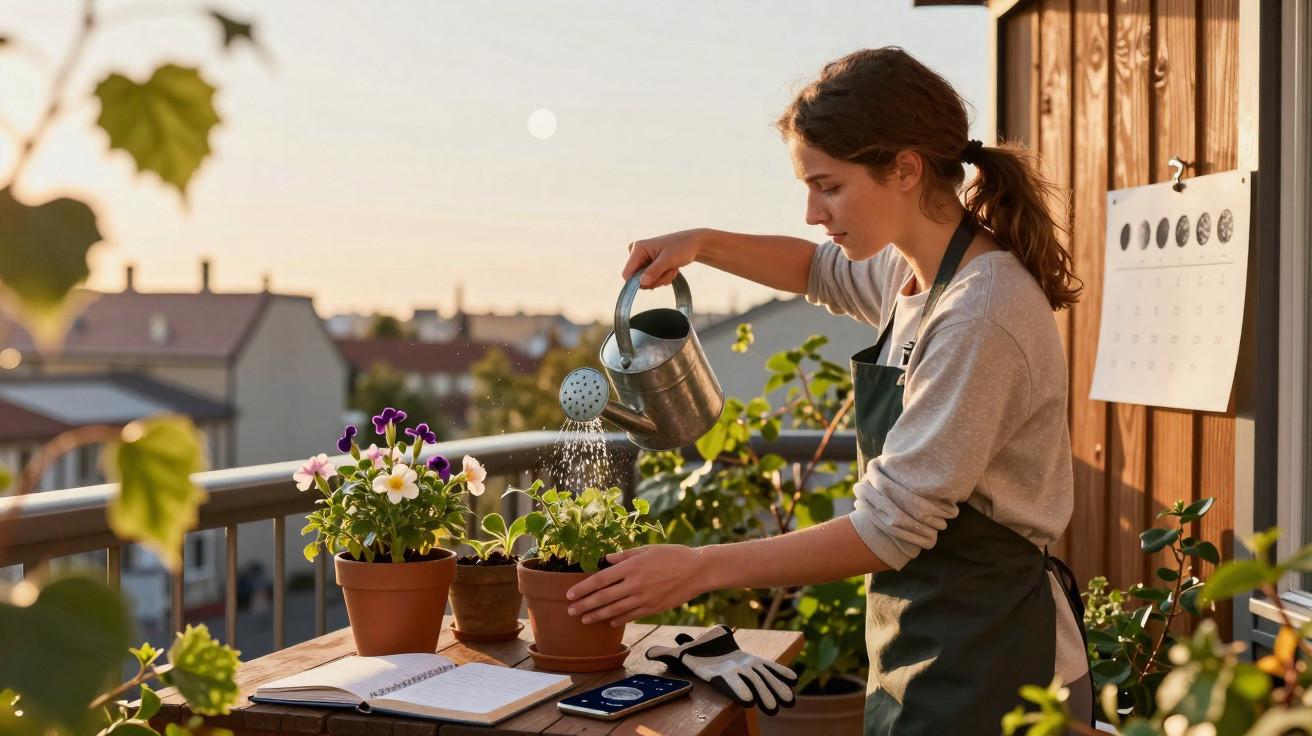
For a compact city balcony, one sunny windowsill and several seed trays can be sufficient. Sow lobelia, petunias, pansies and pelargoniums indoors, then transfer them into railing planters once the nights become milder. Impatiens can occupy shadier spots near the door, creating colour from floor height to eye level.
In a larger back garden, January is an opportunity to reconsider entire borders. Mulch around hydrangea bases, sow sweet peas in deep pots placed in an unheated greenhouse, and arrange trays of pansies and snapdragons beneath lights. By late spring, these young plants can be woven between emerging perennials and bulbs, transforming bare ground into a thick, colourful patchwork.
Approached in this way, January no longer feels like gardening’s dormant period. Instead, it is the calm planning space where the finest spring displays begin to develop, seed by seed and mulch fork by mulch fork.
Comments
No comments yet. Be the first to comment!
Leave a Comment