
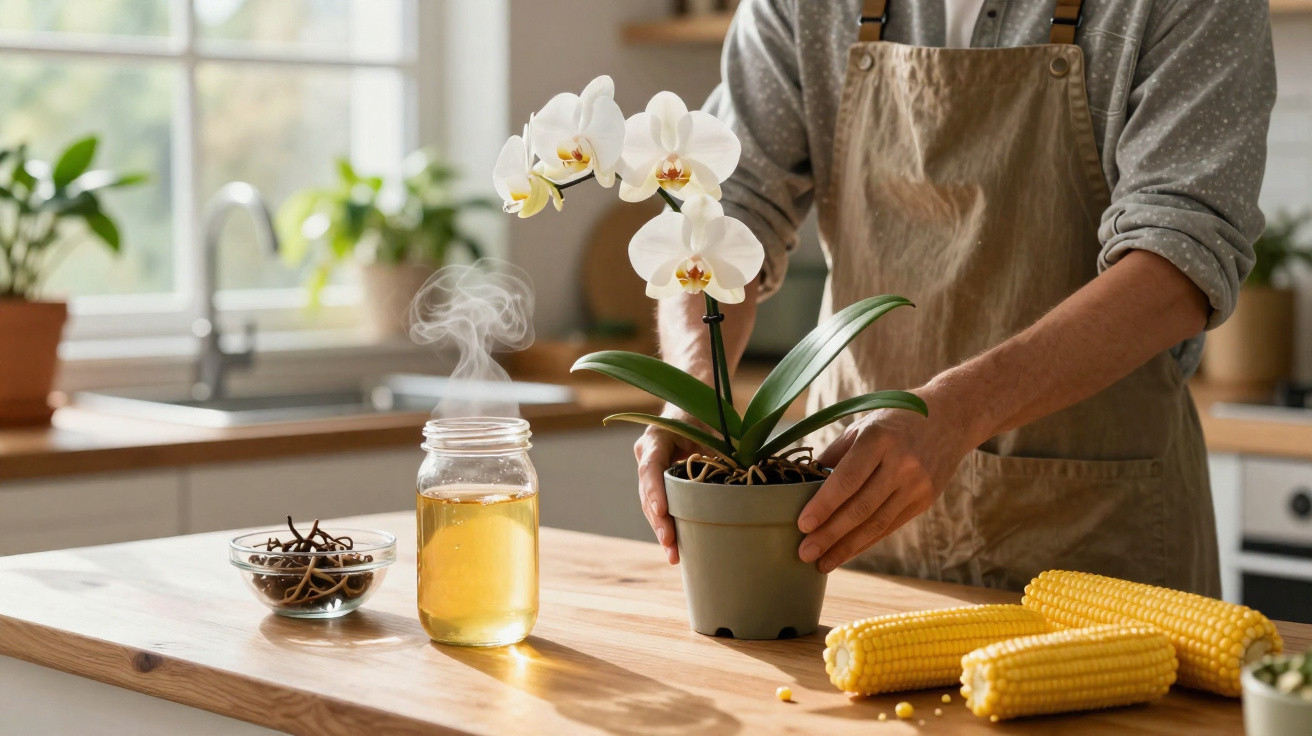
On the windowsill, the leaves are drooping, the flower spike is bare and nothing has happened for months: countless orchids in UK living rooms look like this shortly before they are thrown away. But a bright yellow kitchen leftover is now being widely discussed among amateur gardeners – and has prompted a surprising comeback in some pots.
When a struggling orchid can still be saved
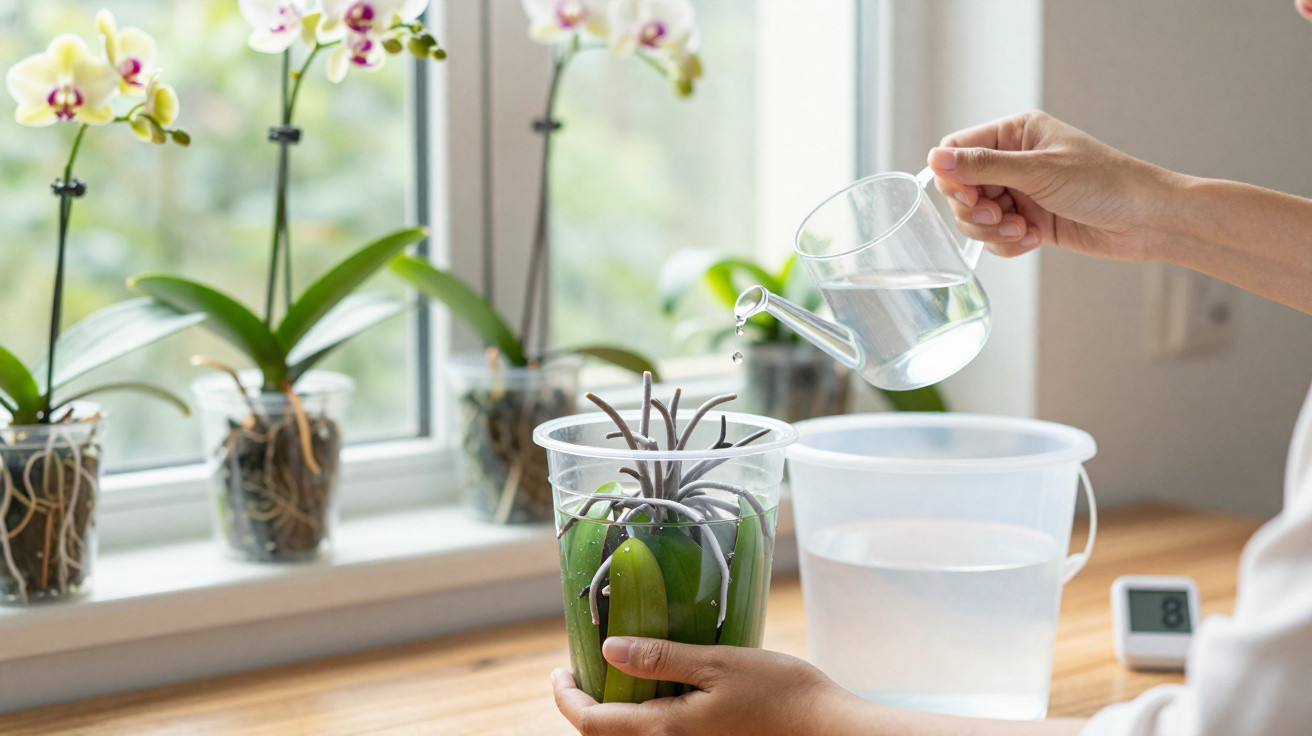
Before trying any household remedy, take an honest look inside the pot. Many Phalaenopsis orchids appear dead when they are simply in a dormant phase. The flowers have disappeared and the spike has dried out, but the plant continues to live through its roots.
A transparent pot is particularly useful. Healthy roots are fairly easy to identify: they are green or silvery grey, firm, and have no noticeable smell. If they still feel plump, the orchid is usually only taking a break and waiting for improved conditions.
Brown, mushy roots with a rotten smell, on the other hand, are warning signs. This means the orchid is suffering from rot, often because it has received too much water or the growing medium has become completely compacted. A kitchen trick will no longer be enough in that situation; decisive action is needed.
“As long as a few plump, pale-coloured roots remain, there is a good chance that the orchid will produce new leaves and flowers.”
Rescue plan for damaged roots
If rot is visible in the pot, the plant first needs a new home. Loose specialist mixes based on bark are suitable, as they allow water to drain away quickly. Remove the old, soft root sections while keeping every healthy part intact.
Then place the orchid somewhere bright but out of direct midday sun. Consistently prevent water from collecting in the saucer. A slight difference between day and night temperatures – four to six degrees is enough – can trigger the natural flowering response.
What the yellow vegetable trick can actually do for orchids
The widely discussed tip centres on an everyday food: cooked, unsalted sweetcorn. Some amateur gardeners use leftover kernels or the cooking water as a mild supplementary feed before giving up on the plant altogether.
The reasoning is that, as the vegetable breaks down, its starches and sugars provide food for microorganisms in the growing medium. These tiny organisms loosen its structure, release bound nutrients and stimulate root activity. Users report firmer leaves and fresh root tips after applying the yellow liquid in very small amounts.
There is currently no laboratory evidence for this; it is based on practical experience. Even so, many people use this method before finally disposing of a seemingly lost plant.
“The kitchen leftover does not feed the orchid directly; it feeds the living organisms in the pot, which may indirectly give the plant renewed vigour.”
How to make a sweetcorn liquid feed
The most common version is quick to prepare: blend around 100 grams of cooked sweetcorn kernels – without salt or seasoning – with one litre of water, filter it very finely and allow it to cool. Use a fine-meshed sieve or a coffee filter so that no pieces remain in the pot.
If you do not want to make a full batch, use only the cooled cooking water from the vegetable. The same rule applies: it must contain no salt or seasoning. The liquid will keep in the fridge for no more than one to two days. As soon as it develops a sour smell, pour it down the drain.
- use only unsalted, unseasoned cooking water or cooked kernels
- always store leftovers in a cool place and discard them if they develop an odour
- never leave unfiltered pieces in the pot
How gardeners use the trick safely
The yellow liquid works only in homeopathic quantities. Almost soaking the plant in it risks fermentation in the pot and, in the worst case, fresh root rot. Amateur gardeners who report good results use it extremely sparingly.
The basic rule is that the root ball should already be slightly moist before applying the liquid. One or two teaspoons per use are then sufficient. Leave three to four weeks between applications.
- never pour large amounts into the growing medium
- do not allow extra standing water to remain in the saucer
- do not combine it with other household remedies such as rice water
- stop immediately if the growing medium becomes sticky or smells strong
“Anyone who turns a kitchen leftover into a permanent fertiliser solution overwhelms the fragile balance in the pot – less really is more here.”
If everything is suitable, encouraging signs often appear before fresh flowers do: new root tips turning green, firmer leaves and an overall more vigorous appearance. It often takes several weeks to a few months before a new flower spike emerges.
Once the plant is growing normally again, many gardeners cut back on the yellow liquid and return to regular, carefully measured watering with plain water, adding a conventional orchid fertiliser at a very weak dilution if needed.
What orchids need for lasting results
The kitchen tip may give a weakened plant a nudge. However, the basis for repeat flowering remains traditional care rather than an occasional splash from the saucepan. Four factors determine everyday success or disappointment.
| Factor | What orchids need |
|---|---|
| Light | a bright position without harsh midday sun; an east- or west-facing window is ideal |
| Water | water thoroughly or soak, then allow to dry well; roots must not stay permanently wet |
| Air | loose growing medium and air around the roots; do not use ordinary compact potting compost |
| Temperature | consistently warm conditions, with slightly cooler nights to encourage flowering |
If these requirements are met, exotic household remedies are often unnecessary. The plant will respond naturally by producing new leaves, followed by flowers. Kitchen leftovers can then serve only as a small boost at most.
When kitchen tricks are off limits
Not every popular household mixture belongs in an orchid pot. Highly sugary, sticky or salty liquids encourage mould and bacterial growth. Strongly concentrated blends containing several household leftovers are also more likely to cause stress than flowers.
Anyone also using conventional fertiliser should apply it very sparingly and leave out the yellow liquid. Orchids are sensitive to overfeeding; brown root tips and yellowish leaves are typical resulting damage.
When a rescue attempt is still worthwhile
Before the orchid is finally put in the bin, carry out a quick check:
- are there still firm, pale-coloured roots?
- do any root tips show delicate new green growth?
- are the leaves limp but not mushy and brown?
If the answer to at least one of these questions is yes, a rescue attempt is worthwhile with better growing medium, adjusted watering and, if desired, cautious use of the kitchen leftover described above. If, by contrast, the plant has only brown, soft root remnants with no firmness at all, starting again with a fresh orchid is usually the more sensible option.
Those who keep the basics of care in mind and do not try a new miracle treatment every week will see the hardiest version of this popular windowsill plant: orchids that remain in the same pot for years, produce new growth regularly and keep sending up flower sprays – without expensive specialist products, and occasionally with a little help from the saucepan.
Comments
No comments yet. Be the first to comment!
Leave a Comment