
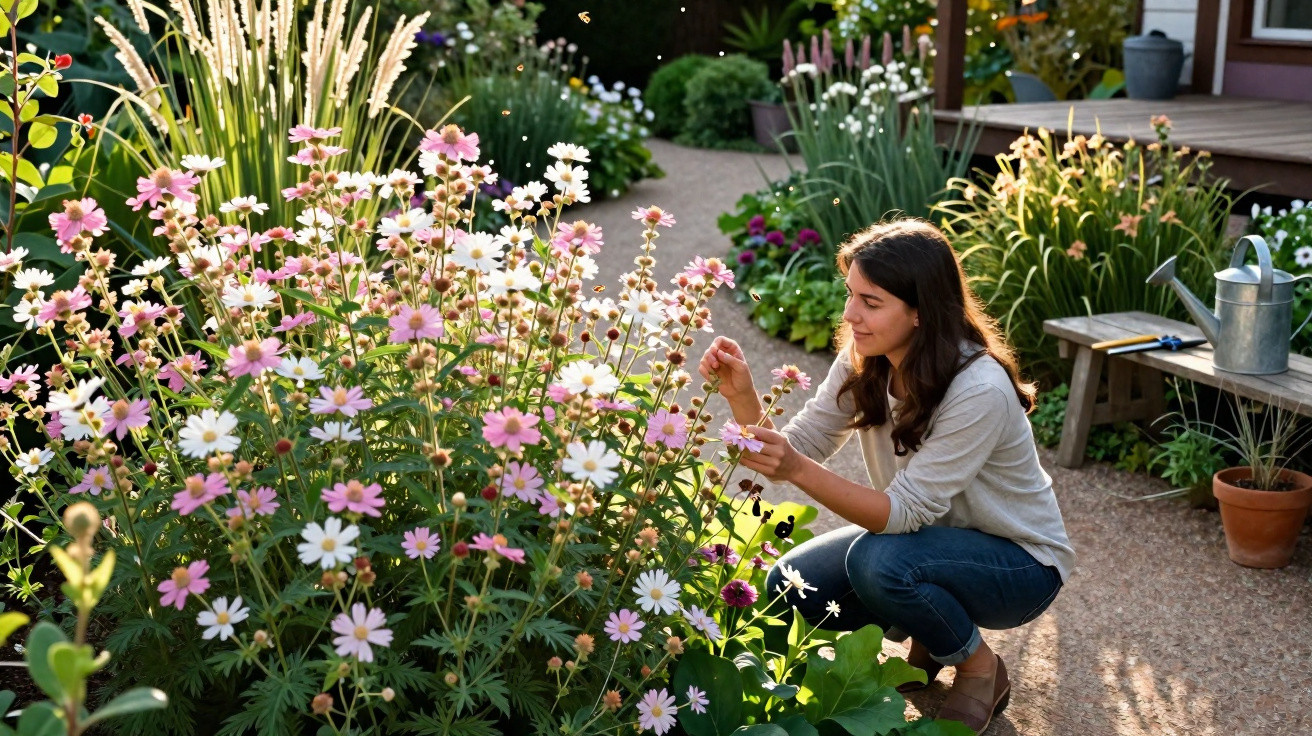
Many amateur gardeners are now quite literally digging out their roses and throwing them out of the border.
Roses are seen as the queens of ornamental gardens, but they come with a hefty workload. A modest-looking perennial from North America is now giving them serious competition: gaura, often marketed as a “splendour candle”. It can flower continuously for up to eight months, asks for very little attention, and in a border it can look like a dancing, butterfly-like veil.
Why gardeners are choosing the splendour candle over roses
Roses are fragrant, romantic and a classic choice for front gardens. Anyone who grows them, though, also knows the drawbacks: regular pruning, fungal diseases, aphids, constant watering, feeding and checking. In many gardens, you can barely manage without a calendar.
The splendour candle (botanically Gaura lindheimeri) plays by different rules. It shrugs off a lot, forgives mistakes, and keeps going long after roses would have started to droop.
"Gaura flowers from May well into winter, without spraying, without specialist fertiliser and without a complicated pruning schedule."
The plant forms loose clumps with long, flexible stems. Along them sit hundreds of small flowers that open one after another. The result is a near-continuous display that can make many rose beds look tired-especially during dry summers.
The splendour candle: a long-flowering plant for the busy (and the lazy)
Gaura comes from the southern regions of the USA and from Mexico. There it has to cope with poor soils, heat and periods of drought. That toughness is exactly what makes it so appealing for gardens here.
- Site tolerance: grows even in lean, stony or sandy soil
- Heat resistance: gets through long dry spells without a watering can
- Cold tolerance: depending on the variety, hardy down to around –15 °C
- Health: hardly prone to typical rose diseases
- Maintenance: no annual shaping cut required; usually a cut-back in late winter is enough
After planting, one thorough soak is usually sufficient to get it established. After that, normal rainfall is typically enough. Watering only really makes sense during extreme drought, such as when grown in a pot on a balcony.
"If you’d rather spend the weekend on the patio than weeding and pruning for hours, gaura is exactly the right choice."
Flowers like dancing butterflies - and a magnet for insects
Visually, the splendour candle hardly matches its rugged nature at all. The flowers look almost delicate: white, pale pink or bicoloured, depending on the variety. They’re spaced loosely along thin, bendy stems.
Even a light breeze can set the whole clump swaying. The effect is like tiny butterflies hovering above the bed-hence the popular nickname “butterfly flower”.
Its long flowering period from May into late autumn-sometimes even into December-makes gaura valuable for bees and other insects. When much of the garden has already finished, it can still provide nectar and pollen.
"Gaura brings together garden design and insect support: light and airy, yet ecologically valuable."
Where the splendour candle looks best in the garden
Gaura is a genuine all-rounder and can fill plenty of gaps where other perennials fail or simply look dull.
In perennial borders and mixed beds
In mixed planting schemes, the splendour candle adds movement and an airy feel. It’s particularly effective slightly further back, behind lower perennials or among strong-structured plants such as lavender or globe thistles.
Those drifting clouds of flowers soften rigid layouts. Formal lines-like those seen in tightly clipped beds-immediately feel gentler.
Along paths, patios and in the front garden
As a loose edging along a path or patio, gaura looks natural and relaxed. The stems spill slightly over the edge without smothering neighbouring plants. Lighter flowers can even make shady corners appear brighter-provided they get at least some sun.
In dry-style gardens, paired with grasses, sage, rockroses or thrift, it fits perfectly. All prefer sun and low-fertility soils; the combination feels lightly Mediterranean, but it doesn’t depend on holiday watering.
In pots on balconies and terraces
If you don’t have a garden, you can still grow the splendour candle easily in a container. Key points are:
- a sufficiently large, well-drained pot
- a sunny position-ideally a hot south-facing balcony
- drainage holes in the base; no waterlogging
Combined with low grasses or cushion-forming perennials, the look is modern and airy. Balcony growers can skip chemical sprays and heavy feeding.
Plant, care, forget - gaura really is that simple
Garden centres usually sell the splendour candle as potted plants in spring and autumn. Either season works well, as it gives the perennial time to root in properly.
- Choose the position: as sunny as possible; soil is better lean than overly rich.
- Prepare the soil: loosen compacted ground; in heavy soils, work in sand or grit so excess water can drain away.
- Spacing: allow around 40 centimetres between plants so they can develop into loose clumps.
- Watering-in: after planting, water generously once so the roots make good contact with the soil.
After that, the plant is practically self-sufficient. One job is worth doing: in late winter or very early spring, cut the dried stems back close to the ground. That encourages new growth and keeps the plant fresh.
A few proven varieties for home gardens include:
- ‘Whirling Butterflies’: tall, pure-white cloud of flowers with a very long flowering period
- ‘Siskiyou Pink’: pink blooms that sit beautifully in naturalistic planting
- ‘Belleza White’: more compact growth, suitable for smaller beds and large containers
Common questions: pruning, winter protection and companion planting
In milder areas, it’s often enough to leave the dead growth in place as natural winter protection and only remove it in spring. In places with harsher winters, a light cover of leaves or fir branches can help-especially for young plants or those grown in pots.
In a bed, gaura can create very different moods depending on what you pair it with:
- Romantic: with catmint, lady’s mantle and pale roses (for anyone who doesn’t want to give roses up entirely)
- Modern: with ornamental grasses, alliums and dark-leaved perennials
- Extremely drought tolerant: with lavender, sage, houseleek and stonecrop
"Anyone who thought a colourful garden requires daily care will be put straight by gaura."
Why this perennial is perfect for the times we’re in
Heatwaves, watering bans and less time for labour-intensive garden projects: many amateur gardeners are looking for plants that cope with stress better than the traditional queens of the rose world. The splendour candle fits that brief.
It saves water, needs very little maintenance and supports insects. At the same time, it offers decorative qualities you’d usually expect from more demanding perennial combinations. If you’re creating a new border or want to replace a rose bed that hasn’t worked out, gaura deserves a place on your shortlist.
One final tip: rather than planting a single specimen, set several plants together in a small group. That’s when the “veil effect” really comes into its own-and the garden looks far more alive from spring through to winter, without constant interventions with secateurs and sprays.
Comments
No comments yet. Be the first to comment!
Leave a Comment