
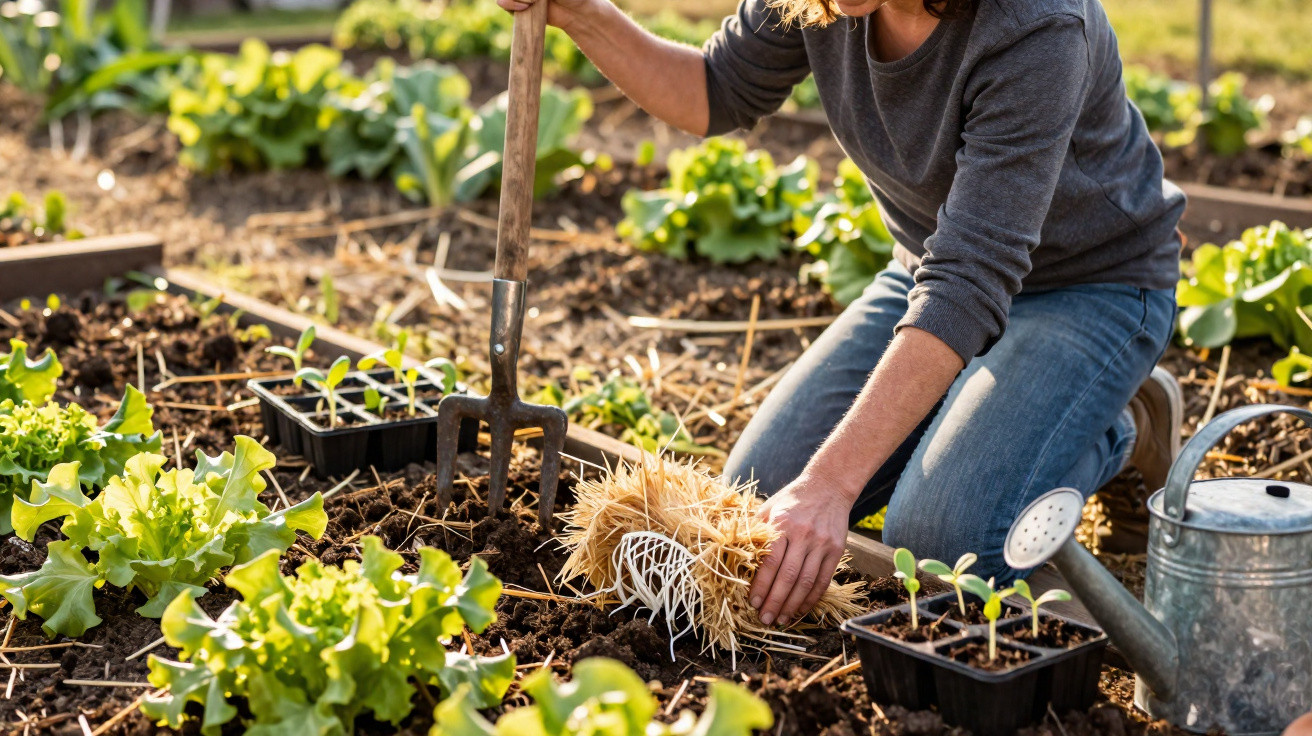
That familiar, well-practised movement can do lasting harm to your soil.
For generations, vigorously digging over the vegetable patch has been the default job as soon as the first warm days arrive. If you’re not standing in the beds with a spade, sweating, it can feel as though you’re not doing gardening “properly”. New findings from soil science suggest the opposite: this traditional spring ritual often clashes with what we now understand about living, fertile soil.
Beneath our feet: soil as a hidden living organism
A productive bed is far more than “just dirt”. In the top 20 centimetres, life is buzzing out of sight. In a single gram of good garden soil there are, on average, between 100 million and one billion bacteria, along with countless fungi, nematodes, tiny arthropods and earthworms.
Together, these organisms form a highly interconnected system. Some break down dead leaves, others release and cycle nutrients, and others still link plant roots to sources of nourishment. Each soil layer has its own micro-world, with typical residents and its own balance of light, moisture and oxygen.
"If you dig deeply in spring, you destroy the very life your plants depend on."
Many microorganisms are adapted to low-oxygen conditions, while others need air and proximity to the surface. When the soil is fully turned with a spade, oxygen-shy organisms are suddenly exposed and die off. Meanwhile, surface dwellers are buried in dark depths where they cannot survive. Soil life collapses-precisely when young plants most need an active, living soil.
How digging tears apart vital fungal networks
Another impact is often underestimated: below ground, a delicate web of fungal threads runs through the soil-so-called mycorrhizal fungi. These strands connect with roots and act like a natural extension of the plant’s root system, helping it reach water and nutrients the plant would struggle to access alone.
When you churn and mix everything with a spade, those networks are repeatedly cut through. The results are familiar:
- Plants access nutrients less effectively
- Roots stay shallower and are less branched
- Vegetables react more sensitively to dry spells
- More fertiliser seems necessary to achieve the same harvest
Many gardeners wonder why their soil feels “tired” despite all the effort. Often, the issue is not too little feeding, but too much mechanical disturbance.
A gentler alternative to the spade: a broadfork with leverage
A more up-to-date response to the spring spade-frenzy comes under names such as a broadfork, a treaded digging fork, a double digging fork or a bio-fork. It’s a tool with several curved tines that loosens the ground without flipping it over.
Using it is straightforward: push the tines vertically into the soil, pull the handle towards you, and lift the earth only slightly. Clods crack, compaction eases, and air gets in-while the soil layers largely stay where they are. Soil life is disturbed, but not thrown into complete disarray.
"The levering motion is extremely kind on the back and makes the work noticeably easier, especially for older gardeners."
If you have back trouble, you’ll notice the difference immediately. Instead of heaving heavy spade-loads, the leverage does much of the work. With this method, gardeners often manage a much larger area without exhausting themselves.
The right moment to loosen the soil
Soil moisture determines whether the tool is a pleasure or a pain. The sweet spot is slightly damp soil-around a day after a decent spring shower. Then the tines slide in readily, and the soil fractures without smearing, clumping or sticking.
If the soil is bone dry, it sets like concrete: the tines suffer, and so does your back. If it is waterlogged, it quickly turns into sticky lumps that can dry into fresh compaction later.
Why mulch transforms the vegetable bed over time
If you put the spade aside, the next step is a second, almost revolutionary measure: mulching. This means covering bare soil with a layer of organic material-such as straw, shredded leaves, dry grass clippings or woodchip.
Mulch copies what happens naturally in woodland: the soil is rarely exposed, and is almost always protected by leaf litter and plant debris. That surface layer does several jobs at once:
- It holds moisture in the soil and cuts watering significantly.
- It shields soil organisms from heat spikes and cold.
- It prevents a hard crust forming after heavy rain.
- It feeds soil life, which gradually turns the mulch into humus.
"Mulch works like an umbrella and a buffet at the same time: protection on top, food underneath."
For older gardeners, there’s another welcome effect: weeds germinate far less beneath a thick mulch layer. That means less bending, less weeding, and less stress during hot periods because the soil stays damp for longer.
Suitable materials for the vegetable patch
Not every mulch suits every spot. As a quick guide:
| Material | Advantage | Where to use it |
|---|---|---|
| Straw | airy, rots slowly | strawberries, tomatoes, paths |
| Dried grass clippings | nutrient-rich, fast-acting | cabbage, squash, heavy-feeding vegetables |
| Leaves, shredded | excellent for building humus | mixed beds, shrubs |
| Woodchip | very long-lasting, suppresses weeds | paths, berry bushes, not right up against heavy feeders |
If you’re new to mulching, start with a thin layer and watch how your soil responds. On very heavy, cold soils, a layer that’s too thick in spring can slow warming. In that case, clear the first planting rows and add mulch again later.
How microorganisms make plants tougher and healthier
Modern soil biology has driven a quiet revolution over recent decades. Plants do not take up nutrients only directly from the soil solution; they collaborate with bacteria and fungi that supply nutrients through a kind of exchange.
Examples include:
- Bacteria that convert atmospheric nitrogen into plant-available nitrate and ammonium
- Fungi that mobilise phosphorus and pass it on to roots
- Earthworms that consume organic matter and turn it into nutrient-rich crumbs
The less you disrupt the soil, the better these networks function. Vegetables often grow more vigorously without constant feeding. Plants also cope better with disease and drought stress, because the fungal networks help them reach more water and bacteria improve the targeted availability of nutrients.
Practical steps: what you can do in spring
Switching to soil-friendly gardening doesn’t have to happen overnight. A realistic way to begin might look like this:
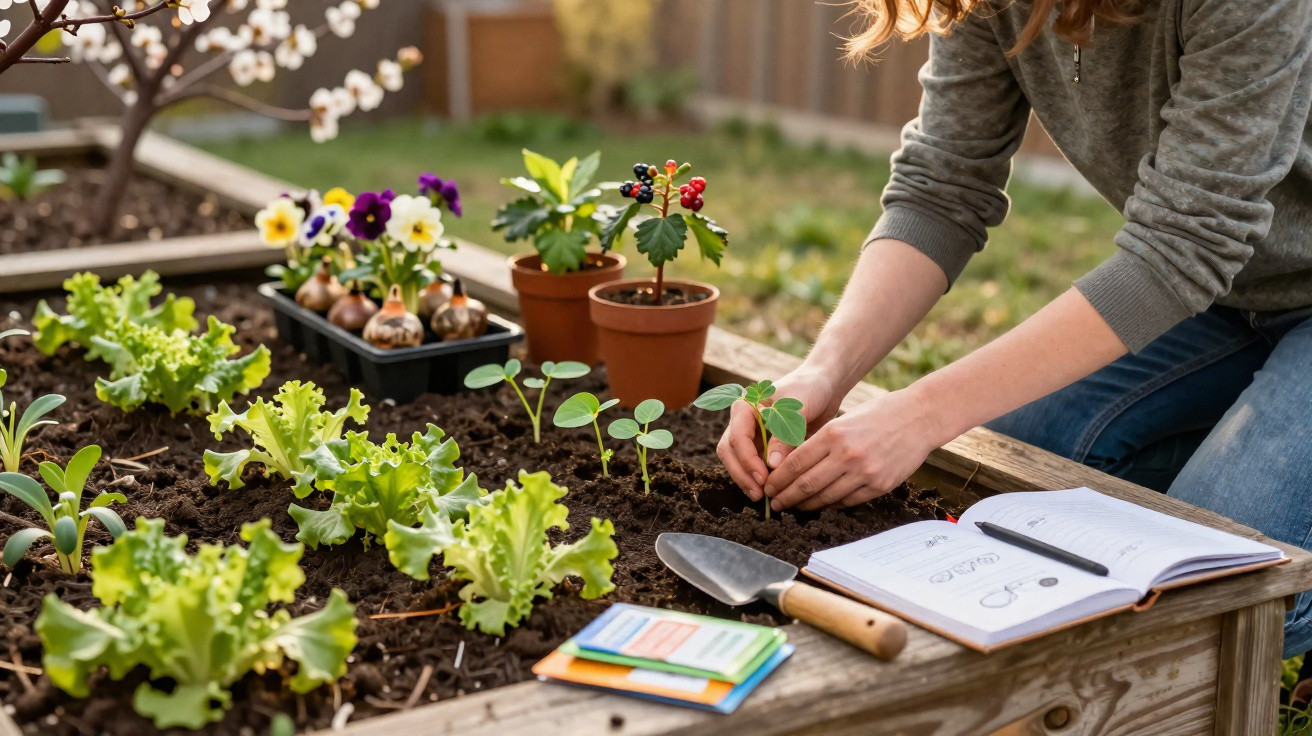
- Instead of digging deeply, use a broadfork and loosen the soil only.
- Spread a thin layer of mature compost (around five centimetres) on the surface.
- After planting, cover beds between rows with mulch material.
- Tackle compacted areas gradually, rather than reworking everything every year.
If you have very heavy clay or loam, it can be reasonable at first to work more thoroughly once to break up old compaction. The key is not to turn it into an annual obligation, but to let the soil stabilise afterwards with organic matter, mulch and gentle cultivation.
Further tips for healthy, load-bearing garden soil
Living soil builds its strength over years. A few measures can help speed up that progress in a sustainable way:
- Apply home-made compost regularly
- Avoid walking on beds; create fixed paths
- Alternate shallow-rooting and deep-rooting crops
- Use green manures where suitable, such as clover or phacelia
Green-manure plants root through the soil, loosen it and add fresh organic matter. Many fix nitrogen or help access nutrients that are otherwise difficult to dissolve. If you sow green manure in late summer or autumn, then in spring simply cut it down and leave it in place, you’re immediately offering the next “buffet” to your microorganisms.
In the end, it helps to hold a different image of a “good” bed: the best harvest doesn’t come from a bare, neatly turned plot, but from soil that is alive and well covered. Between mulch, earthworms, fungal threads and fine roots, a quiet partner develops-one you can’t see, but whose effect you’ll notice in summer in every crisp cucumber and every heavy-laden tomato plant.
Comments
No comments yet. Be the first to comment!
Leave a Comment